

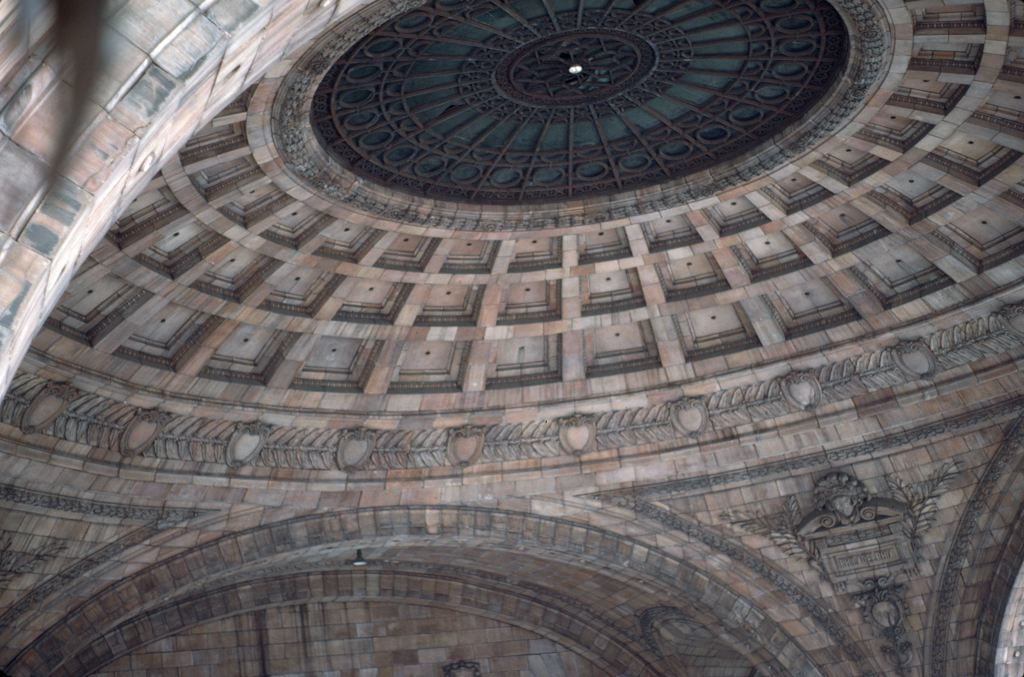
The northern apex to the Golden Triangle had already served as terminus of the Pennsylvania Canal and home to three successive railroad stations when Alexander Cassatt commissioned Daniel Burnham for this stirring rail portal to Pittsburgh. It was Cassatt, a native Pittsburgher and brother of impressionist painter Mary Cassatt, who oversaw Burnham's later Union Station in Washington, D.C., and McKim, Mead and White's Pennsylvania Station in New York City. In 1898, Burnham was still riding his national fame as chief architect of the World's Columbian Exposition of 1893 in Chicago. In Pittsburgh he was also known for replacing the exposition buildings at the Point (1901, demolished). Among Burnham's surviving Pittsburgh buildings are the Engineers' Society of Western Pennsylvania (the original Union Trust Building, 1898; 337 4th Avenue), the Frick Building and Frick Annex (1902; 437 Grant Street), the Highland Building (1910; 121 S. Highland Avenue), and the Oliver Building (1910; 535 Smithfield Street) on Mellon Square.
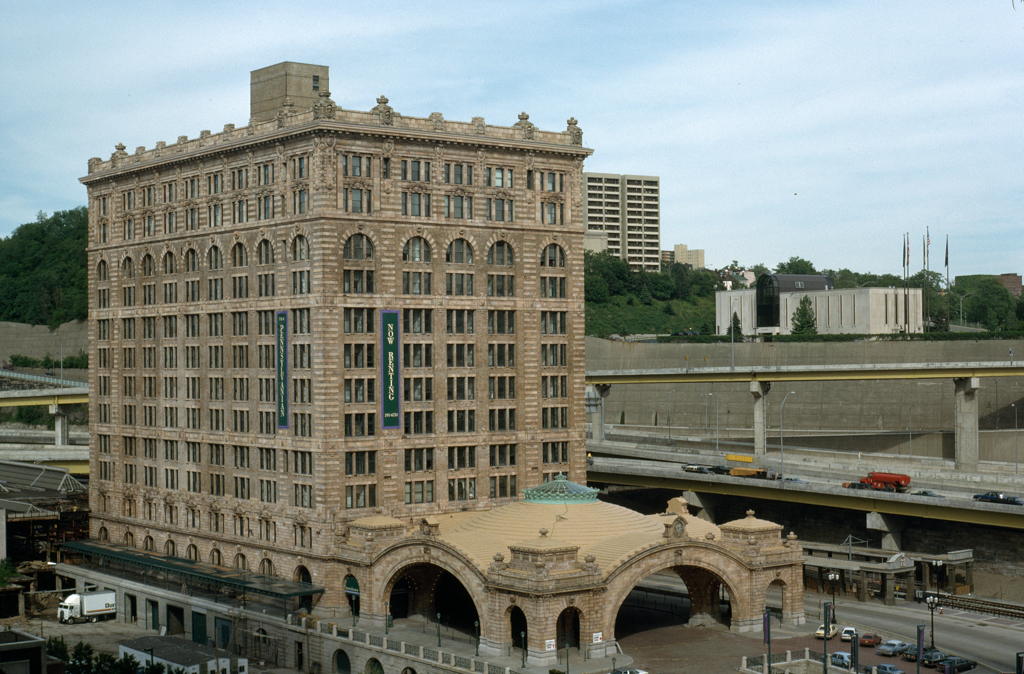
At the last minute, what had been planned as a four-story building was expanded into a twelve-story tower. The impetus for the design change probably came from Cassatt, but one suspects also the hand of Henry Clay Frick, who was about to become the Pennsylvania Railroad's largest stockholder. The basic parti of the shelved plan later resurfaced as the key element in Burnham's Washington station. Here the tower is fronted by an elegant domed cab shelter, whose pendentive ornaments and the spelling as “Pittsburg” recall the twenty-year period (1891–1911) when Pittsburgh's name was spelled without a final “h.”
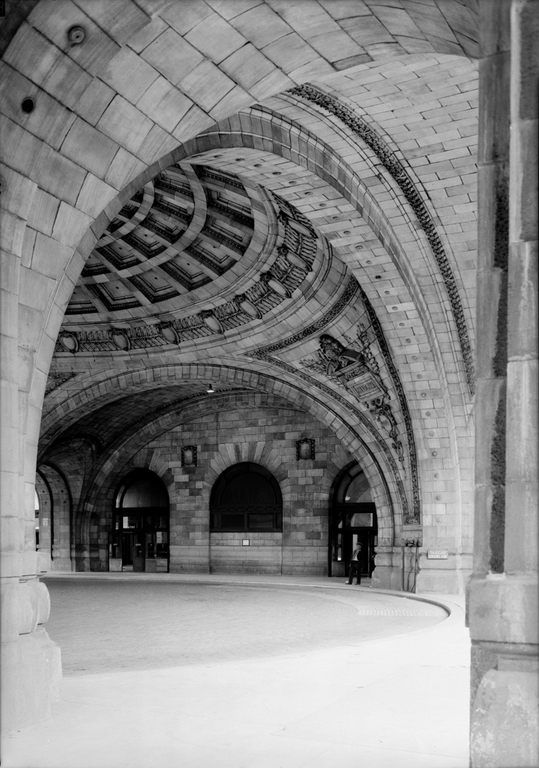
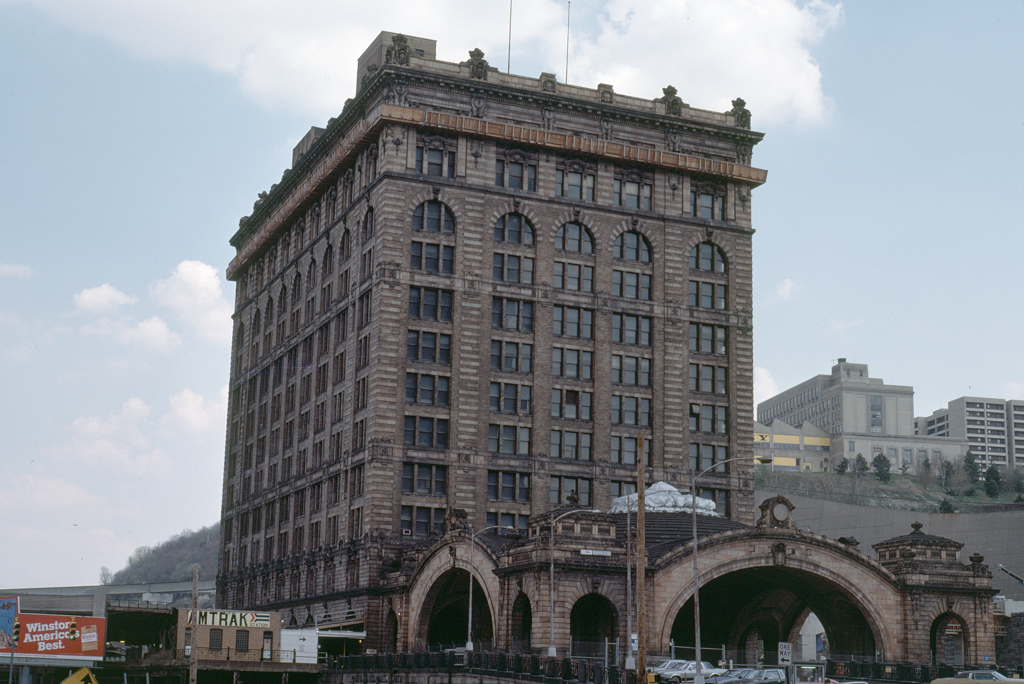
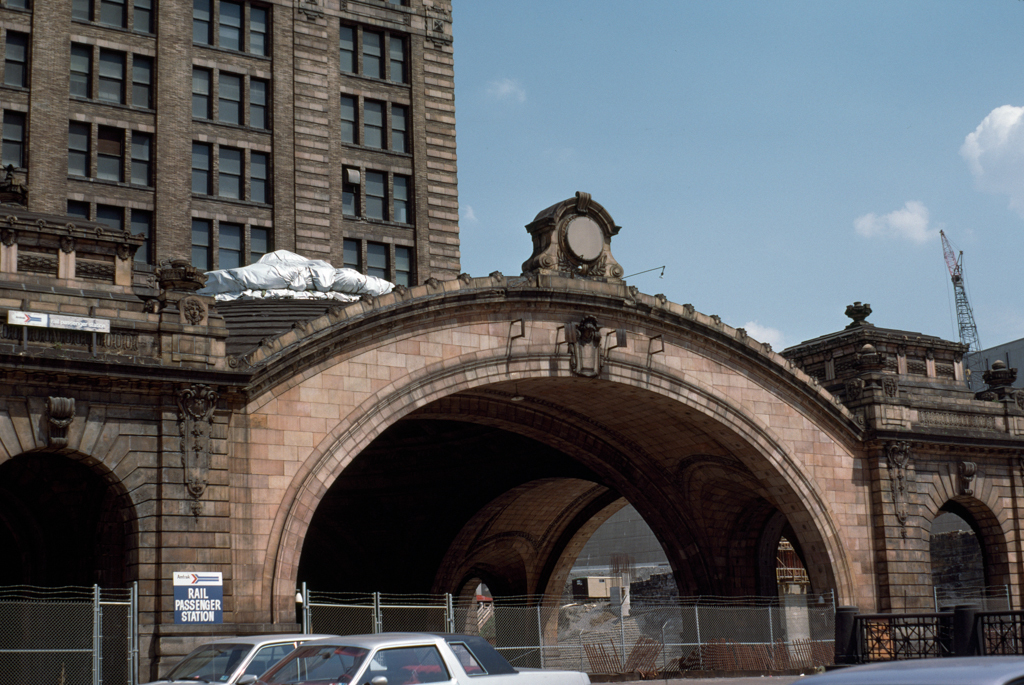
Burnham manipulated standard Beaux-Arts stylistic devices for the main building and the rotunda, but employed them with restraint so as not to compromise function. The brown brick and terra-cotta facade has a smooth, even texture. The main block sits on a high basement, the better to provide more bulk for its vista down Liberty Avenue. Curved entrance ramps give extra majesty to the low arches of the rotunda, which is often accounted the most captivating architectural element in Pittsburgh.
Preservation of so large and functionally specific a building was not easy. The Pennsylvania Railroad intended to tear down the station in 1966 as part of its 148-acre Penn Park redevelopment; then four years later, the merged Pennsylvania and New York Central railroads declared bankruptcy, imperiling the terminal a second time. The rotunda and office block now house a large apartment complex, while rail passengers catch their trains from a modest depot at the rear.