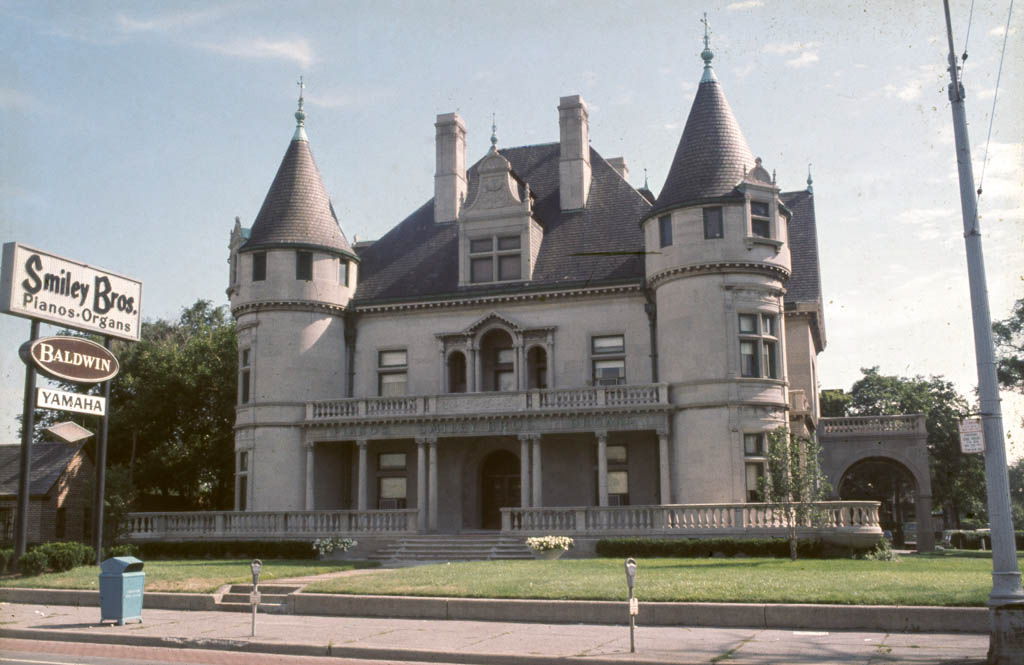
With a fortune amassed from manufacturing railroad cars, Colonel Frank J. Hecker (1846–1927), a sometime partner of Charles L. Freer (see WN71), built and furnished this magnificent stone residence. Kamper designed it in the Chateauesque manner, inspired perhaps by such examples as the original part of the sixteenth-century French chateaux of Chenonceaux and Azay-le-Rideau. This was done presumably to satisfy Hecker's fantasy of himself as nobility. The interior decoration of the forty-nine-room turreted mansion is sumptuous, with Italian Siena marble floors and walls, English oak paneling, Egyptian Nubian marble fireplaces, and Roman tile. From 1947 to 1990, the Smiley Brothers Music Company reused the mansion as a showroom for its pianos and organs, with the carriage house serving as a two-hundred-seat recital hall and music classroom. In 1991 Charfoos and Christensen, PC, bought and restored the house.

