

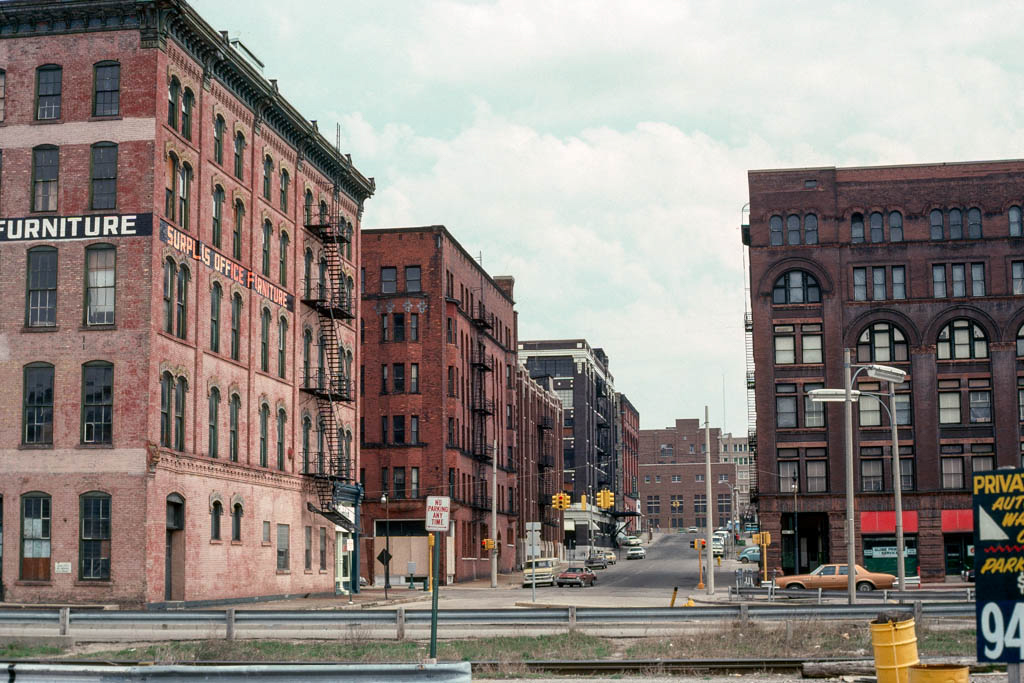
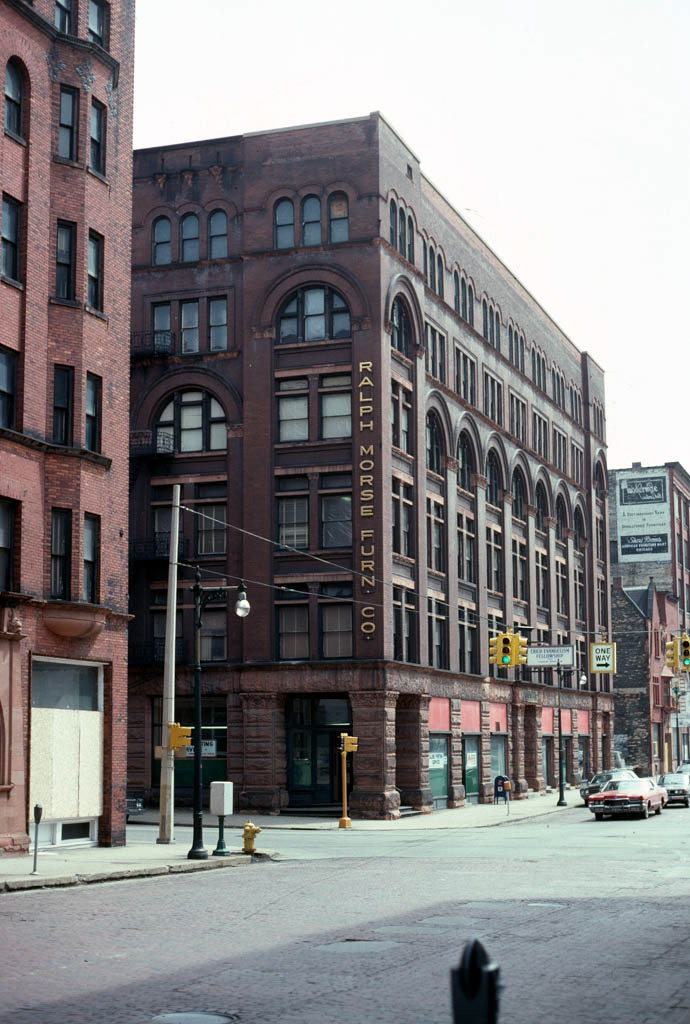
Heartside encompasses one of the largest and finest groupings of late-nineteenth- and early-twentieth-century warehouses and wholesale business blocks in Michigan. The completion in 1870 of the Grand Rapids and Indiana Railroad, with a station and rail yards at the western edge of the area at what is now Oakes Street, sparked the development of Heartside. By 1900, scores of large brick buildings, many with decorative stone or terra-cotta trim, representing a broad range of late-nineteenth-century architectural styles, including commercial Italianate and Richardsonian Romanesque, stood shoulder to shoulder as if to announce the maturity of commerce in West Michigan. Listing in the National Register of Historic Places in 1982 of fifty-five buildings on 250 acres in Heartside halted mindless demolition in the declining district. Yet, until Van Andel Arena opened in 1996 (Rossetti Associates; 130 West Fulton Street), the neighborhood remained a haven for drug traffic and prostitution. Since then entrepreneurs are rehabilitating an astounding number of buildings.
Heartside
1870–1929. Bounded by Fulton and Wealthy sts. and Division and Ionia aves. SW