

Distinctive for its long, linear configuration, Lynn Common dates to 1637. Its current character reflects improvements made beginning in the 1820s, when N. and S. Common streets replaced a road bisecting the Common. The cast-iron fence that borders the Common dates from about 1870. The Civil War monument was added in 1873, the fountain in 1893, and the bandstand by 1900. Just beyond the west end of the Common and separated by a small cluster of commercial buildings lies the old burial ground, established in 1637.
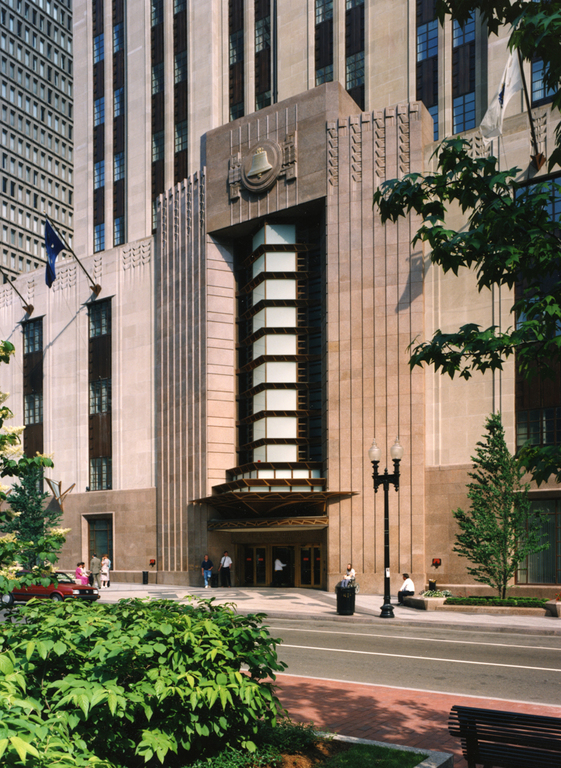
At the east end stands the Lynn City Hall (City Hall Square), a 1948–1949 replacement of the 1867 municipal building designed by Gridley J. F. Bryant and Arthur Gilman. Fred Dyer designed the city hall in a V-shaped plan constructed of concrete with modest Moderne-style ornament. Nearby is the New England Telephone Building (21 City Hall Square), an Art Deco office building designed by Densmore, LeClear and Robbins in 1931.
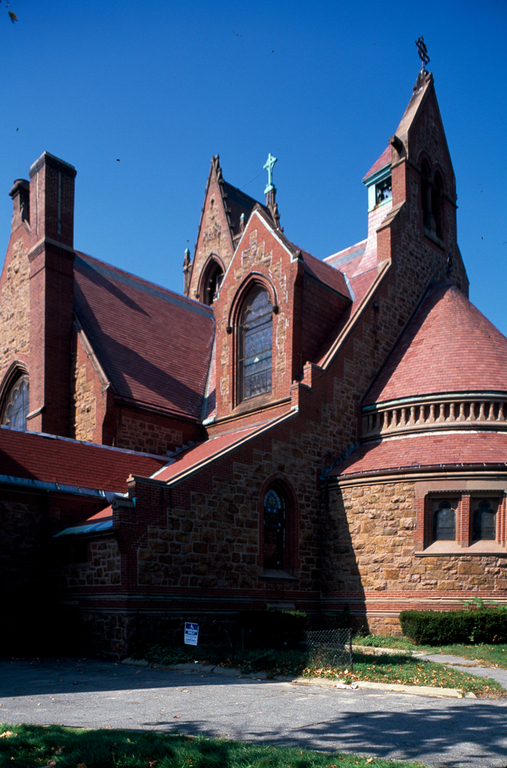
A number of architecturally prominent buildings face the Common. Foremost among these is St. Stephens Episcopal Church (70 S. Common Street), the last and one of the best of several major churches designed by Ware
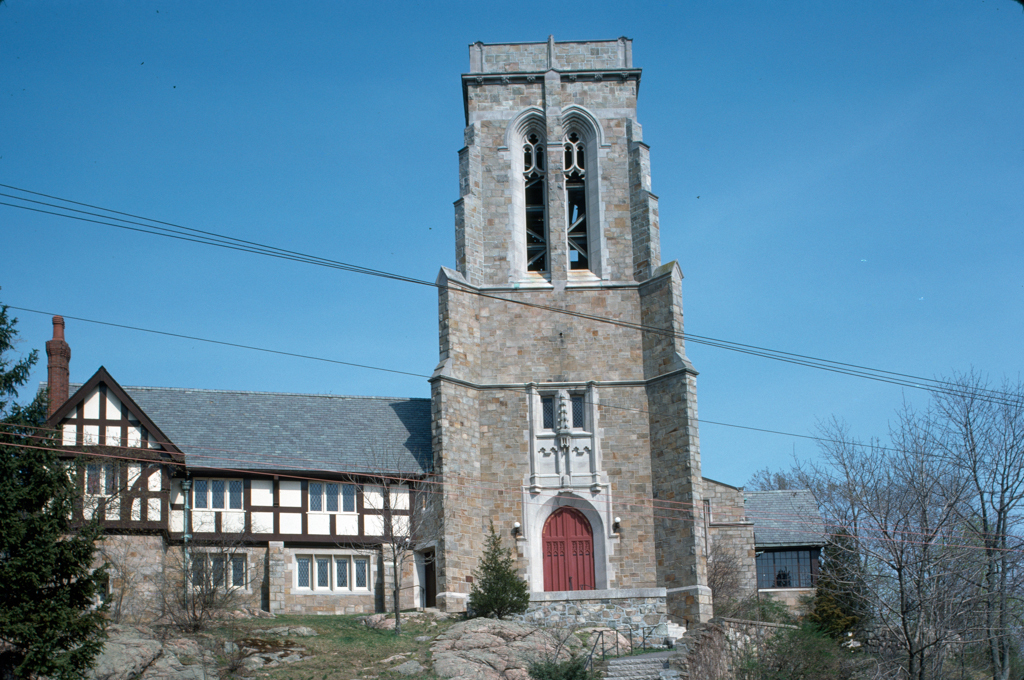
In 1871–1872 John Stevens of Boston designed the Congregational Church (152 S. Common Street), a classic example in brick of his distinctive church architecture, now sadly vacant, and the spire has been lost. Another major landmark is the Lynn Public Library (5 N. Common Street). A monumental Corinthian portico fronts this large Beaux-Arts classical design constructed in limestone in 1898–1900 and designed by George Moore, a Boston architect better known as a partner in the firm of Little, Browne and Moore during the mid-1890s. Nearly opposite on the other side of the Common looms the red brick Lynn Armory (36 S. Common Street) designed by the local firm of Wheeler and Northend in 1893 in a traditional castellated style.