

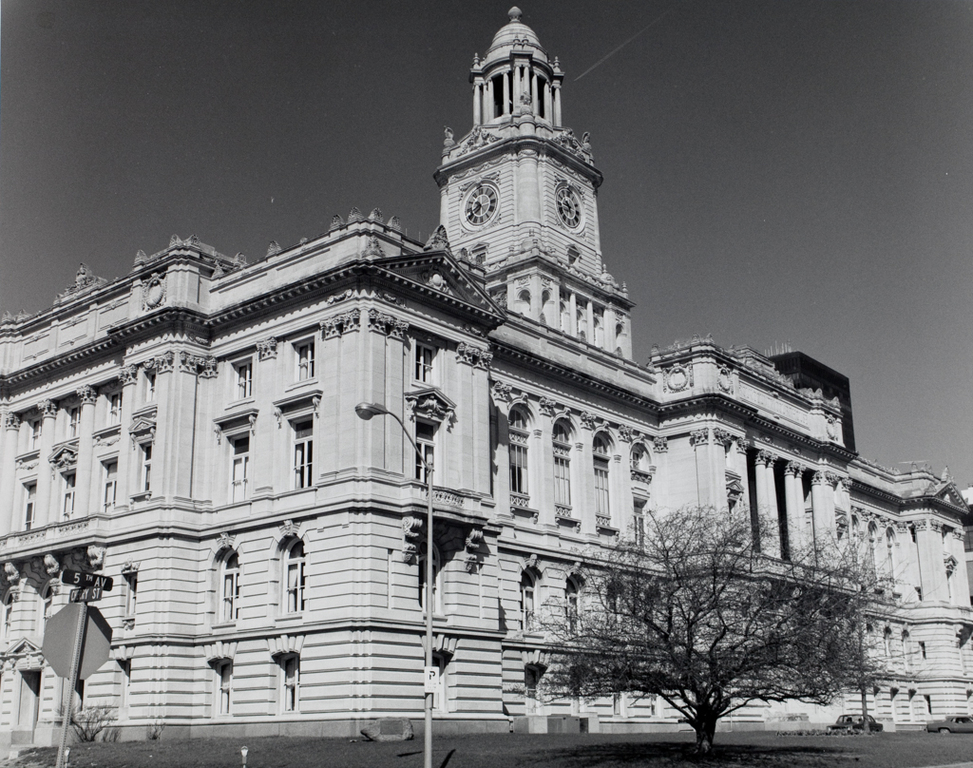
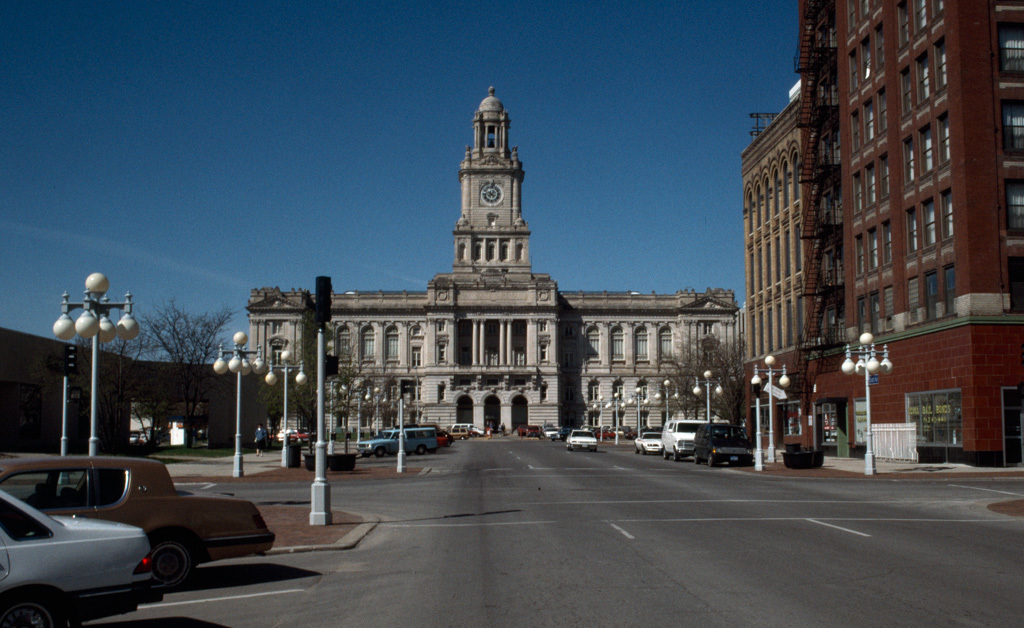
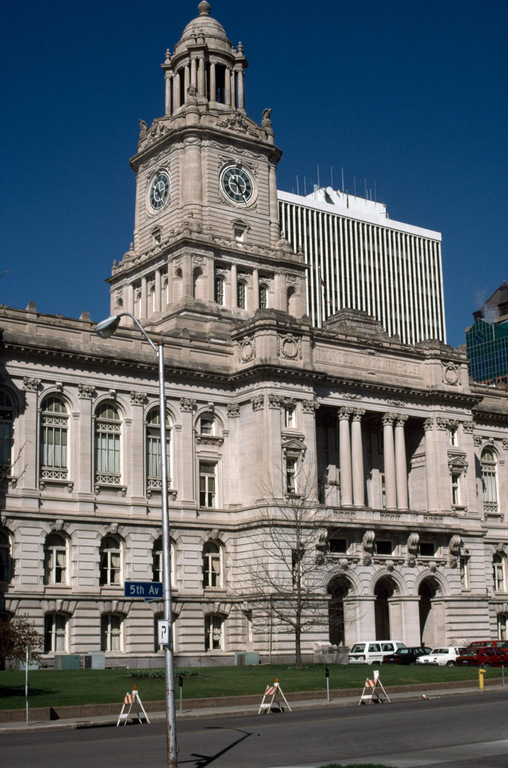
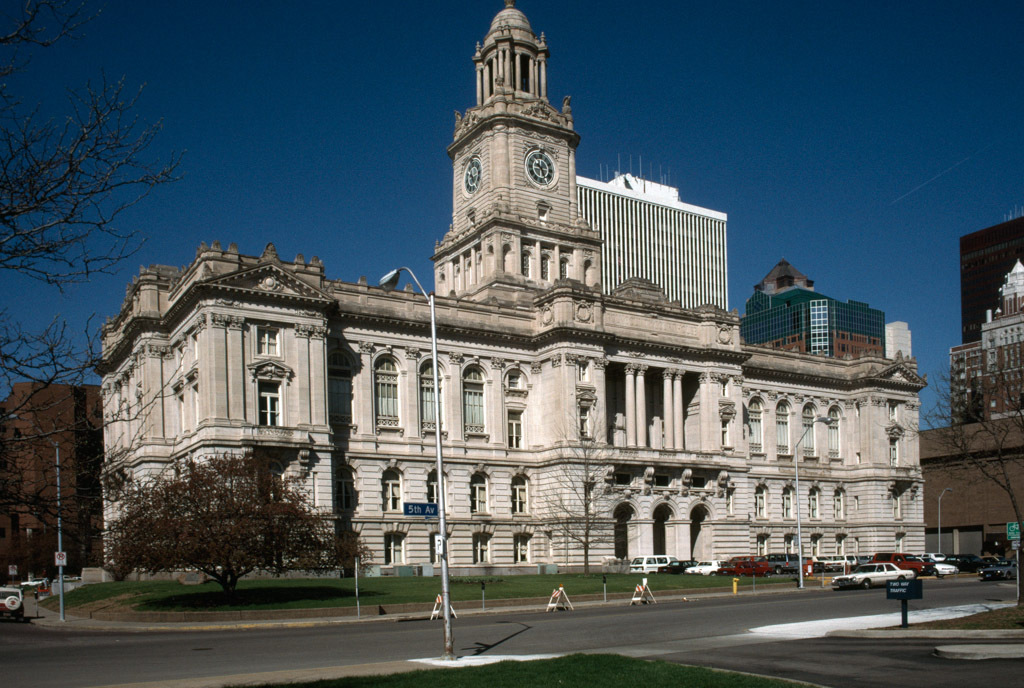
The site for a courthouse west of the Des Moines River was purchased by Polk County in 1846. Because of the offset of the city's grid along Fifth Street, the courthouse site served as the termination of the eastern portion of Court Street. Two years after the site was acquired, the first courthouse was built—an unpretentious two-story building with a brick veneer. This plain, simple structure was replaced by a far more opulent masonry building designed by Dyer H. Young. Construction of this second building started in 1858, but it was not occupied by the courts until 1866. In style this second courthouse was French Second Empire; it was surmounted by a tall, spirelike, segmented dome and lantern.
To accommodate the expanded needs of county government, the third and present courthouse was built in what was labeled as “a modified Renaissance style,” i.e., Beaux-Arts Classical. In general the design of the building is sophisticated and correct; it has a multifloor central rotunda and a gray