

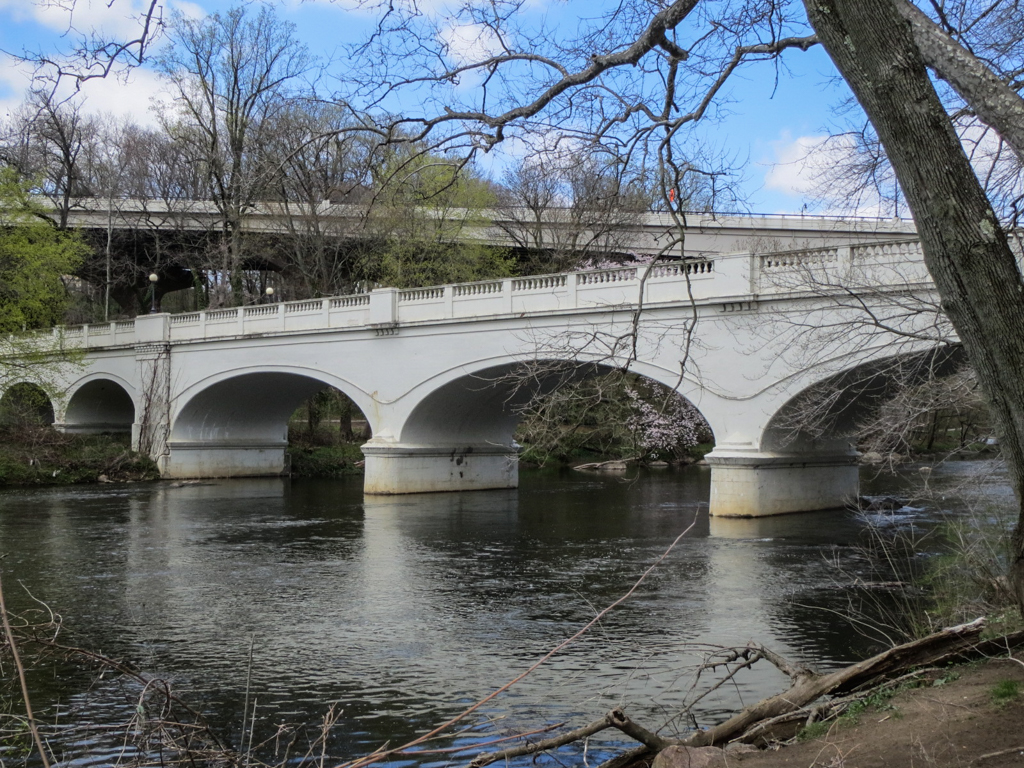
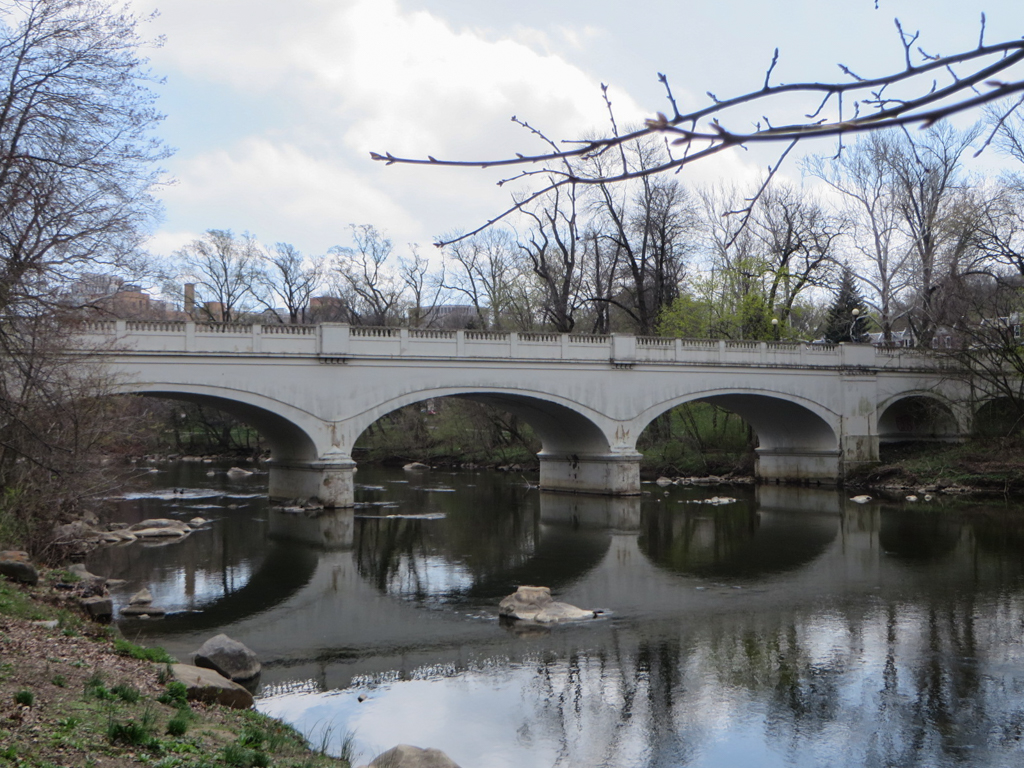

The 353-foot bridge of eight arches, an early example of reinforced-concrete construction, contained a pipe that carried water from Porter Reservoir on Concord Pike to the Wilmington filter station. The first of many concrete highway bridges in Delaware, it used a variety of early reinforcement methods: latticed and Melan-type rolled I-beams as well as Thacher bars, the last named for the noted Edwin Thacher of the New York City firm, Concrete-Steel Engineering Company, which designed some 300 reinforced-concrete bridges between 1895 and 1904. This bridge was meant to spur development on Wilmington's northeast side. Constant internal leaking led to a recent reconstruction of the bridge, generally along the lines of its original appearance. Downstream, a pattern of ripples marks the site of Barley Mill Dam, which served a millsite on the west bank—scene of the first milling on the Brandywine (before 1687) and rebuilt in the mid-eighteenth century. A millstone survives as a lone relic of those early days.
Van Buren Street Bridge and Aqueduct
1906, Concrete-Steel Engineering Company, with Theodore A. Leisen. 1997 rebuilt. Van Buren St. over Brandywine Creek