

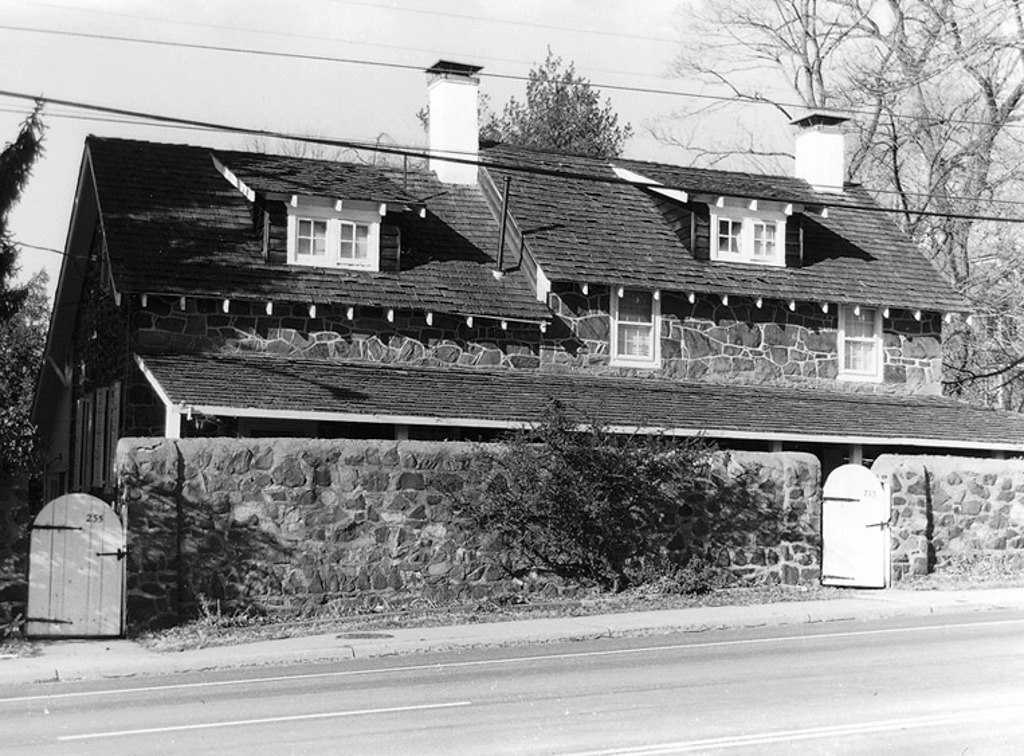
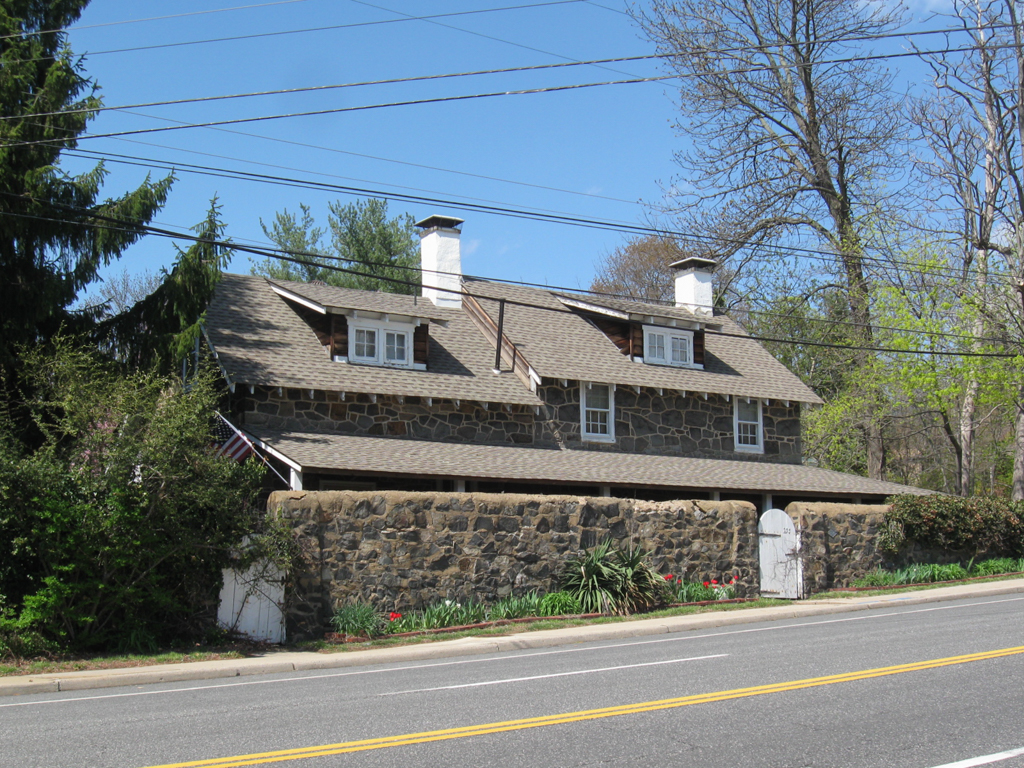
The compact stone colonial home served at various times as residence, blacksmith shop, cabinetmaker's shop, and hostelry. George Washington and the Marquis de Lafayette supposedly stayed here. Nineteenth-century artist Robert Shaw, whose etchings called early attention to Delaware's disappearing colonial architecture, kept a studio inside. A restoration in 1947 added a stone wall (topped with broken glass), partly to protect the building from runaway automobiles, and reversed the orientation of the dwelling. The long, steep descent of Philadelphia Pike here was improved in 1919 as part of the new Lincoln Highway network along the east coast, DuPont dynamite blowing out 5,000 cubic yards of rock to lower the hilltop a dozen feet. The road was then resurfaced in vitrified brick, part of Delaware's pioneering efforts at highway improvement.
Penny House
1749, with additions. North side of Philadelphia Pike (U.S. 13), west of Marsh Rd. intersection