

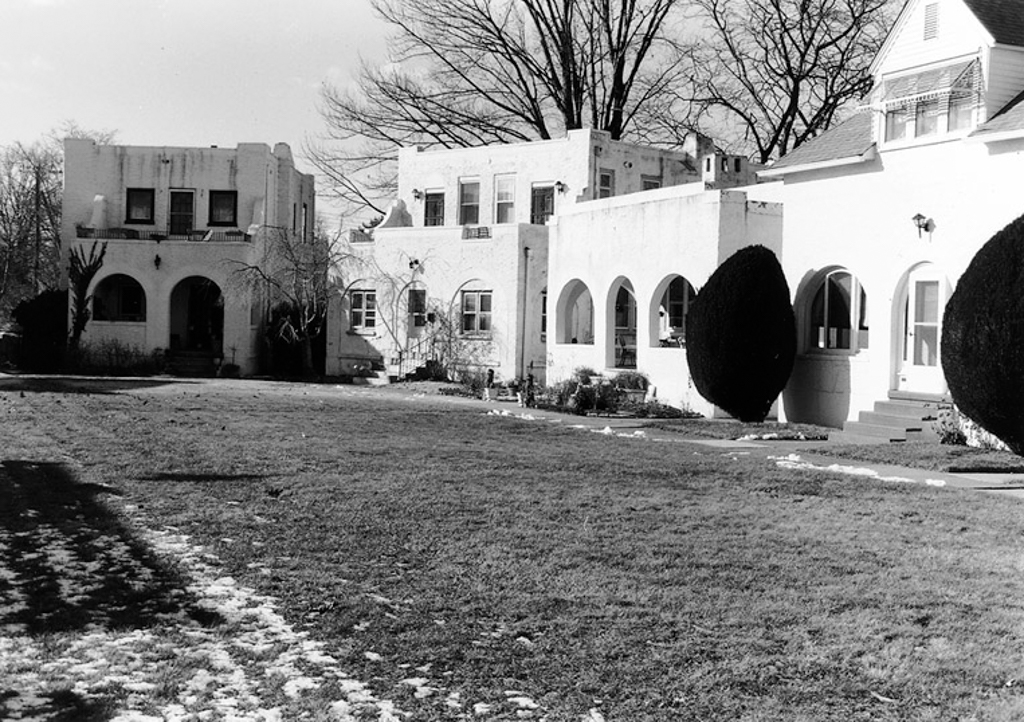
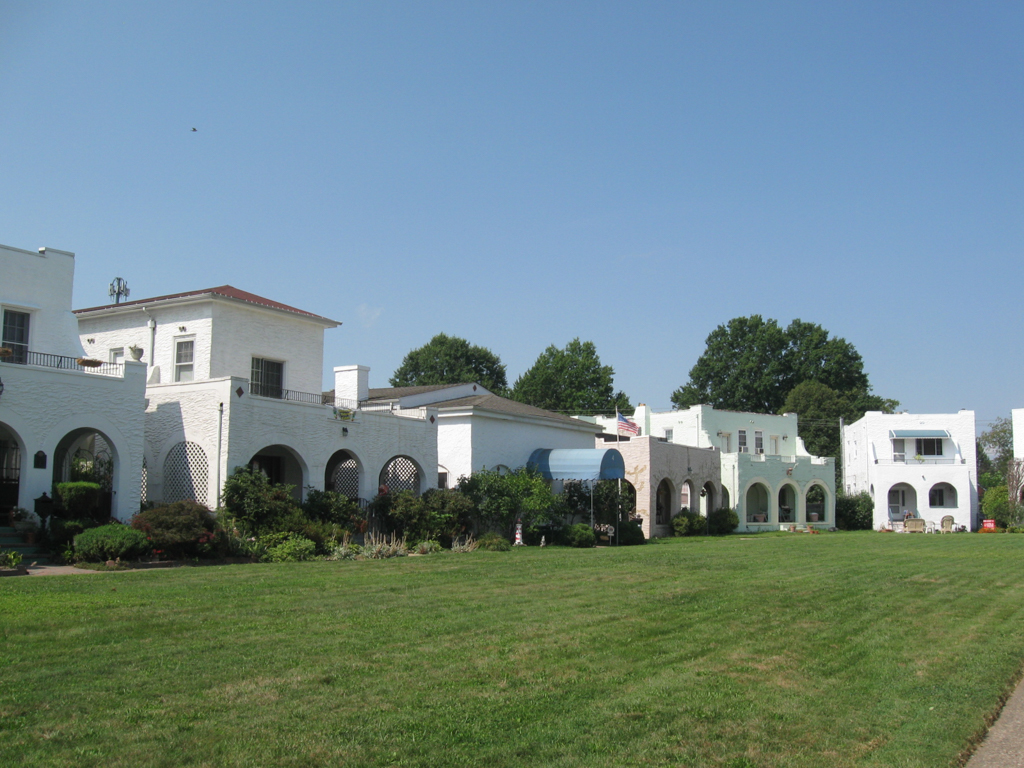
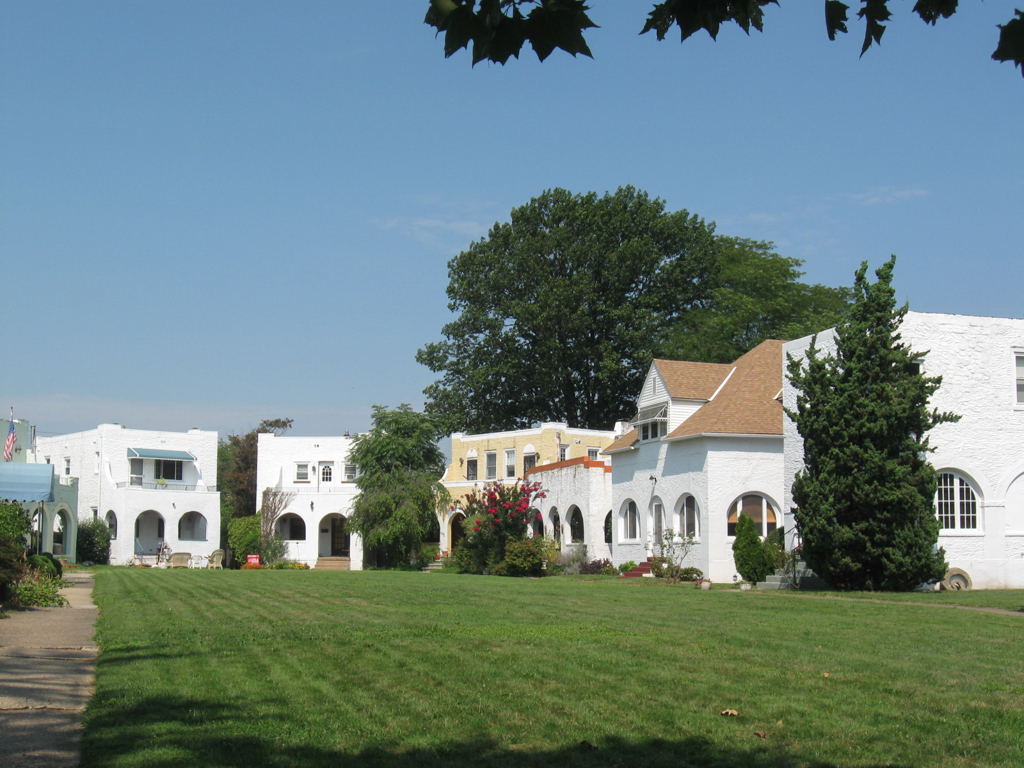
As historian Susan Chase has shown (1995), Banta worked as a railroad car builder and carpenter before becoming a land developer with two tracts near Newport: Tuxedo Park and Lyndalia (1920). Typical of the times, he limited his suburbs to whites, calling Lyndalia “The Ideal Restricted American Settlement for American People.” More adventurous aesthetically was Villa Monterey, with 350 houses projected as an “enchanting community to make your home.” The Mediterranean-influenced style that Banta chose was a radical departure from local precedent. The flat-roofed, cement-block houses were stuccoed and painted “in the brilliant colors of the rainbow.” The expensive development was rendered exclusive by the application of fourteen deed covenants, only one fewer than ritzy Westover Hills (CH22). “It takes courage to do anything different in Delaware,” a building-trades newsletter said, and Banta only built twelve units, two of which he lost to foreclosure. Arranged around a courtyard and with stuccoed walls and arched openings, they are strikingly different from most suburban development in the state, before or after.
Villa Monterey (Corinne Court)
1923, Claude Banta, developer. Philadelphia Pike (U.S. 13), north of Washington St. Extension