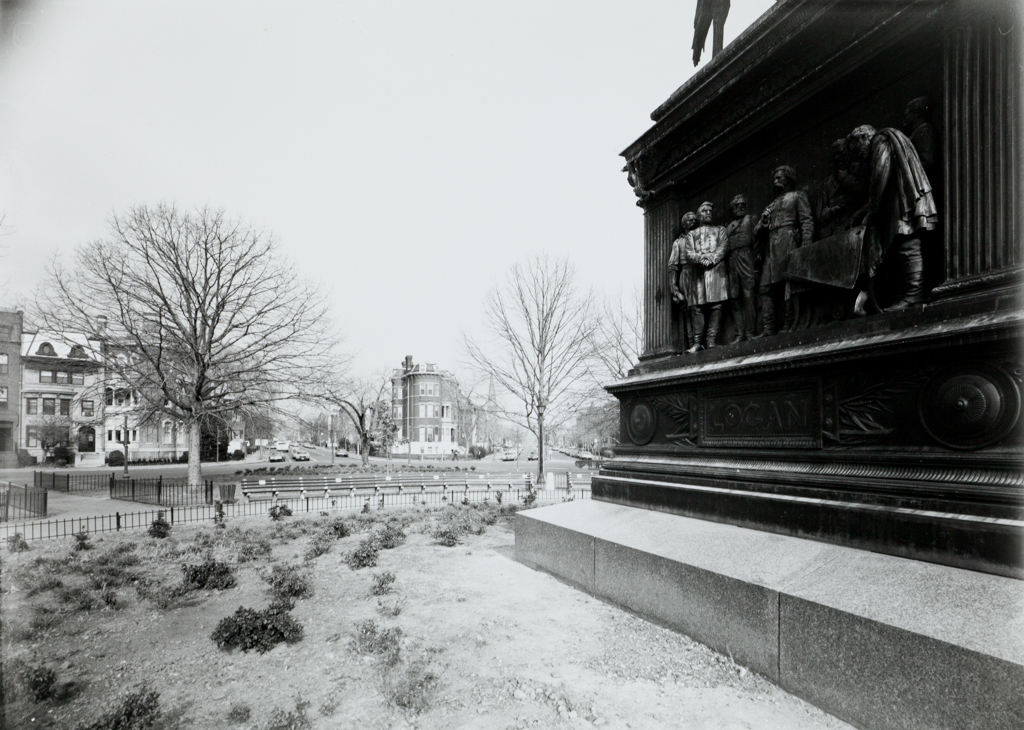
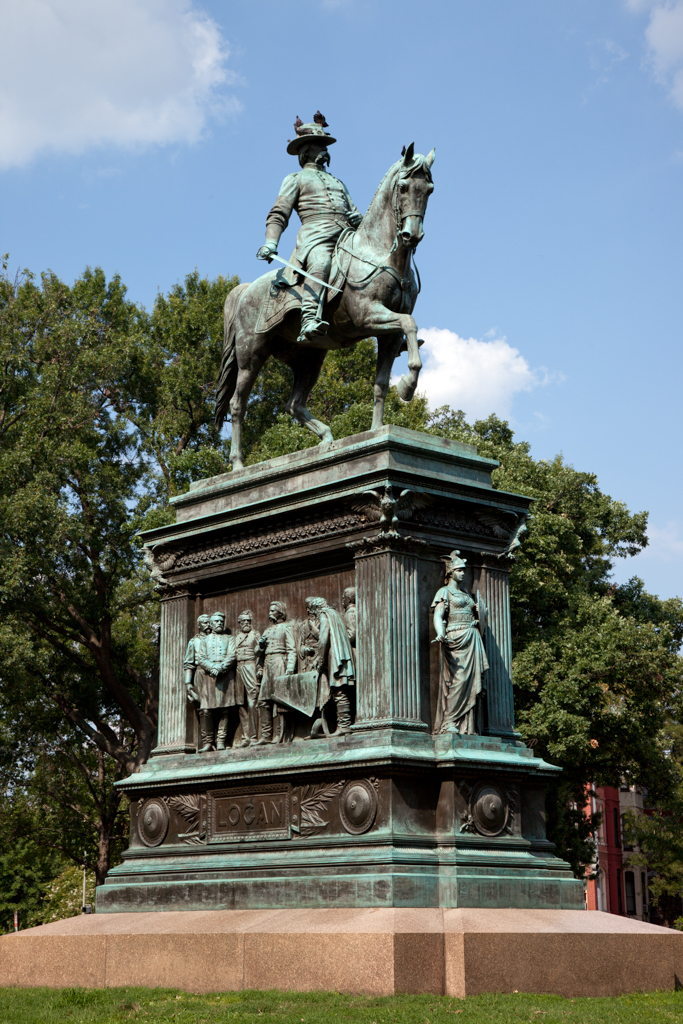
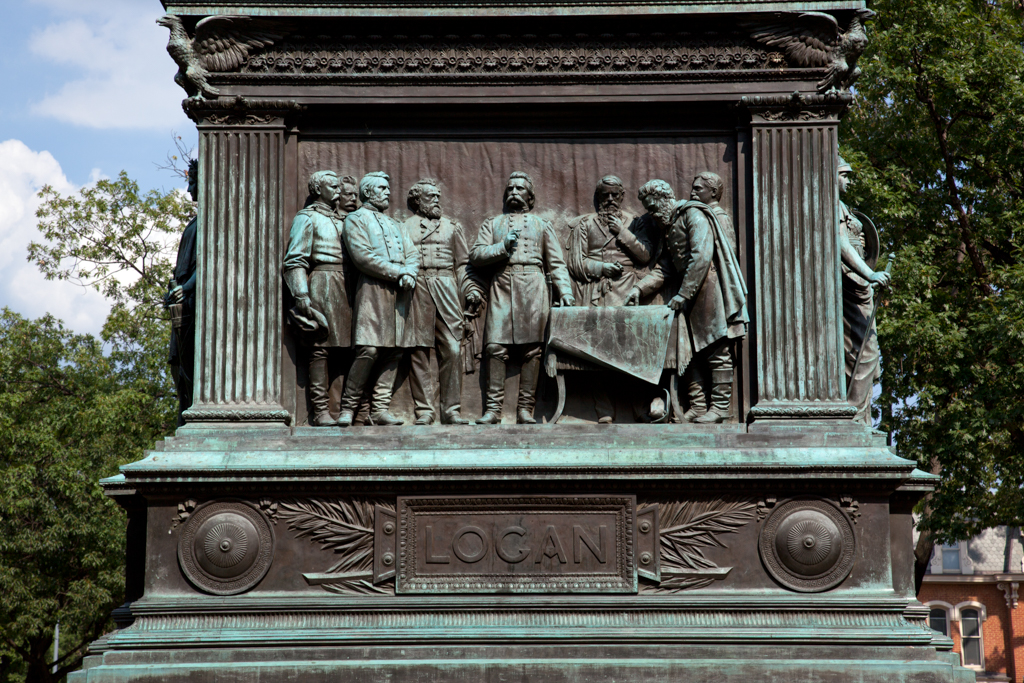
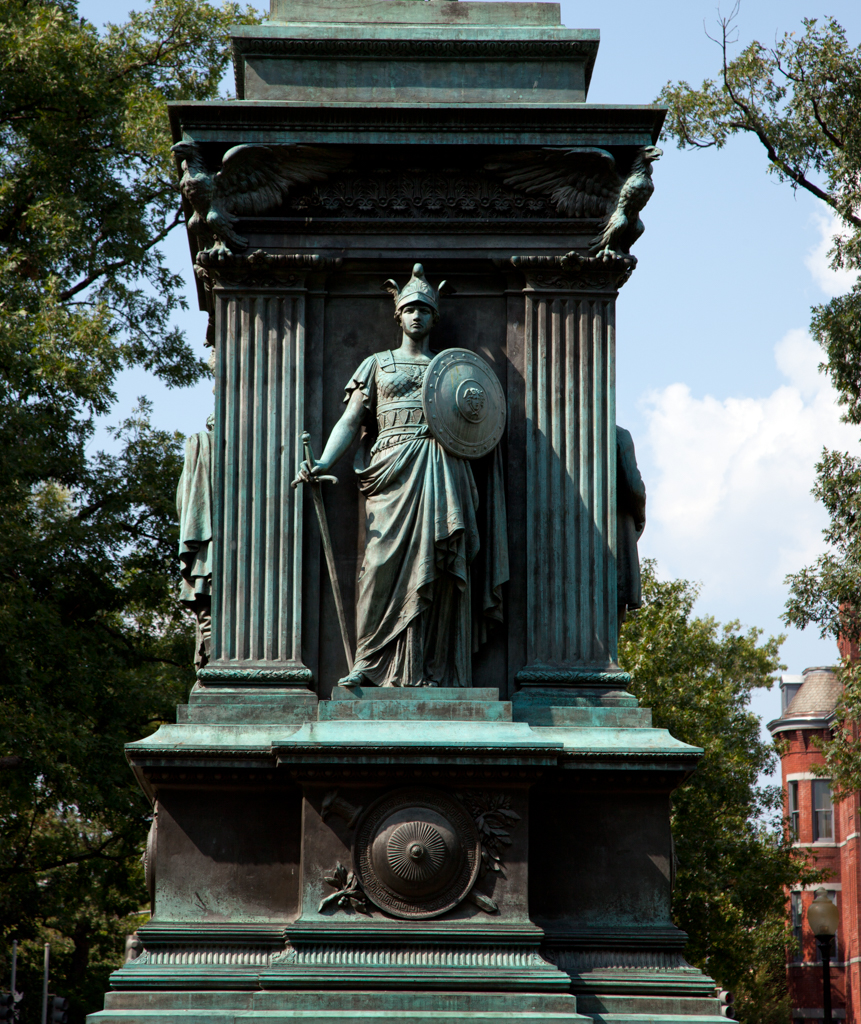
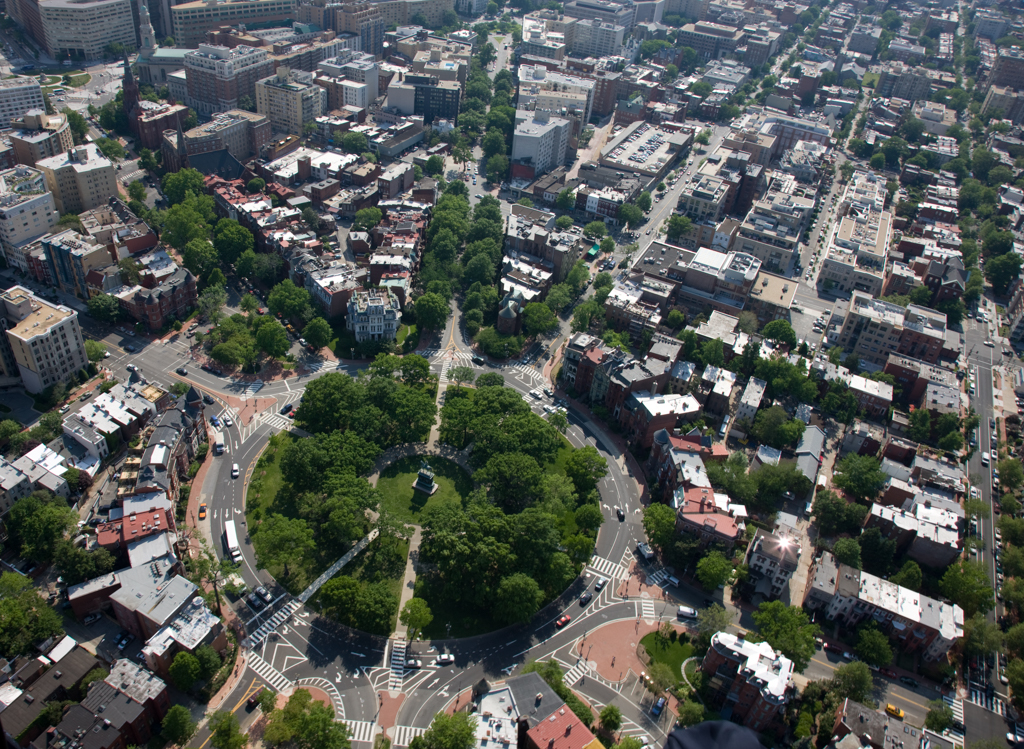
Iowa Circle, renamed Logan Circle in 1930, was not formally landscaped until 1874, although it had been designated on L'Enfant's 1791 plan of Washington. The bronze statue of John A. Logan, a Civil War general, was dedicated on 9 April 1901. It was the second collaboration of the New England sculptor Franklin Simmons with Richard Morris Hunt, although the Parisian-trained American architect had previously designed the bases for several sculptural works including the Statue of Liberty in New York Harbor and an elaborate gateway entrance to Central Park. The Logan monument is unique in Washington in being entirely of bronze; Hunt's Italian Renaissance—inspired base has at least as much prominence as the equestrian figure it carries. High-relief panels on the two flanks depict events in Logan's career (criticized as inaccurate in Washington newspapers at the time), while single figures on the ends are allegorical. All are set within a densely architectural framework reminiscent of Renaissance tombs, rectangular boxes decorated with a full complement of architectonic sculpture derived from the column and all its parts, emphasizing in this case multitiered pedestal and base moldings and an entablature with spread-winged eagles at the corners.