

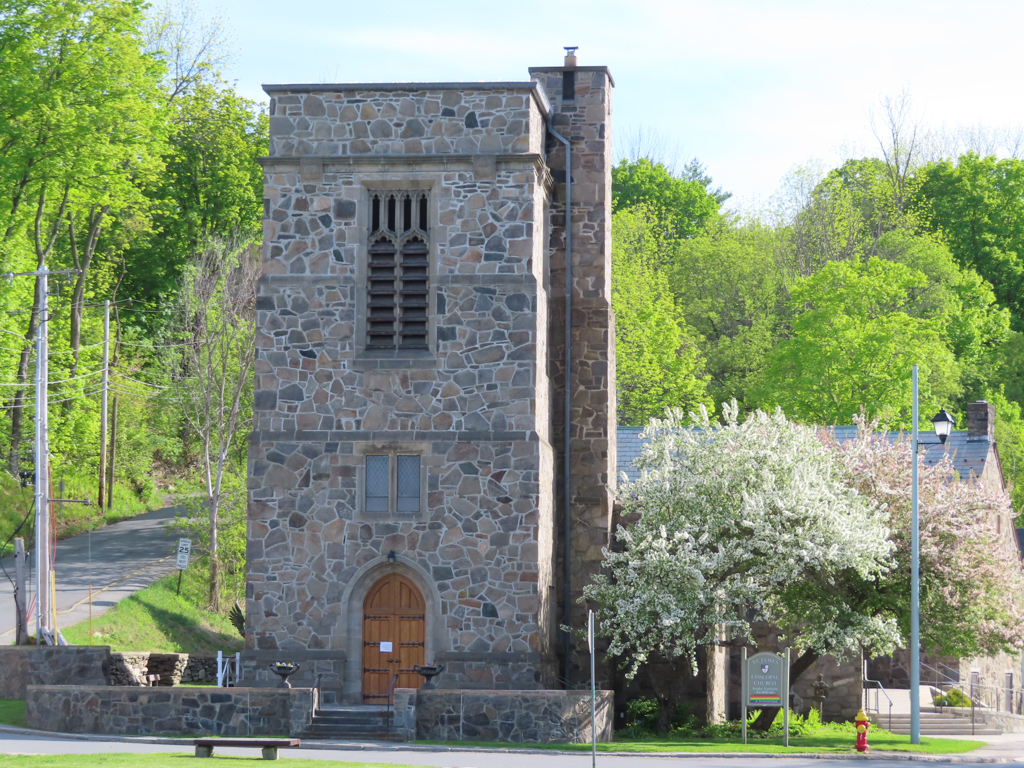
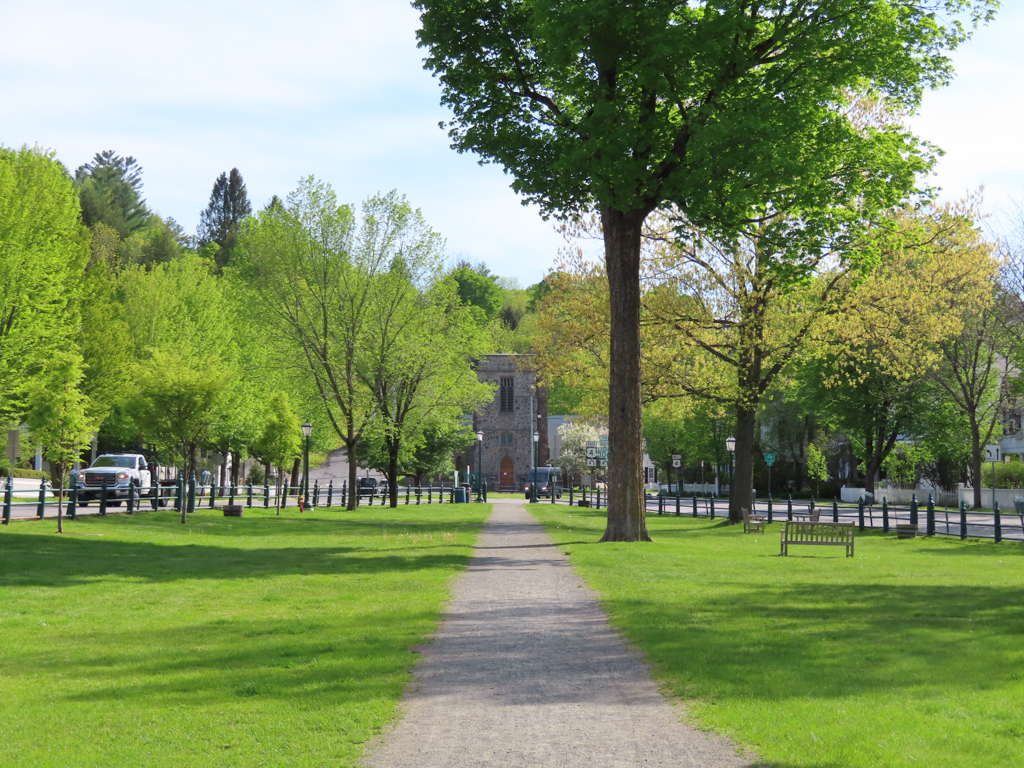
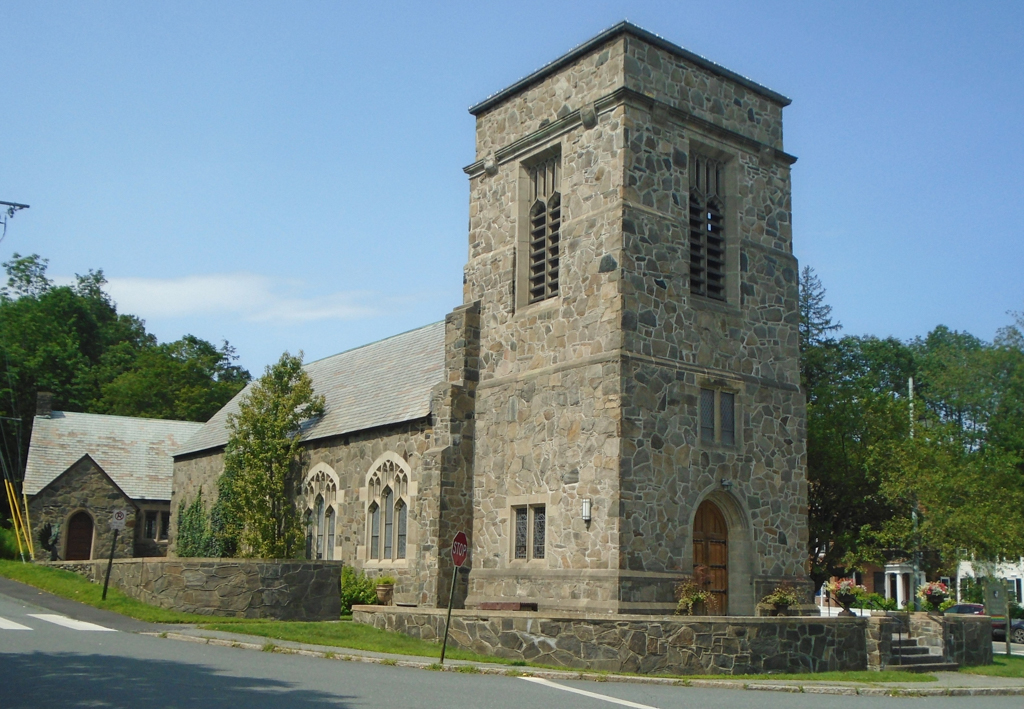
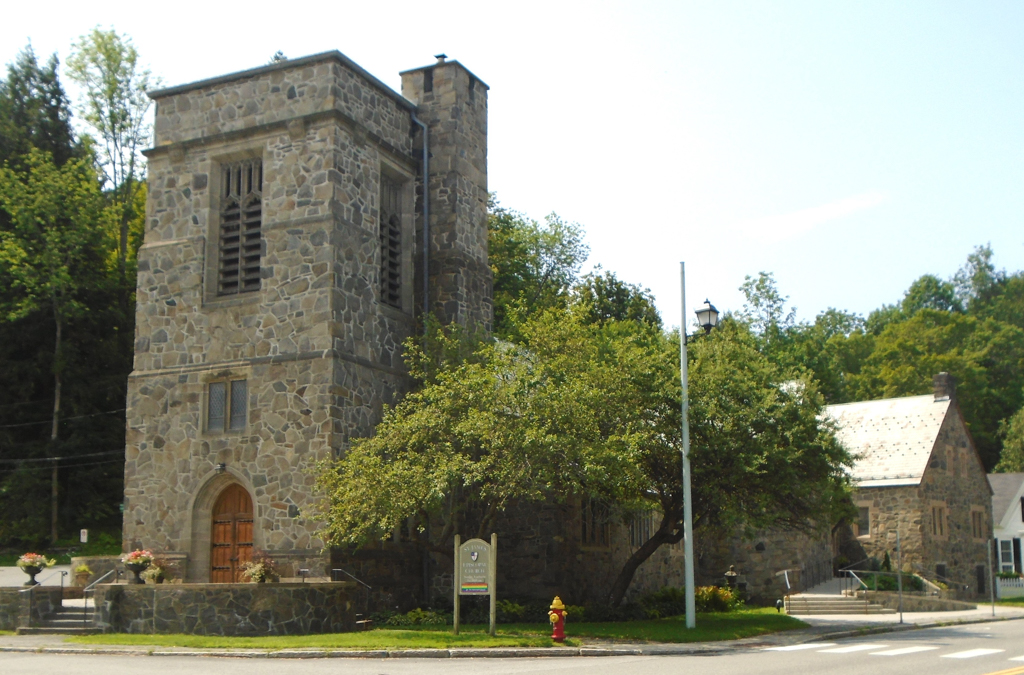
This handsome stone building replaced Vermont's second-oldest Gothic Revival church, bringing that movement into the twentieth century in an appropriate fashion. Organized in 1826, Woodstock's Episcopal parish had planned to construct a stone church overlooking the west end of the green, but unstable soil prompted them in 1827 to build in wood instead. Eighty years later the prospering parish engaged the nation's foremost Ecclesiologist architects to help them realize their original dream. Boston-based Ralph Adams Cram, a follower of A. W. N. Pugin's architectural theory and practice, thought of Gothic more as a creative principle than a mere style. He believed it could capture the spirit of evolve in contemporary ways. While known best for great collegiate and urban projects, Cram made some of his most significant interpretations of the Gothic in modest parish churches like St. James. In this small, simple, but grand building one senses Cram's masterful compositional skills. A stocky stepped tower with weighty parapet and oversized louvered belfry addresses the green then spreads through stepped buttresses to join a simple sanctuary behind. The forms evoke English parish churches, while the traceryfilled square-headed openings of windows and belfry recall fifteenth-century Collegiate Gothic. Yet nothing is a literal copy, and the materials in which the forms are realized recognize modern construction. This may reflect the attitudes of Cram's partner, Bertram G. Goodhue, who was responsible for much of the firm's detailing. The walls are faced with random stone and the belt courses, cornices, buttress caps, window frames, and tracery are of molded concrete. While innovative in their techniques, the team also shared an Arts and Crafts sensibility as it had evolved out of Gothic Revival and strove to include handworked elements in their projects, including a set of decorative panels on the interior. These were presented to the Vermont congregation by its sister church of St. Mary Magdalene in Woodstock, England.
St. James Episcopal Church
1907, Cram, Goodhue and Ferguson. 5 Church St., Woodstock village