

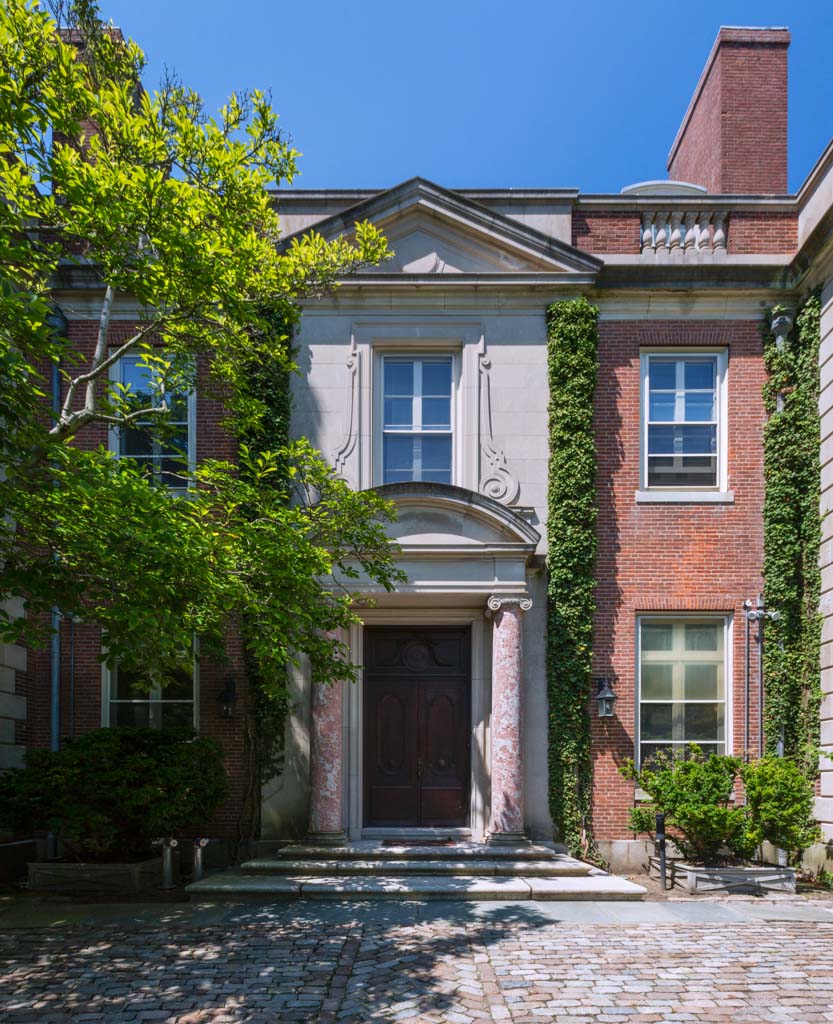
Built across the street from one another, for a sister and brother associated with the important Brown and Sharpe machine tool industry, these two houses—the earlier Neo-Tudor, the later of eighteenth-century French inspiration—illustrate the capabilities of Parker, Thomas and Rice in accommodating the eclectic desires of early twentieth-century patrons. Both houses have fine interiors, which are substantially retained on the ground floors (especially in the Henry Sharpe residence), albeit without the furniture that completed the ensemble. Ellen Dexter Sharpe's house, now a dormitory, has a large yet well-designed and well-sited wing gently added at the rear. Both properties included extensive gardens, Ellen Sharpe's now fragmentary, but, appropriately, Mary Elizabeth (Mrs. Henry) Sharpe's substantially intact. She was an avid gardener who made many garden and landscape benefactions to Providence and the state, including an active role in their design; among them were most of the landscaping for Brown University and most of the initial financing for India Point
Rochambeau House, Brown University
1928, Parker, Thomas and Rice. 87 Prospect St.