

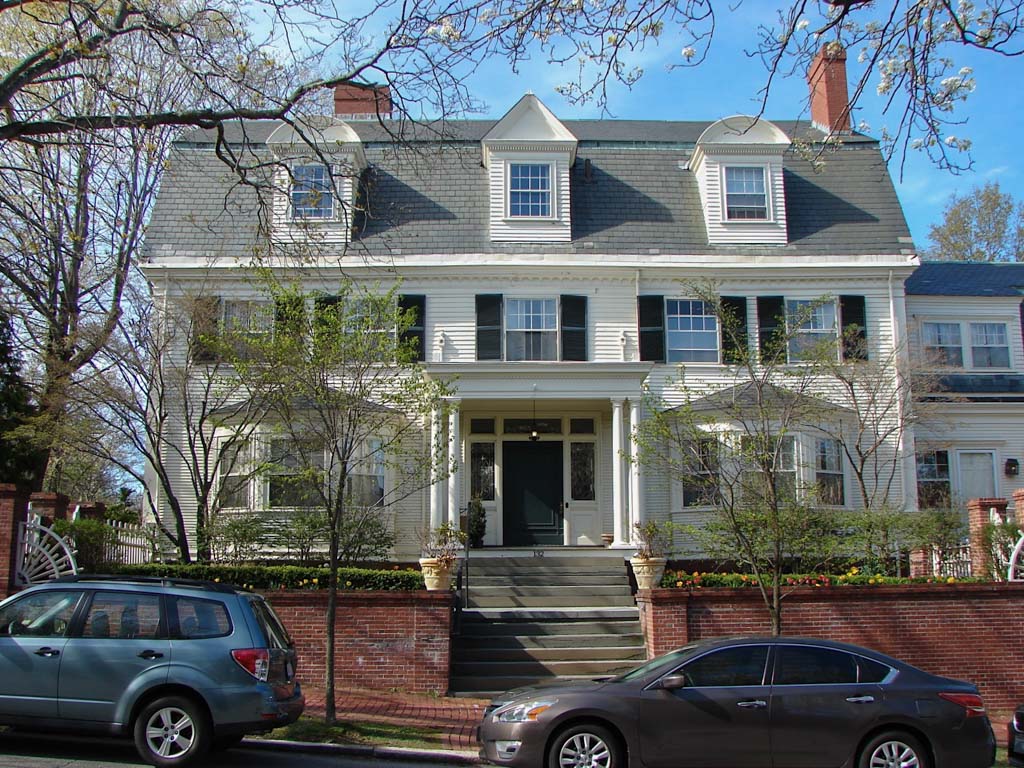
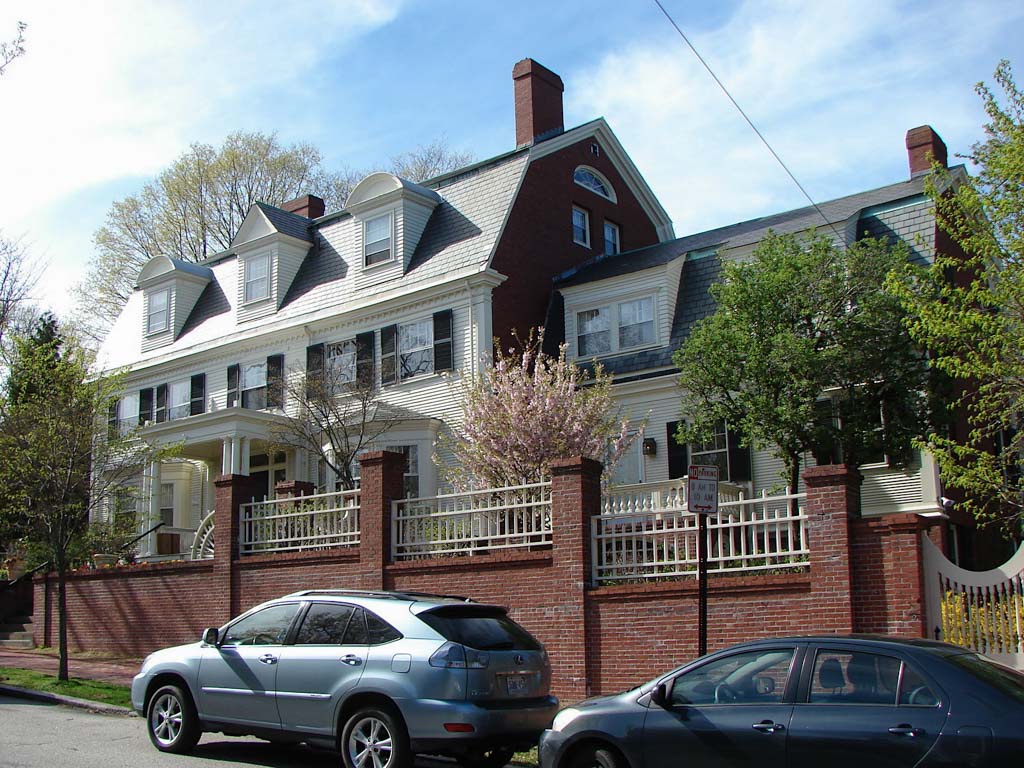
Of the three large houses in Rhode Island which most conspicuously announced the social “arrival” of Neo-Colonial as a style, only the Stephen Metcalf House survives; the others were McKim, Mead and White's H. A. C. Taylor House (1882–1886) in Newport and Stone, Carpenter and Willson's Henry J. Steere House (1886) in Barrington. It was also the first grand house in Providence thoroughly committed to the style, notwithstanding its un-colonial horizontality, which characterizes other houses at this phase of the Colonial Revival. In contrast to the pretentious quality of the other two houses, the relative plainness and low spread of this gambrel-roofed mass may have encouraged a relaxed, expansive version of the style even for luxurious houses. However, the bay windows on the ground floor, the aggressive spread of the double-columned porch, the width of the windows upstairs, and the assertiveness of the dormers are all far from “colonial.” The magnificent terracing of the house, lifting it above its site, belies the first impression of its relative modesty. So does a circuit around the property, which discloses the extensive service areas extending from the conventional gambrel-roofed core. Whereas the first generation of Metcalfs to head the Wanskuck Mill had lived close to the factory, the second- generation head of the corporation removed his family to College Hill. As the family gave much to RISD, so they also made a gift of this house, which has served as the presidential mansion for RISD.
RISD President's House (Stephen O. Metcalf House)
1889–1891. Andrews, Jacques and Rantoul. 132 Bowen St. (corner of Prospect St.)