

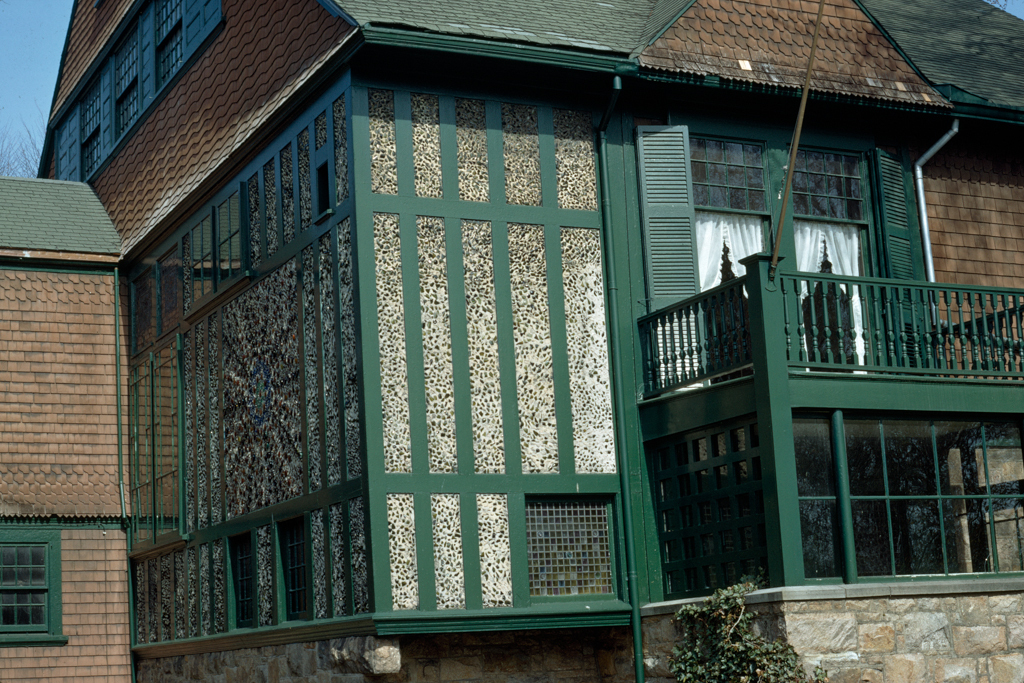
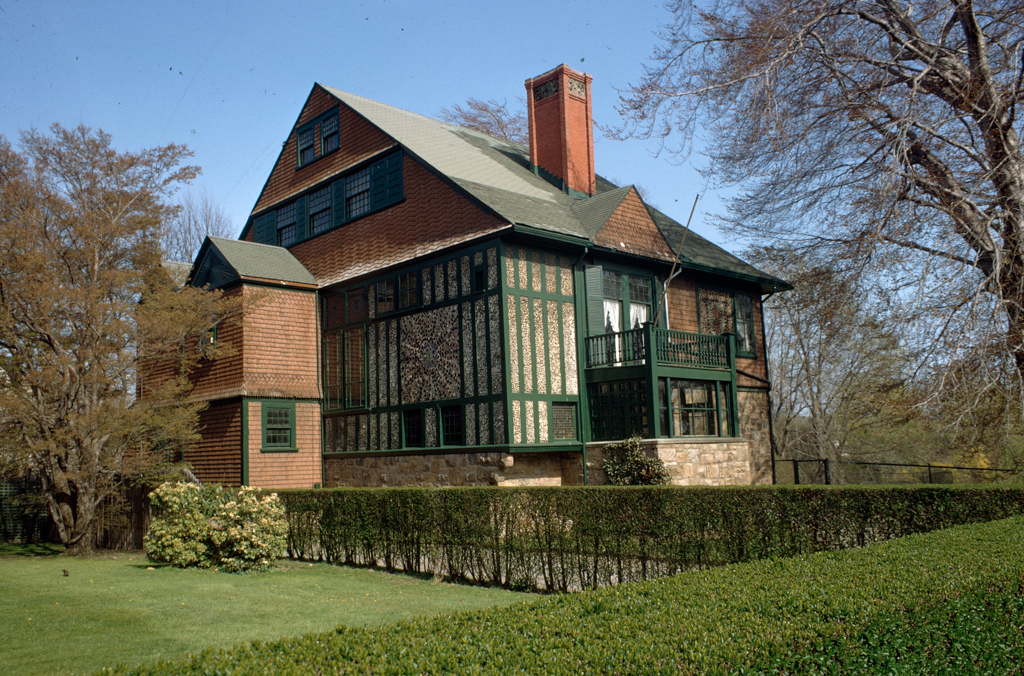
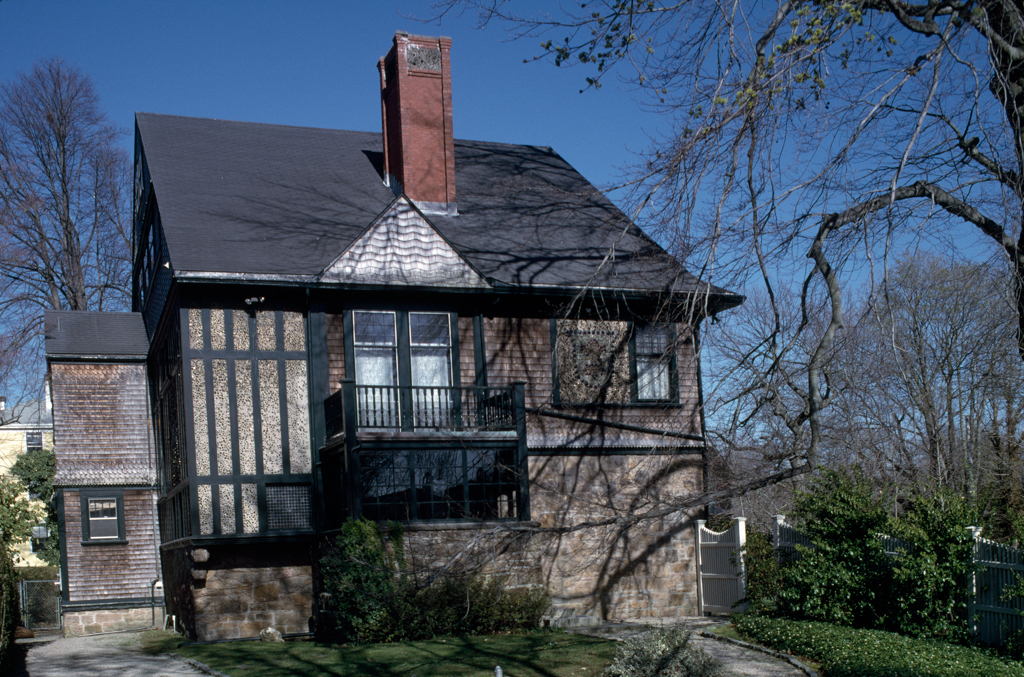
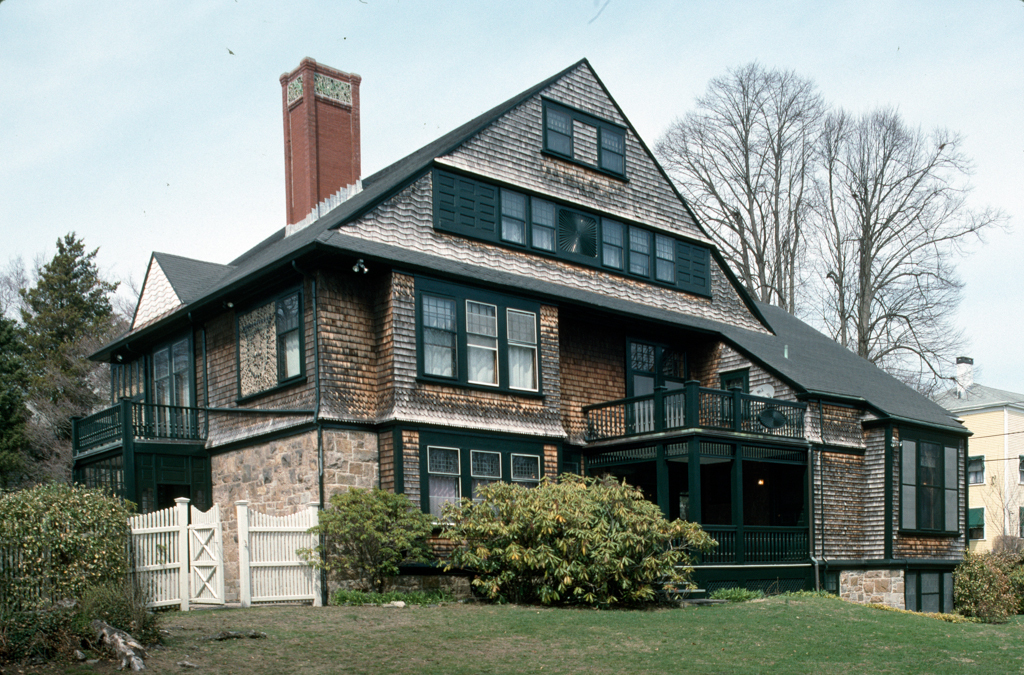
This is less an exercise in creative massing than in surface ornament. Viewed on Sunnyside Place, the Tilton House is covered with a spectrum of materials and patterns that ranges from the foundation course of rough-hewn granite to upper stories covered in wood shingles cut into wave, notch, and sawtooth motifs, all contained within the simple shape of a large gable. On the north and west elevations, an irregular composition of extraordinary decorative stucco panels interrupts a band of half timbering and windows. In the panels are
The present small entry porch seems appended as an afterthought to the richly ornamented west wall, but old photographs show its original form to have been a two-story, gabletopped projection with turned spindle screens on the second level. This would have augmented the already ornately textured facade, affording greater integration with the main block. From the street, the Tilton House seems quite small, but this elevation is the narrow end of a house which stretched the width of its lot along its north edge, leaving the south front open to windows and porches facing a private lawn. The firm repeated this formula for many of their smaller houses at this time, including four examples on Red Cross Avenue.
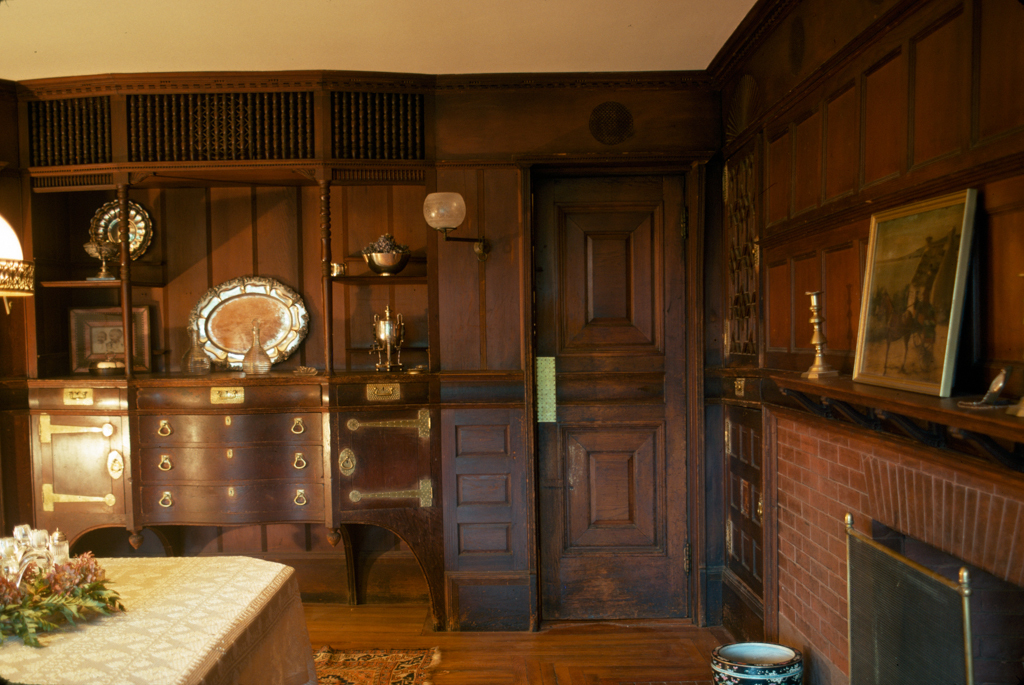
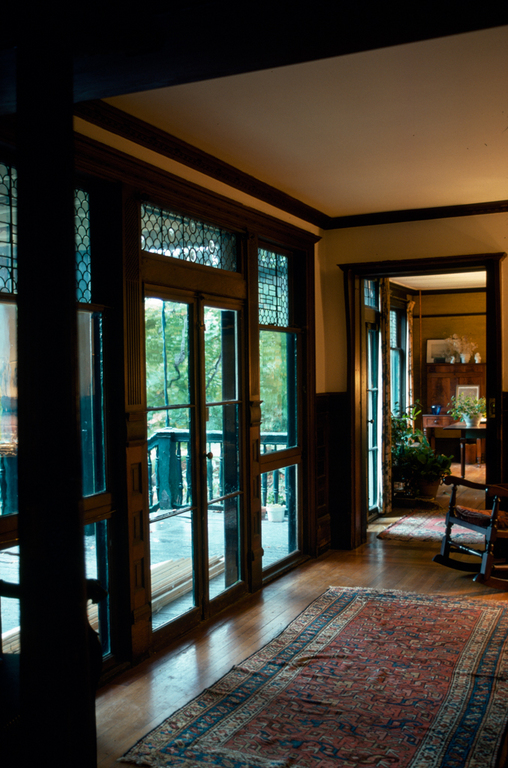
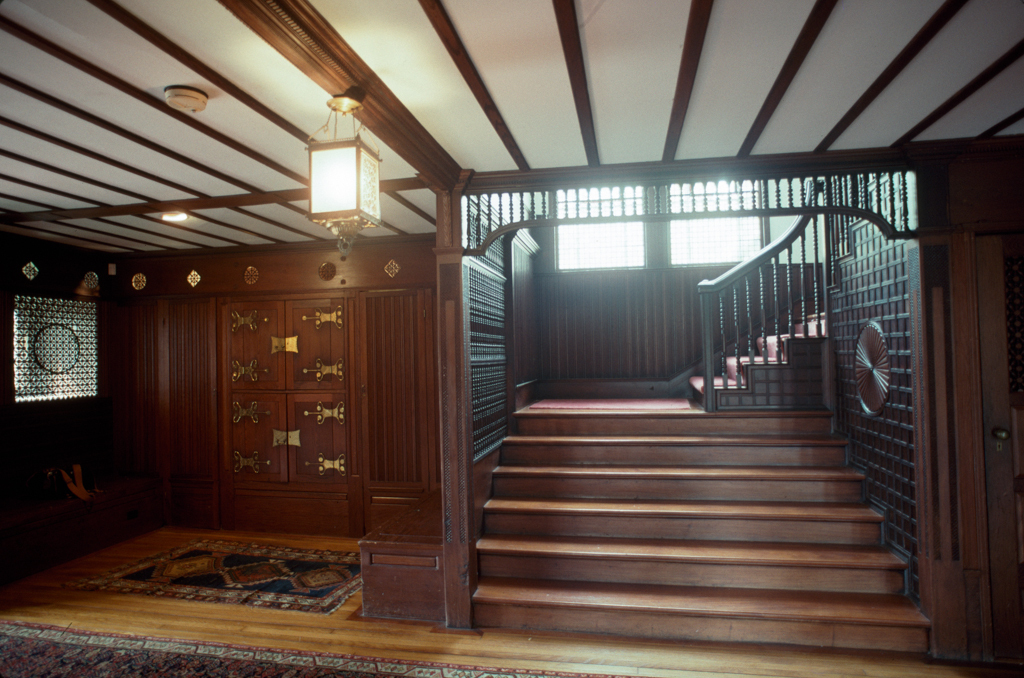
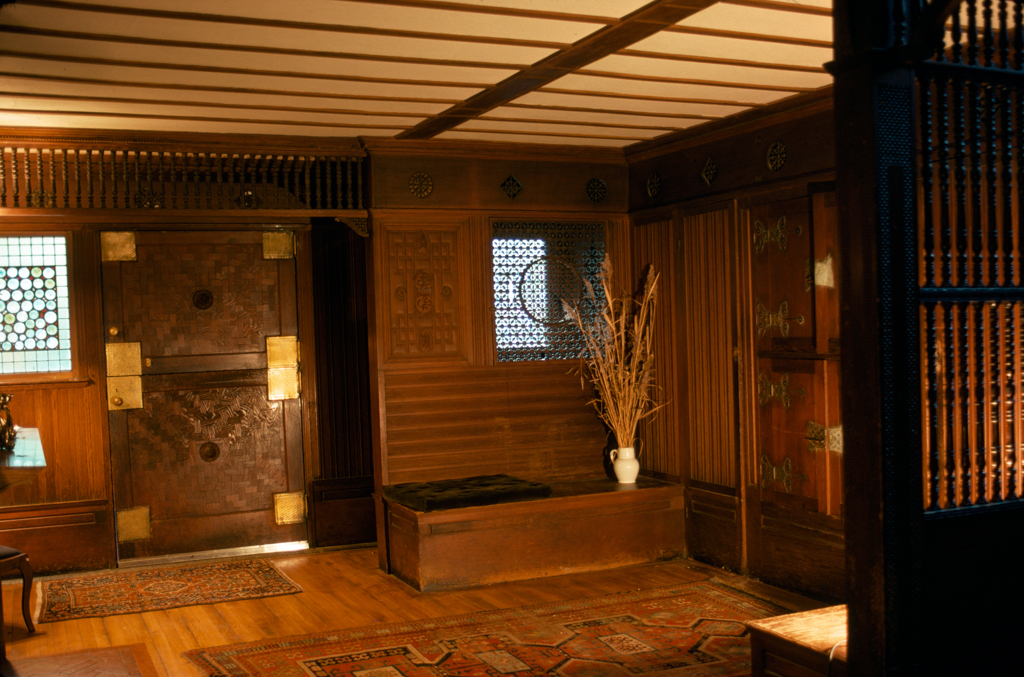
This house contains some of the best-preserved interiors of its period (not open to the public), in which influences from American colonial and Japanese design and even from India combine to complement a diverse palette of materials, textures, and color outside.