

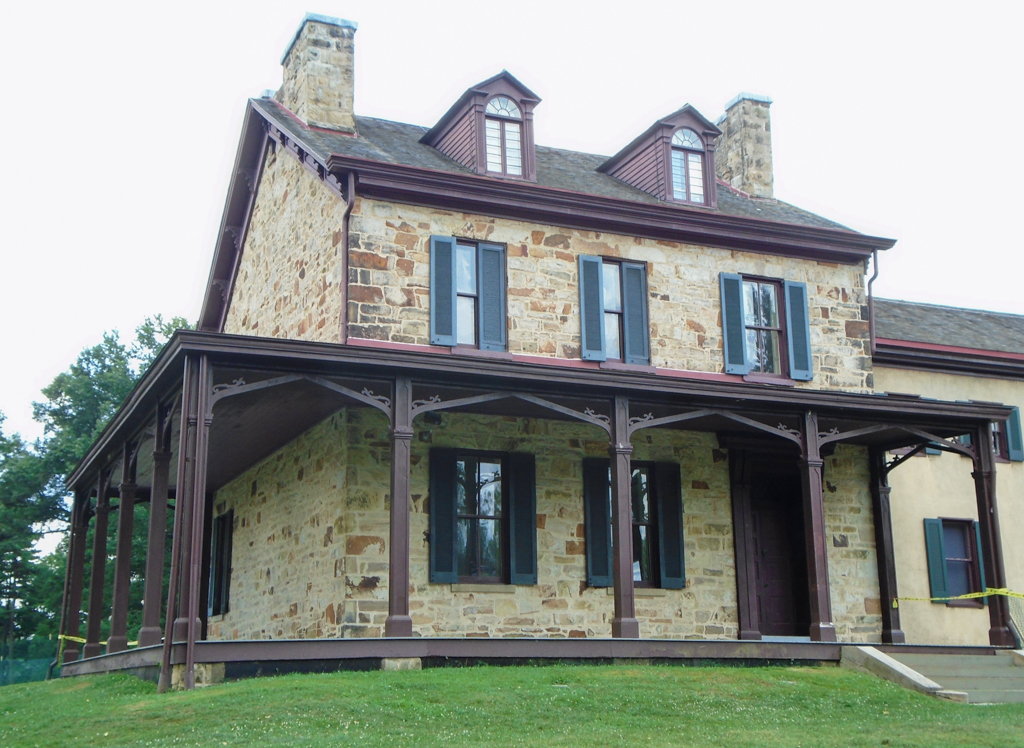
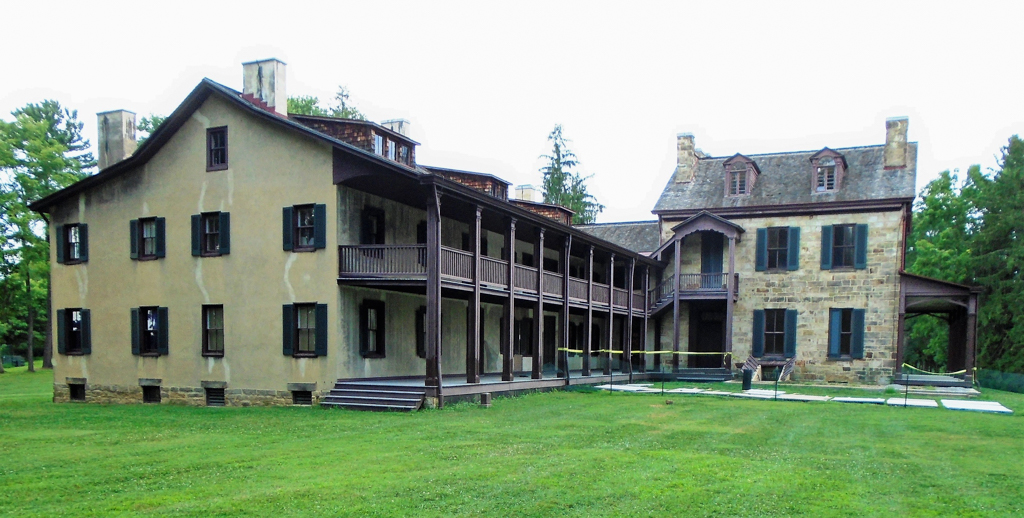
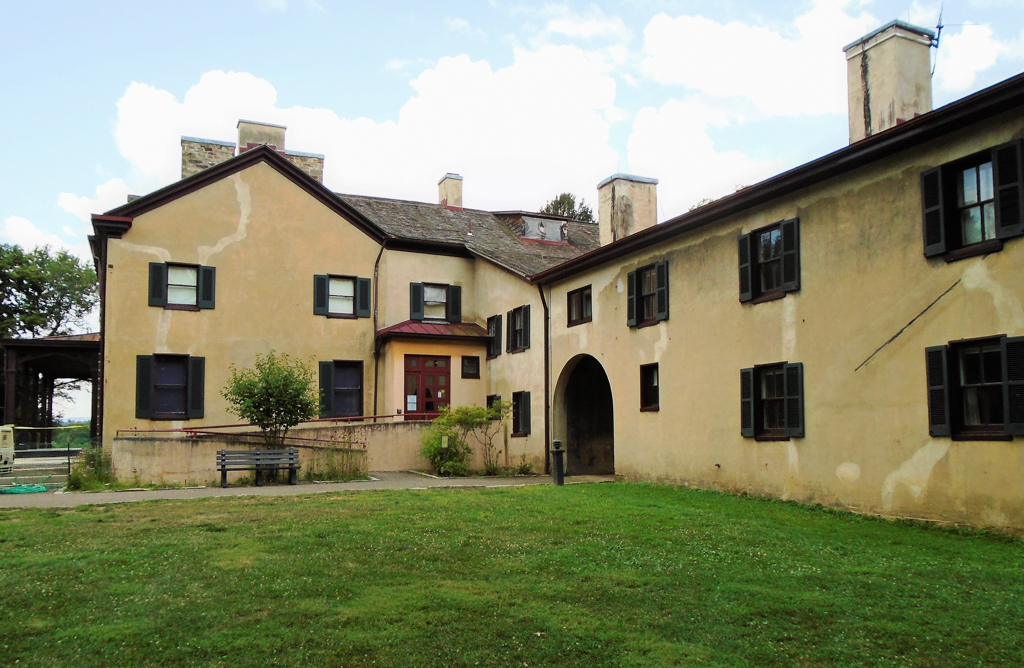
Friendship Hill represents life on the early frontier and during the coal boom years at the beginning of the nineteenth century. The house was commissioned by Swiss immigrant Albert Gallatin (1761–1849), who rose from local legislator to become secretary of the treasury under presidents Thomas Jefferson and James Madison. Gallatin reduced the national debt and arranged financing for the Louisiana Purchase, the Lewis and Clark expedition, and the building of the National Road. This rambling house was built by local craftsmen in five stages, three during Gallatin's forty-six-year tenancy, and two in the late nineteenth century. Gallatin built a modest side-hall plan brick house in 1789, with one large room on the first floor and one bedroom upstairs. After the death of his first wife and his involvement with national politics, he spent little time on this Fayette County estate. Following his second marriage, he added a two-story clapboarded addition in 1798, one room downstairs and one upstairs, to the north side of the original house. A second addition of 1821, built by Scots-Irishman Hugh Graham and supervised by one of the two sons from his second marriage, Albert R. Gallatin, included a sandstone kitchen to the west and a grand two-over-two house of three bays to the northeast. He apparently was less than satisfied with the aesthetics of either, saying in an 1823 letter to his daughter Frances that “the outside of the house, with its portholelooking windows has the appearance of Irish Barracks, whilst the inside ornaments are similar to those of a Dutch Tavern.” In 1825, his family, tired of provincial life, moved east. Gallatin sold the house in 1832 to Swiss immigrant Albin Mellier and moved to New York City, where he remained active in business and politics. The Charles Speer family added a formal dining room and upstairs bedrooms in 1895 that linked the 1798 and 1821 additions. And between 1901 and 1903, a brick bedroom and servants quarters were added.
The National Park Foundation acquired the house in 1979, and it was restored by the National Park Service in 1984 to its early-nineteenth-century condition. Nearby coal mine tunnels have been filled to avoid subsidence (the sinking of land above an abandoned mine), and later alterations to the house were removed. The Park Service has incorporated museum exhibition spaces into the house with little disruption to its original outlines.