

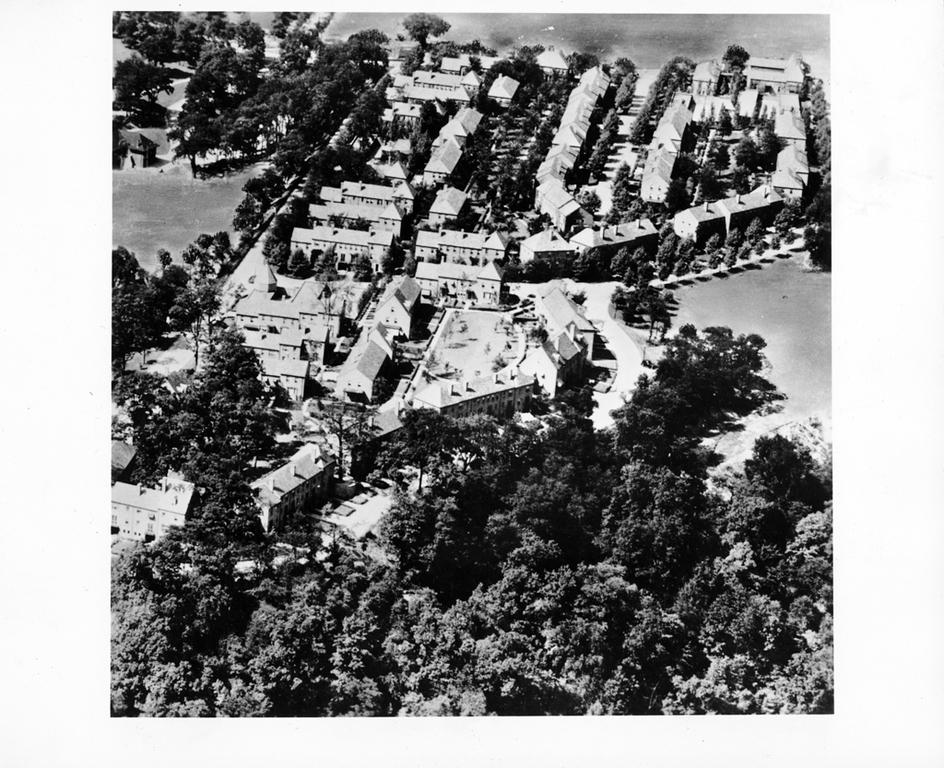
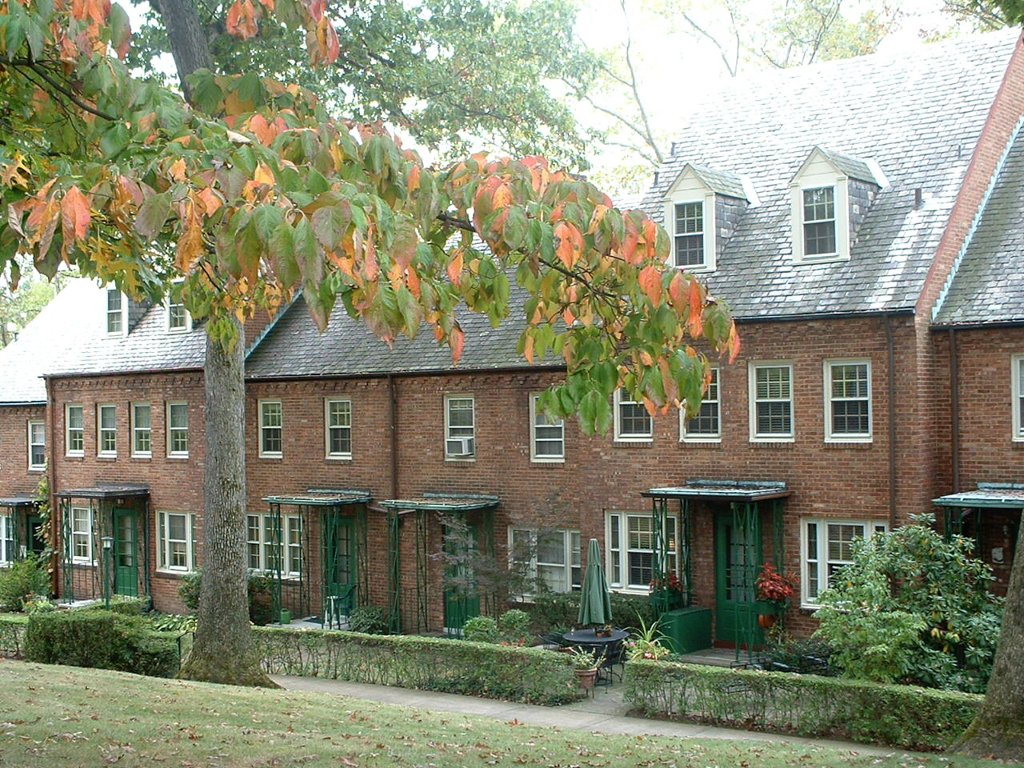
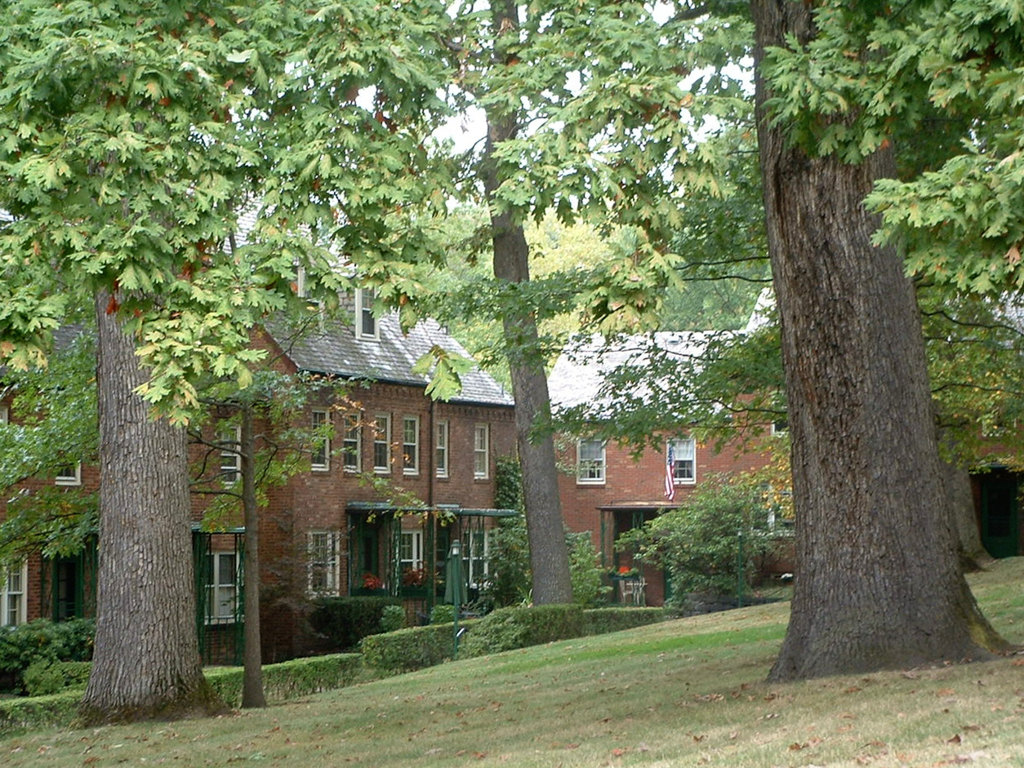
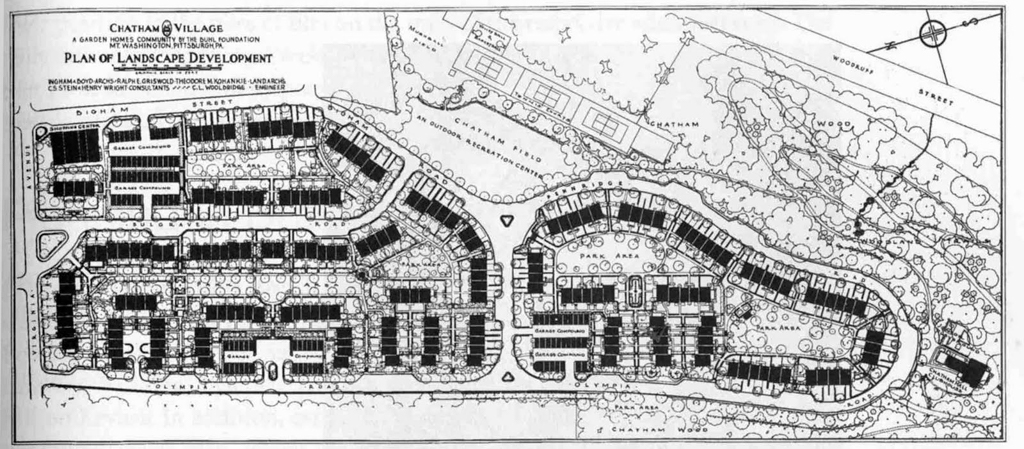
The Buhl Foundation, in its brochure for the project, promoted this for-profit housing as the “First large scale, planned, residential community built from the ground up in one operation to be retained in single ownership and managed as a long-term investment.” Chatham Village always had a national, and even international, impact out of proportion to its rather modest dimensions, deriving in part from the names of Stein and Wright, acclaimed planners of Sunnyside Gardens in Queens, New York, and Radburn, New Jersey. More notable is the complex's highly irregular contour; rarely had low-cost housing
The complex fits 216 families on sixteen acres: 129 row houses date from 1932 and 68 from 1936; a three-story, 19-unit apartment building went up in 1956. The planners left four acres for playgrounds and commons, plus twenty-six adjoining acres of untouched woodland. Rented from the Buhl Foundation until 1960, the homes then became a cooperative and were privatized. Nonetheless, the complex retains strict restrictions on upkeep and changes.
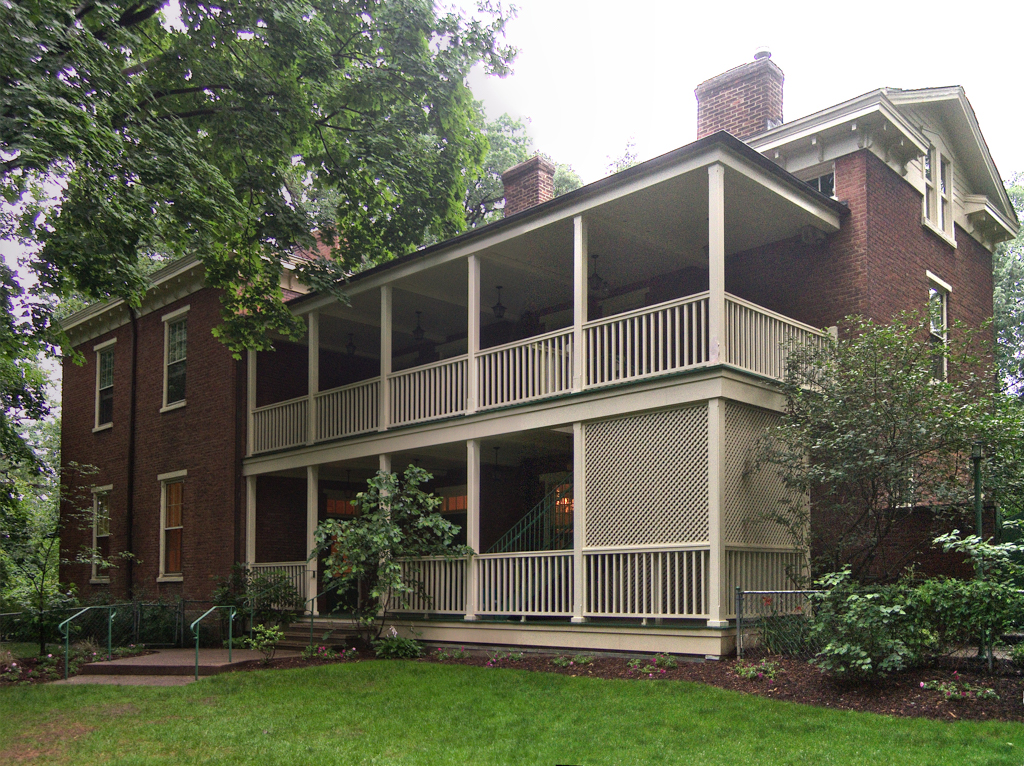
At the south end of the development the Greek Revival former Thomas James Bigham mansion of 1849 is now a community center named Chatham Hall. Its original owner and builder was an avid abolitionist, newspaper publisher, and politician whose house was used as part of the Underground Railroad.