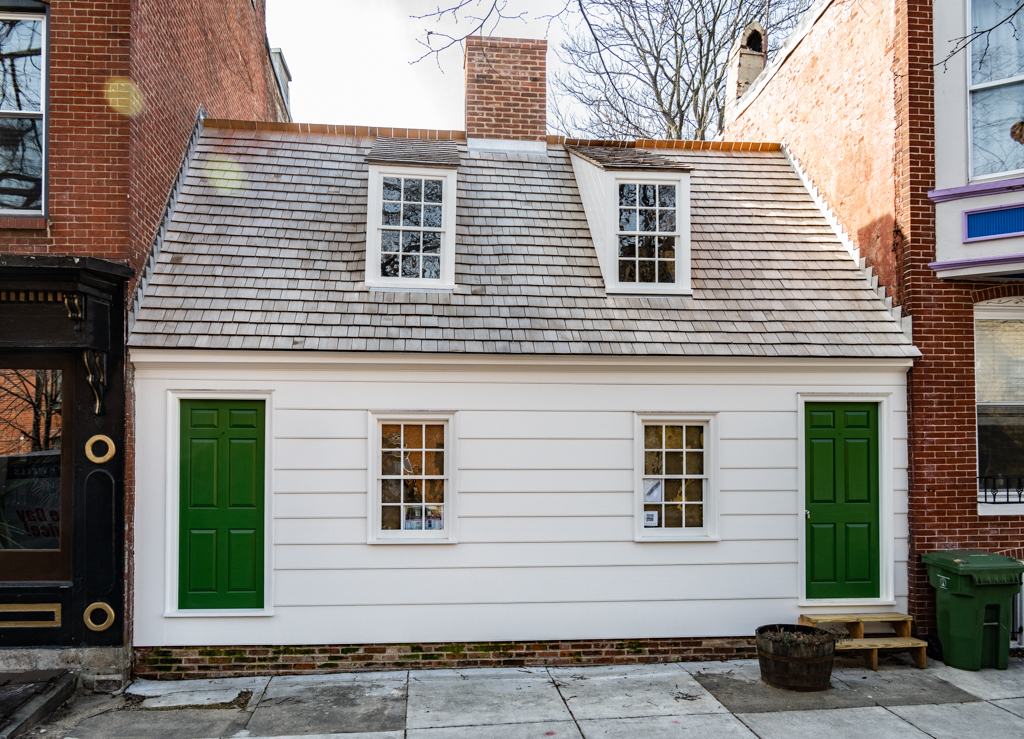
The double house at 612–614 and the single at 604 are rare survivors of a once common eighteenth-century dwelling form inhabited by Baltimore’s working class. Of frame construction with partial brick nogging, the units are only a story-and-a-half in height and two-bays wide, measuring a modest 12 × 16 feet. They consisted of a single room with a fireplace and winder stair in one corner that led to a loft above, lit by a single dormer window. As frame structures, they predate the city’s 1799 ordinance that prohibited the construction of such residences, then determined to be a fire hazard. According to city directories, they were occupied during the 1830s through the 1850s by African American freedmen and their families; the men were typically employed as ship caulkers working in the yards located just a few blocks away. The double house is quickly deteriorating, while the single house has been restored.

