

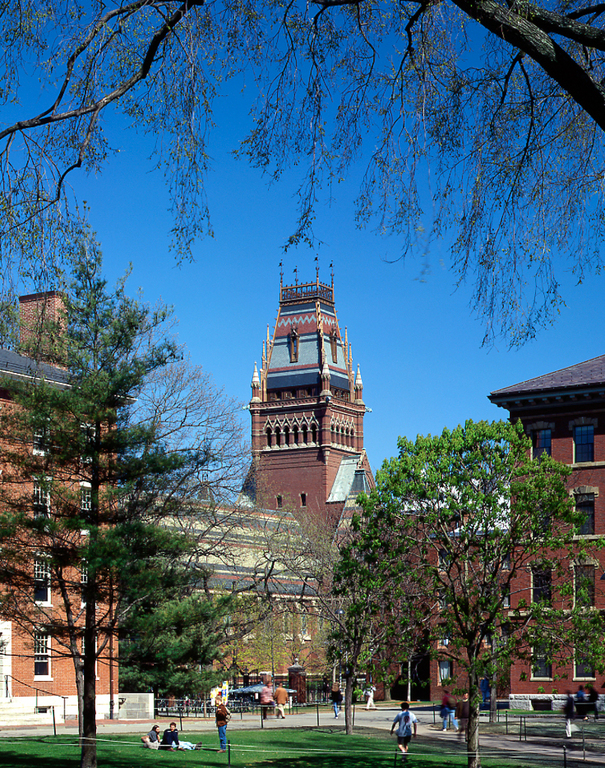
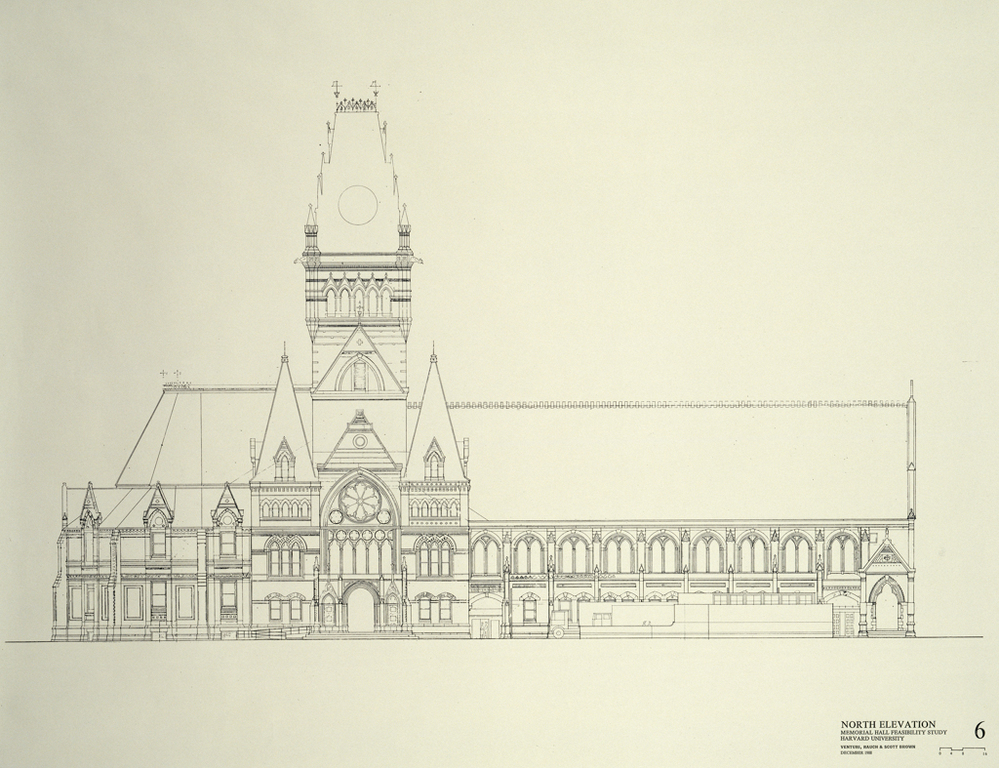
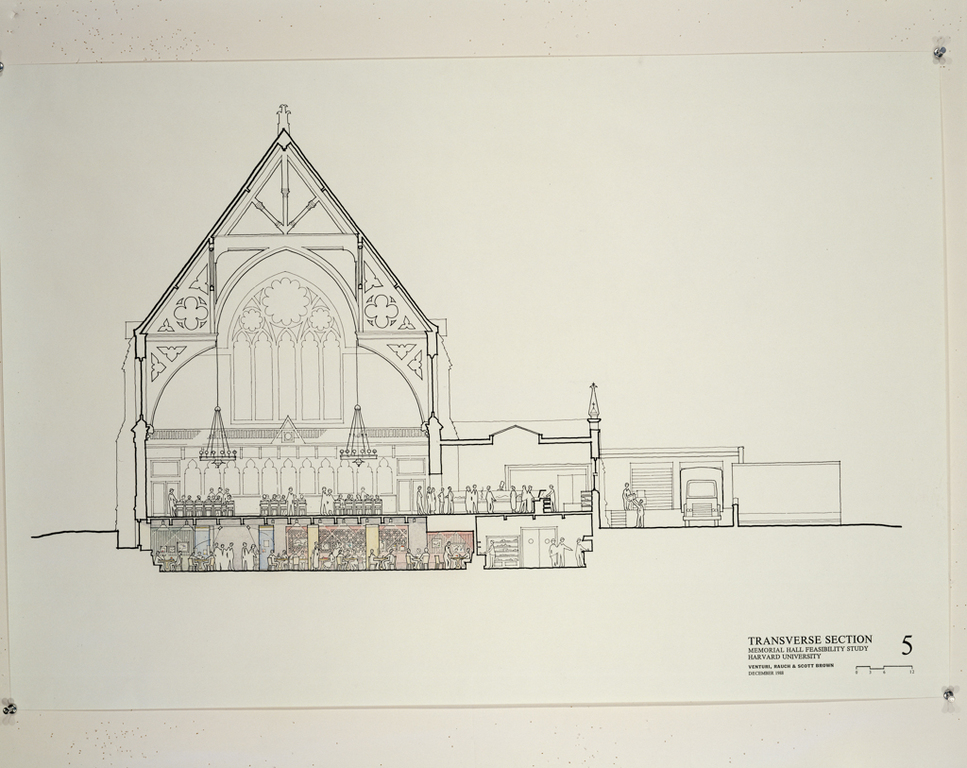
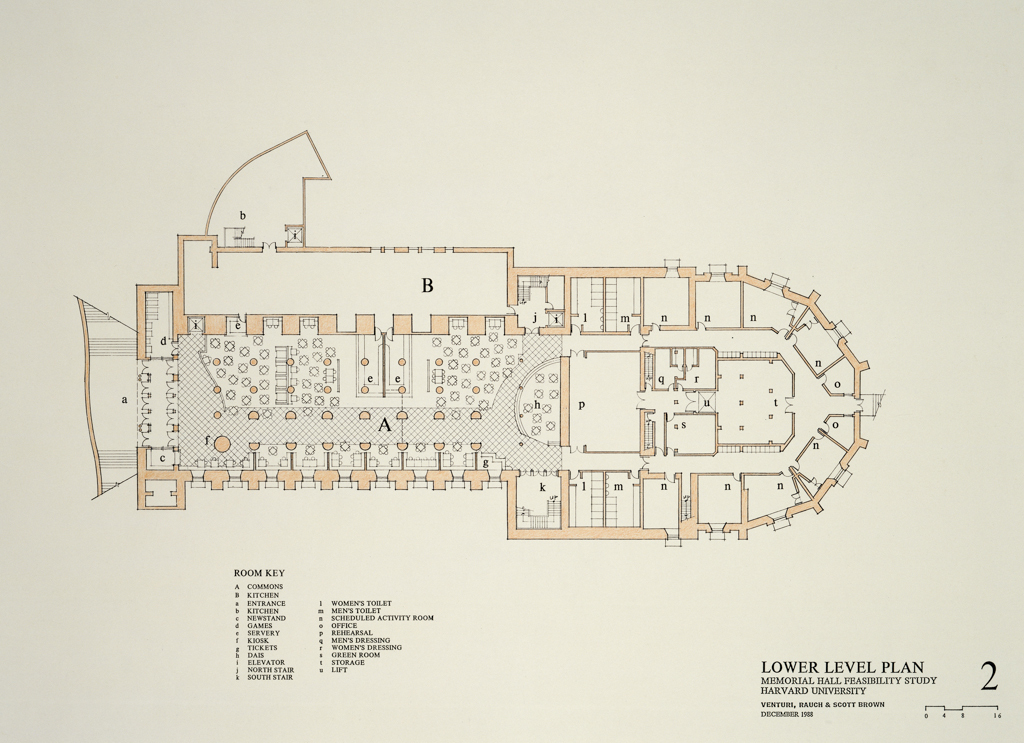
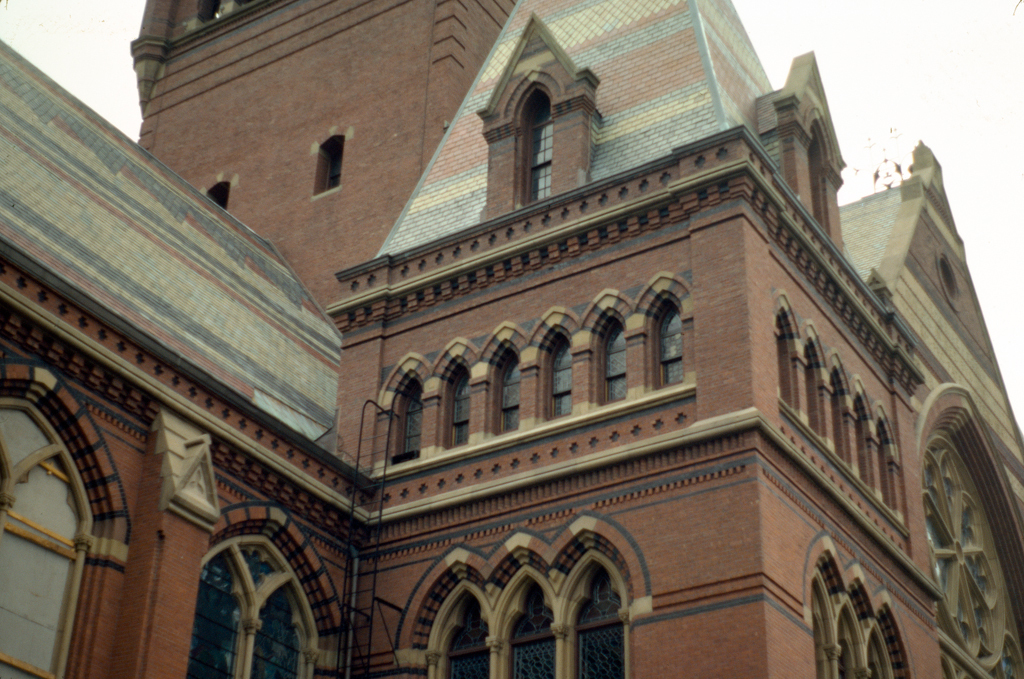
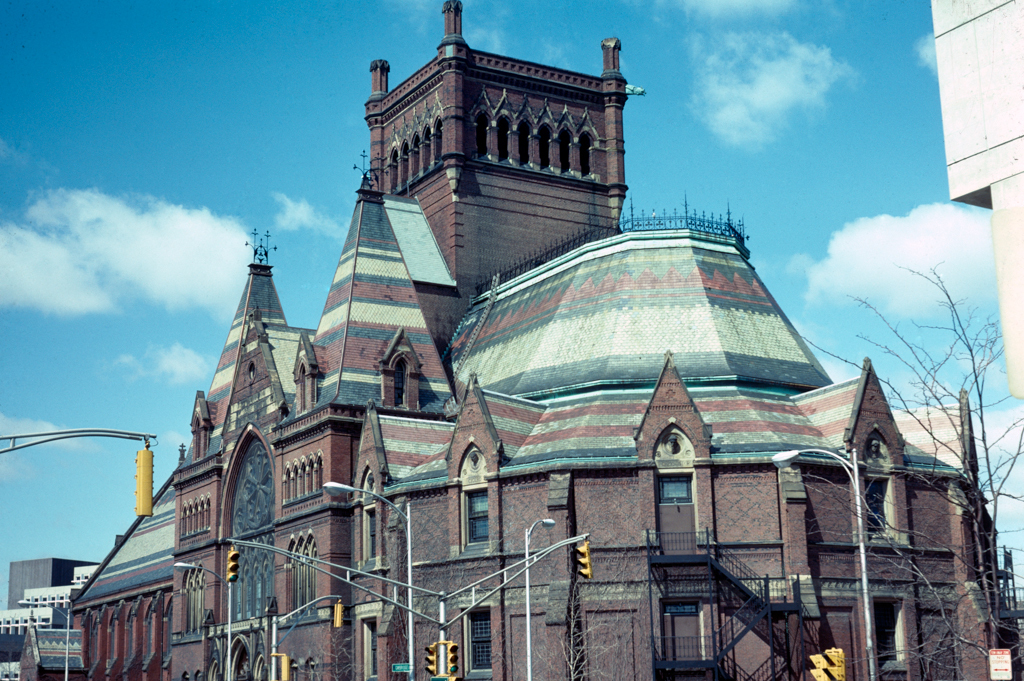
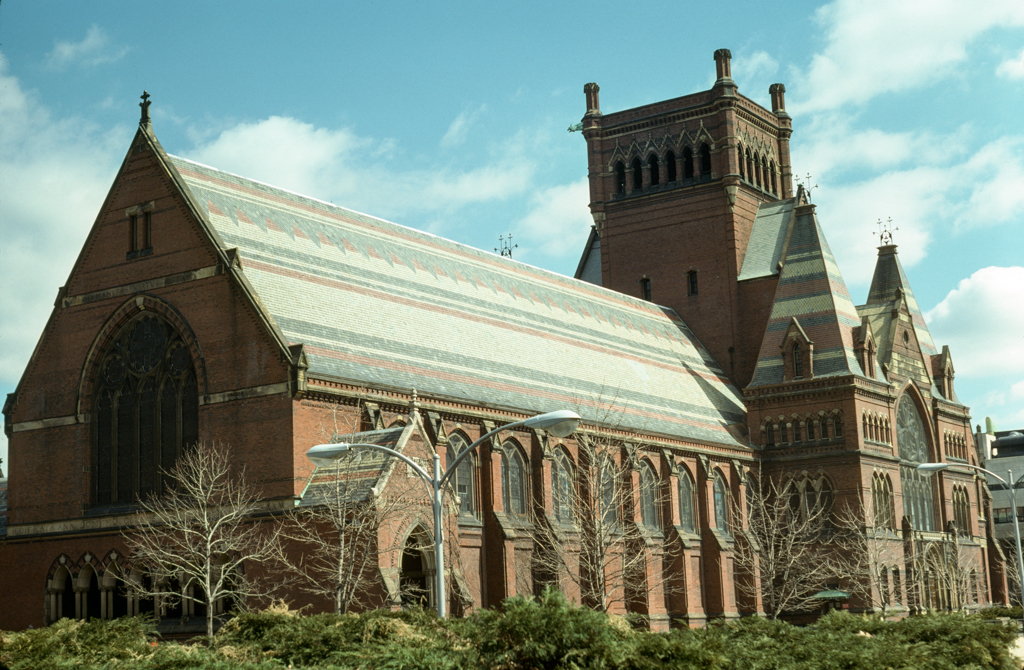
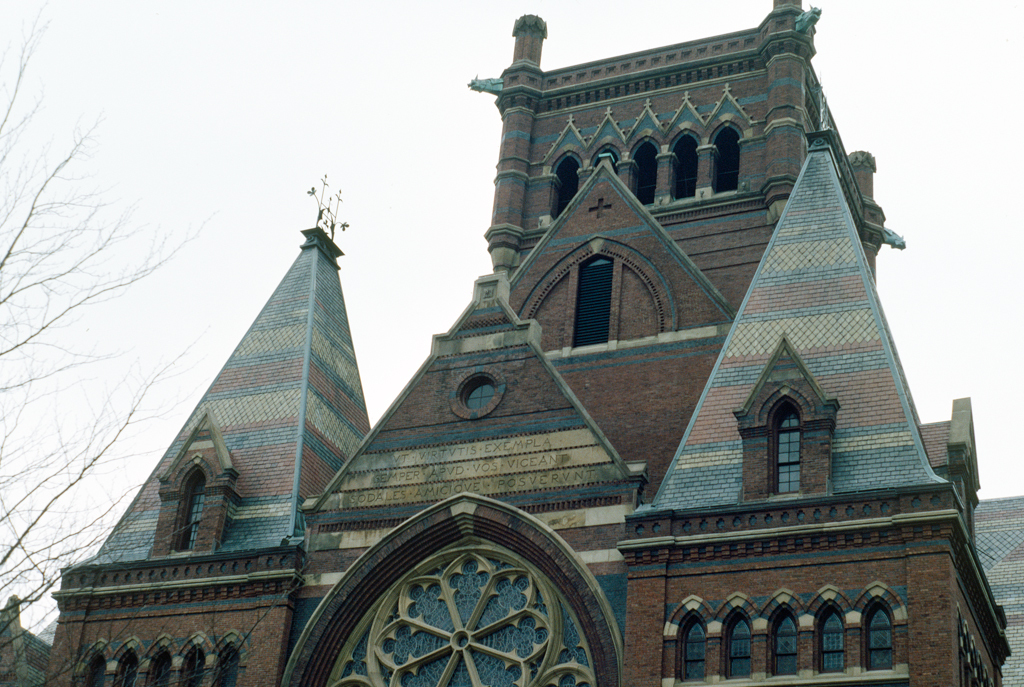
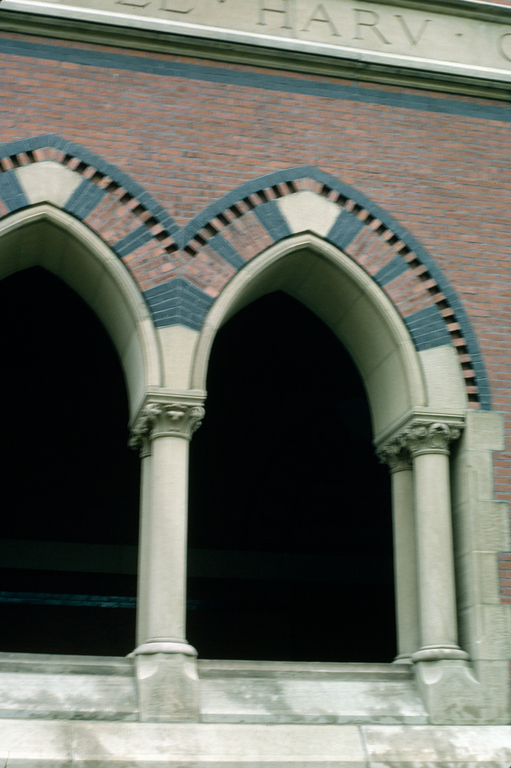
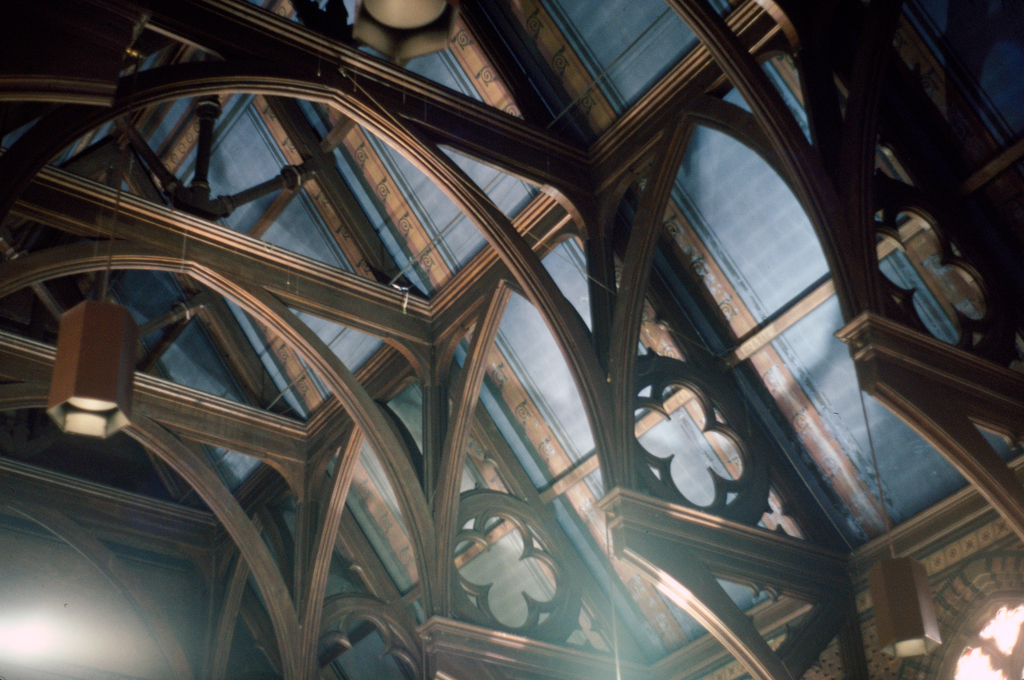
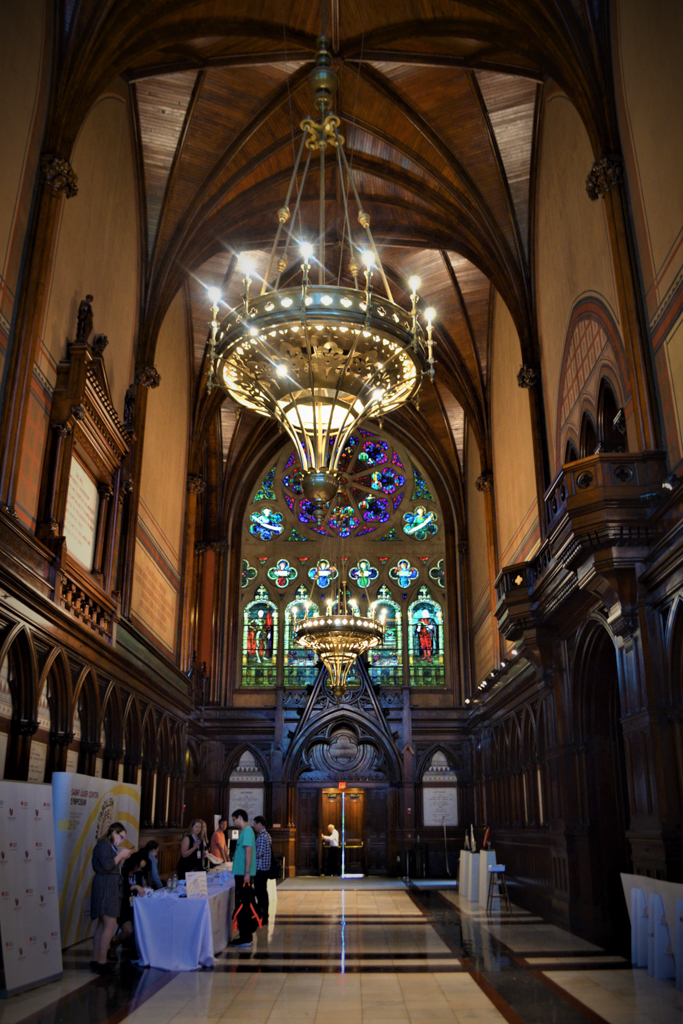
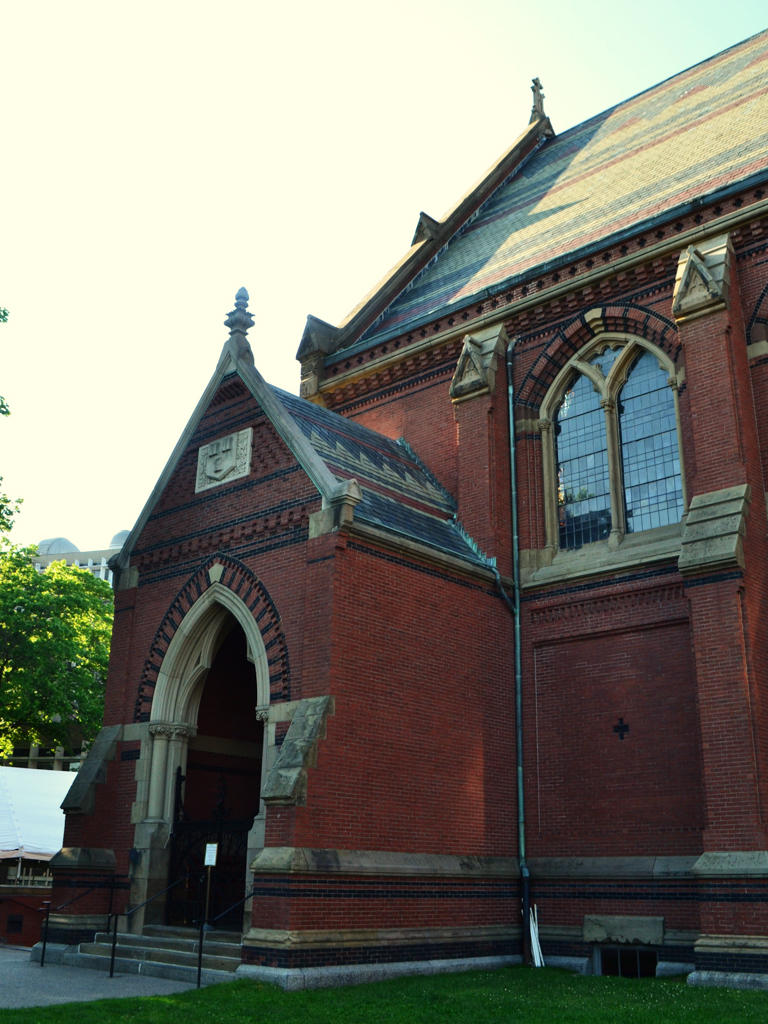
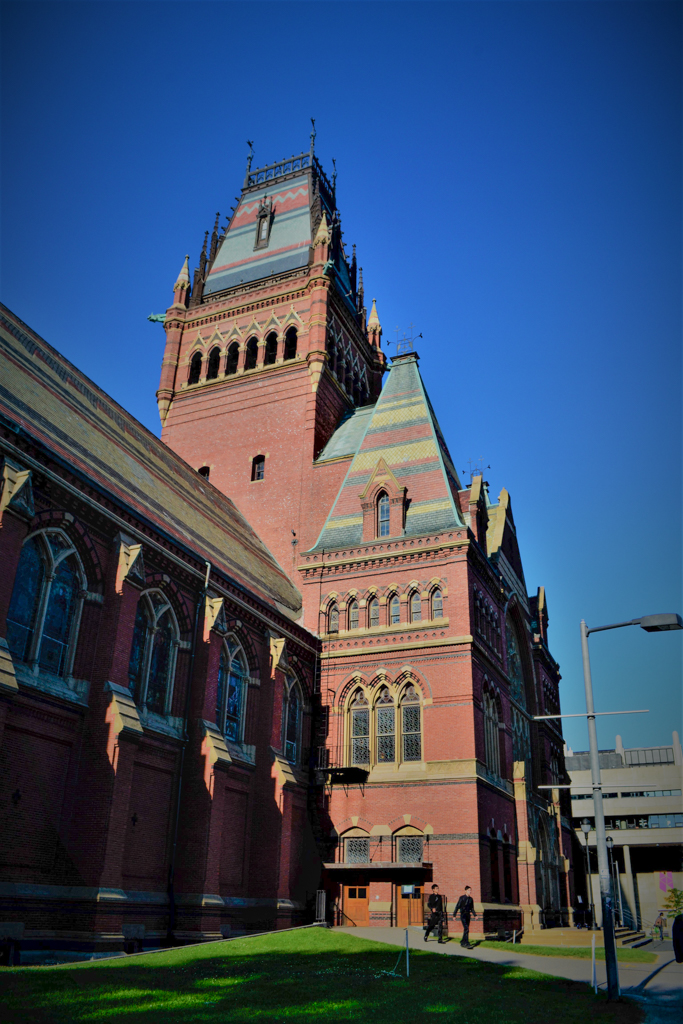
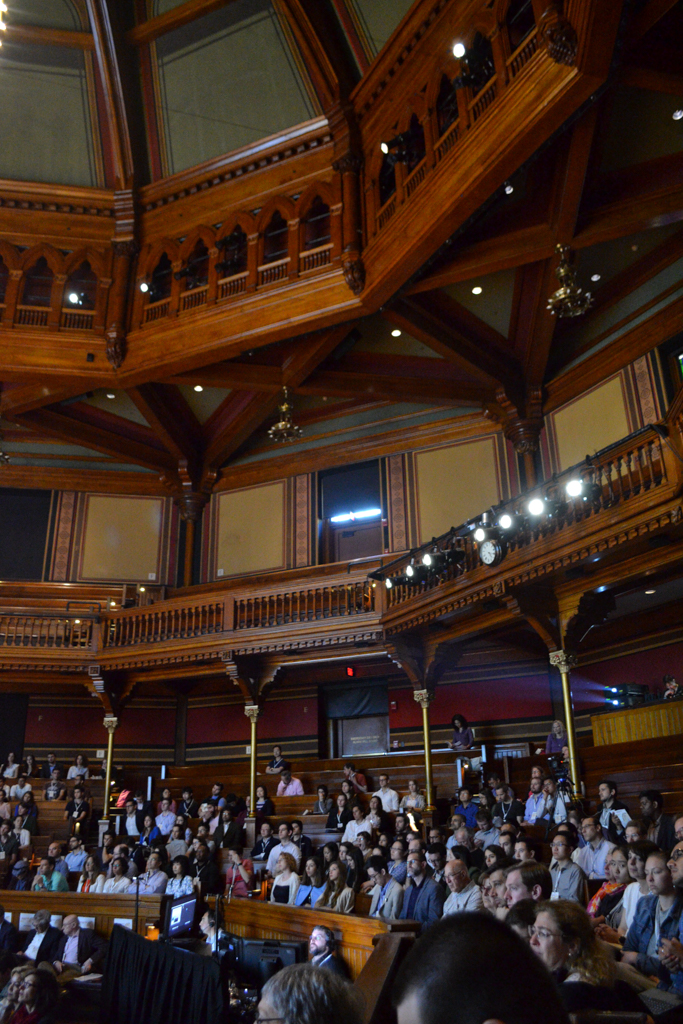
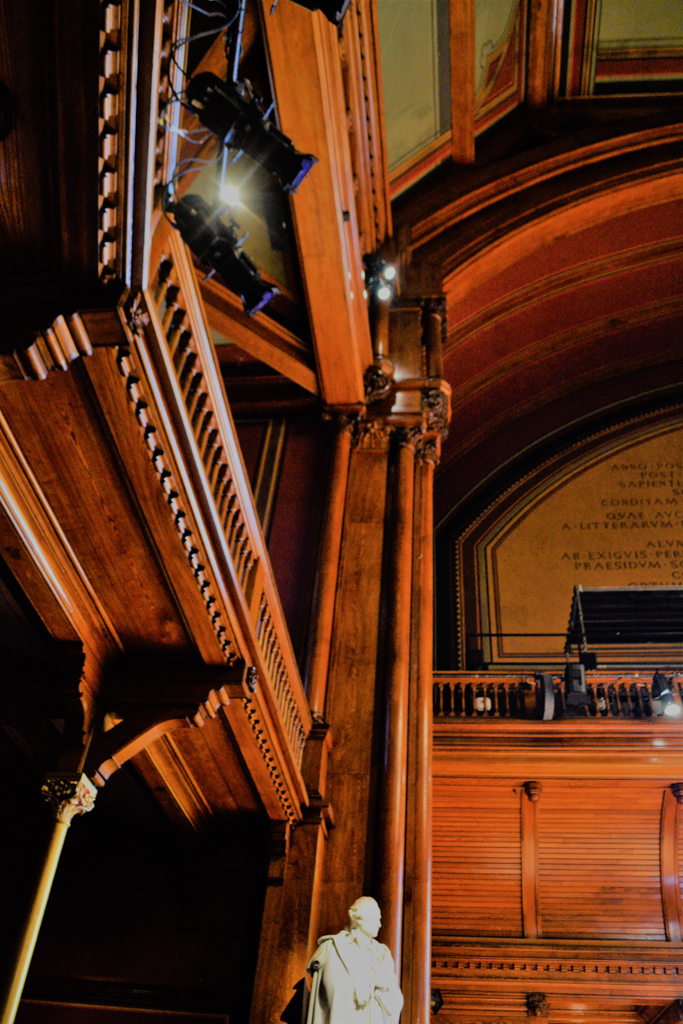
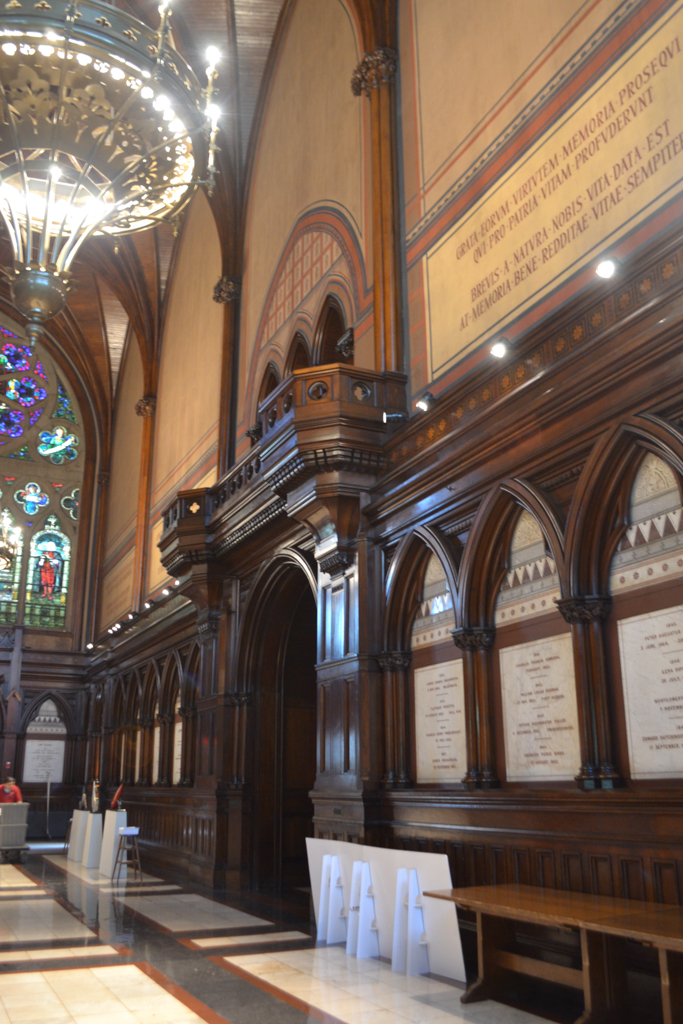
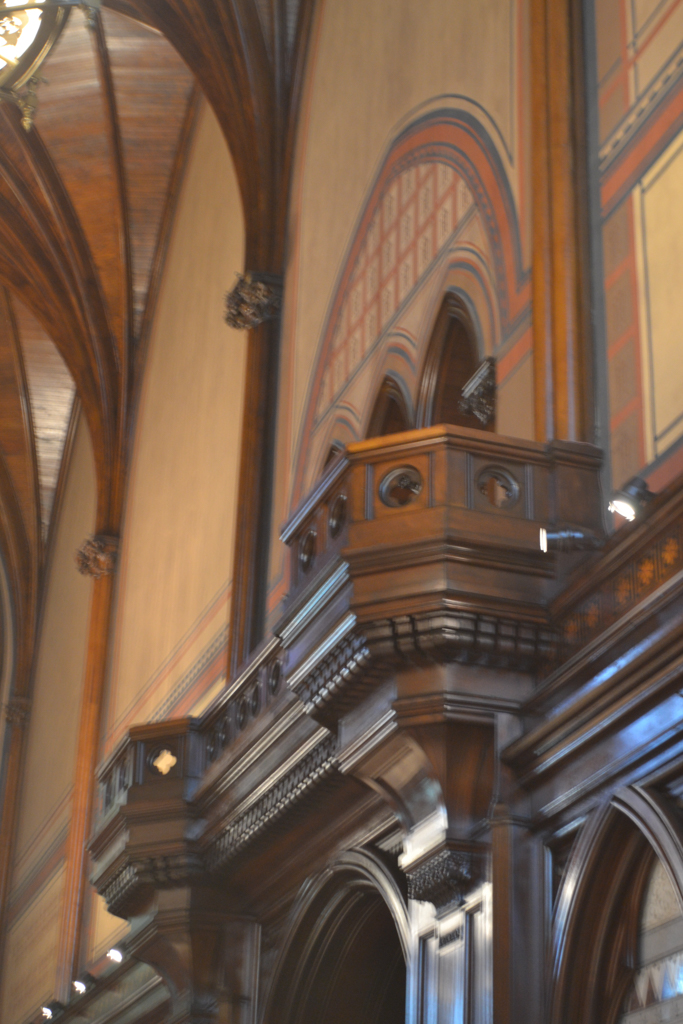
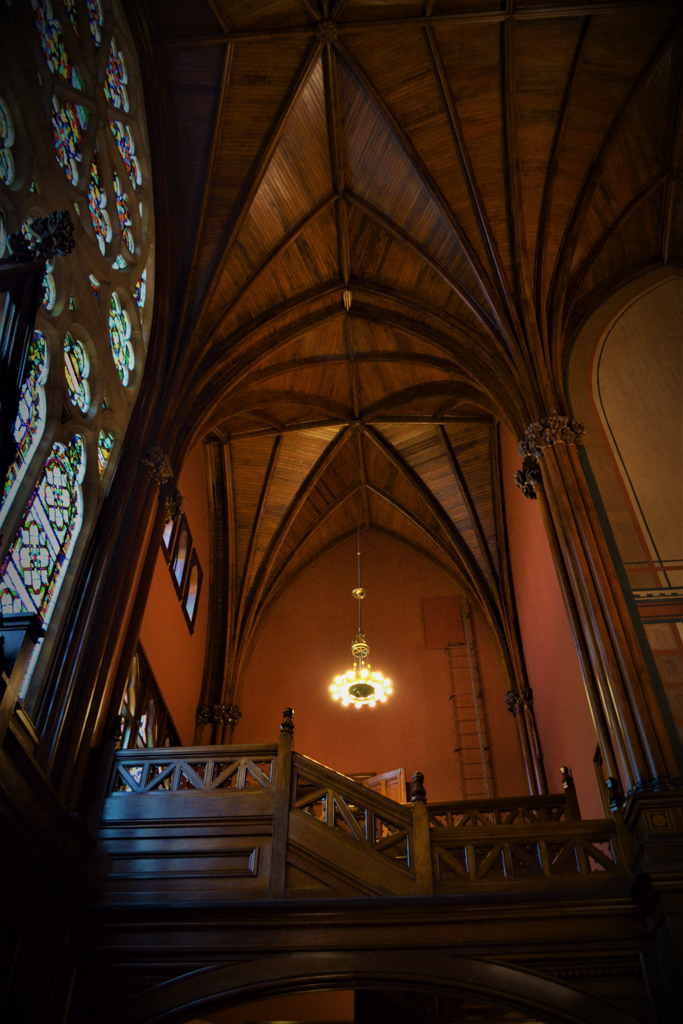
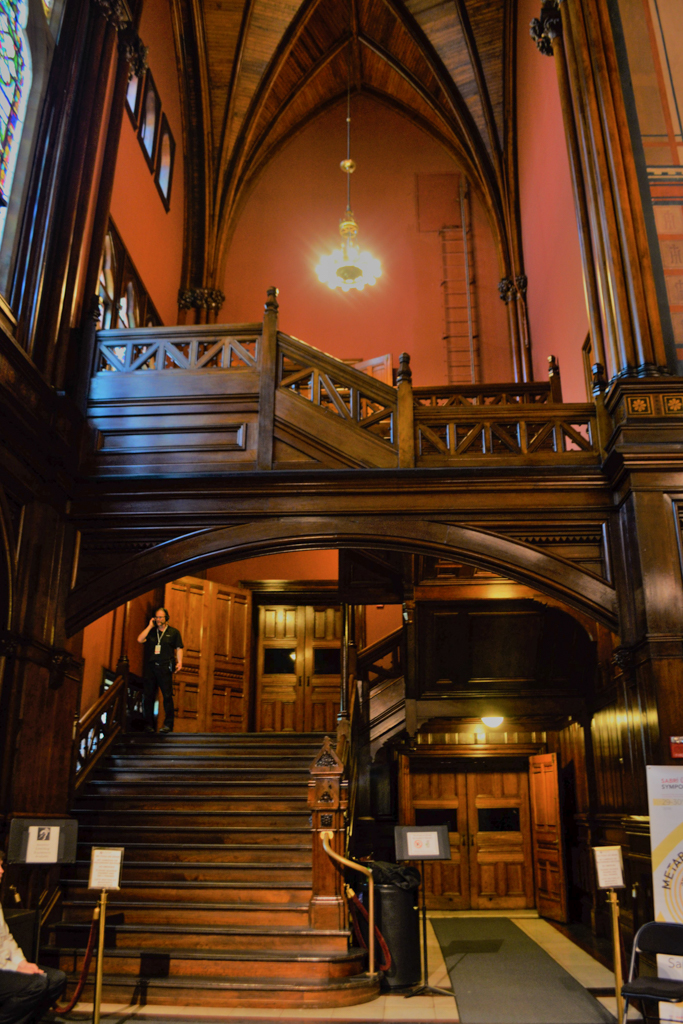
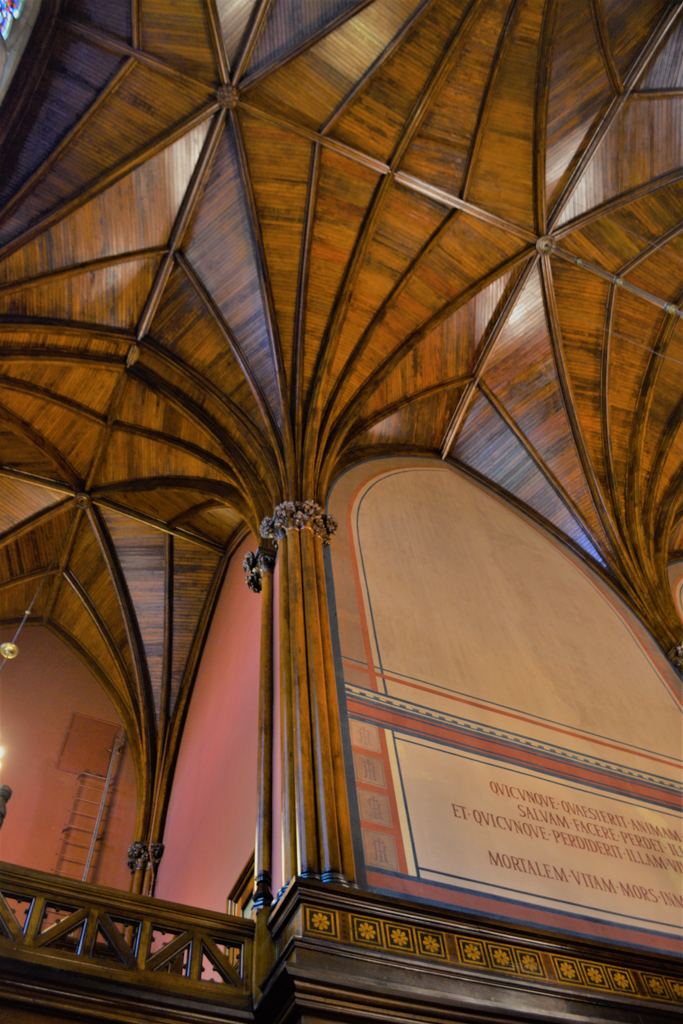
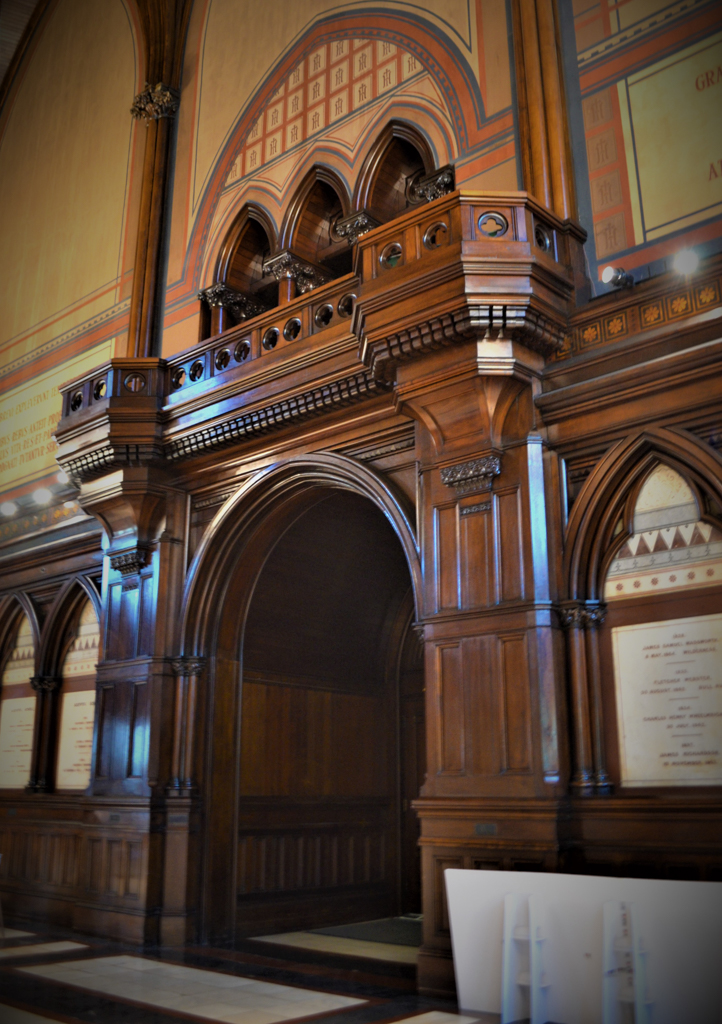
Just beyond the boundaries of Harvard Yard, Memorial Hall acts as a beacon for the northern campus. A major monument of High Victorian Gothic architecture, with polychrome slate roof, red brick, bands of tar-dipped black brick, and sandstone, it also may be identified as Ruskinian Gothic for its associations with the writings of English critic John Ruskin, an admirer of the patterned masonry architecture of medieval Venice. Harvard's first professor of art history, Charles Eliot Norton, promoted Ruskin's reverence for the preindustrial past, which he equated with honesty and simplicity in design. The cathedral-shaped Memorial Hall served three functions, a dining hall for freshmen in the nave, Sanders Theater in place of the apse, and in the transept a Civil War memorial for the Harvard alumni who died for the Union cause. The lavish stained glass window installation here stimulated
Memorial Hall
1866–1878, Ware and Van Brunt; 1997, Venturi, Scott Brown; Brunner/Cott; Robert Neiley; 1999 tower restoration, CBT/Childs Bertman Tseckares. 45 Quincy St.