

In 1895 the federal government first proposed a Romanesque-style design for Lynn's new central post office. The change to the Renaissance Revival style that was built reflected the different tastes of two supervising architects of the U.S. Treasury, Jeremiah O'Rourke and his replacement in April 1895, William M. Aiken. Although Aiken's tenure was short, he was the
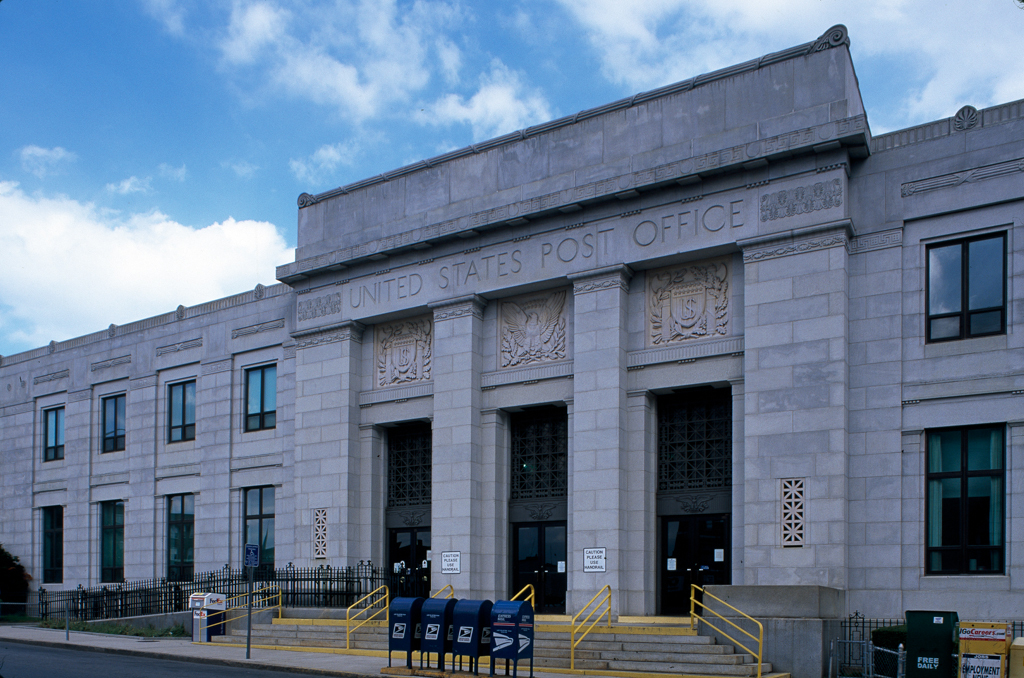
Not far from the Old Post Office stands its replacement. Constructed during the Great Depression, the building provided employment for architects and artists as well as contractors. Two firms, Edward H. Hoyt and Associates and Ripley and LeBoutillier, associated architects, worked on the design under the supervision of James A. Wetmore of the U.S. Treasury. William Riseman painted the lobby murals, installed in 1936, to commemorate Lynn's cultural and industrial history. The post office was constructed of Chesterfield granite with molded plaster ceilings, bronze doors, and marble wainscot and floors. The exterior design features the stylized classicism that was characteristic of government architecture in the 1930s.