

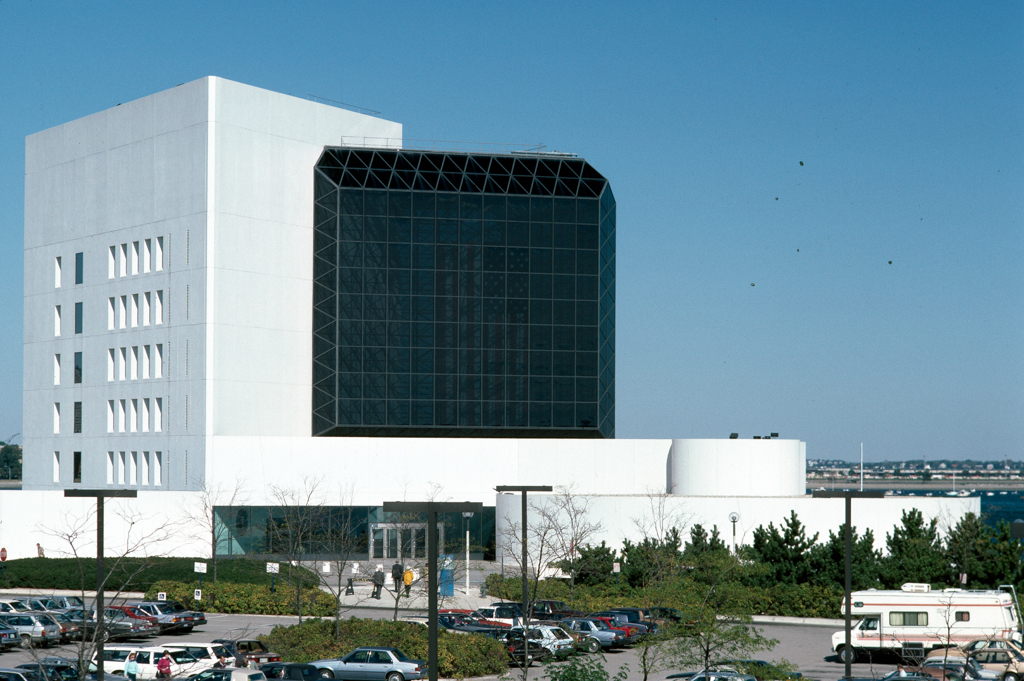
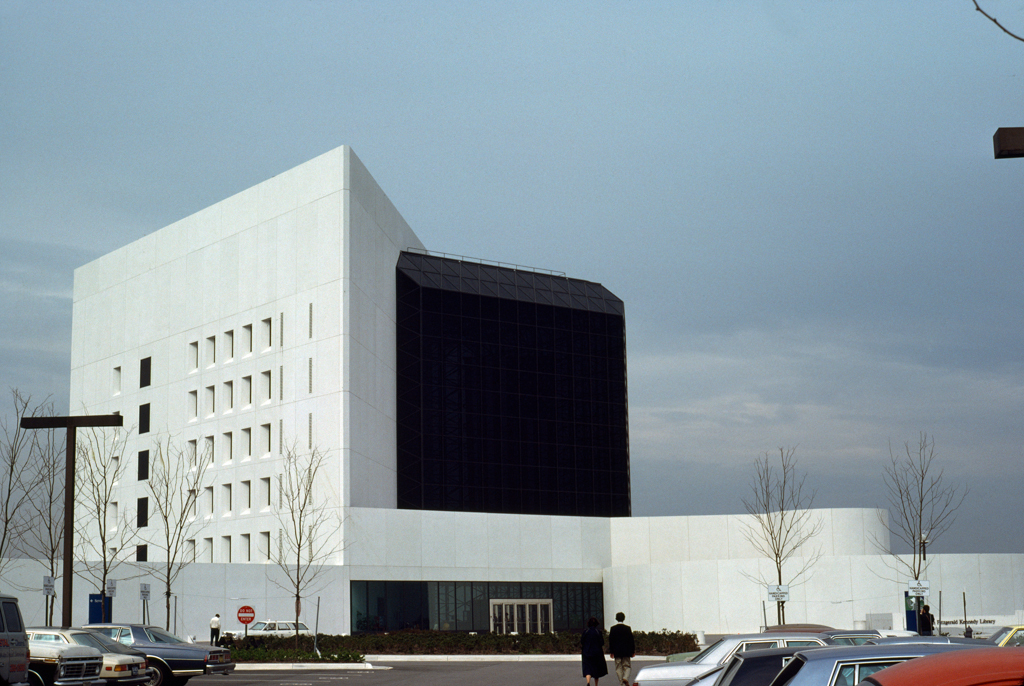
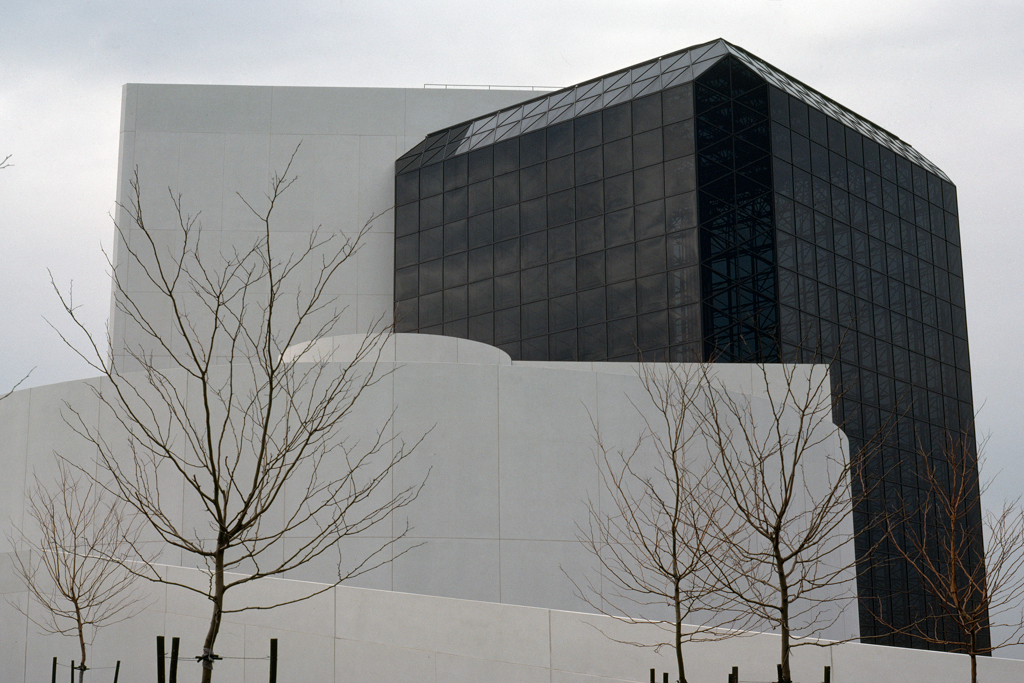
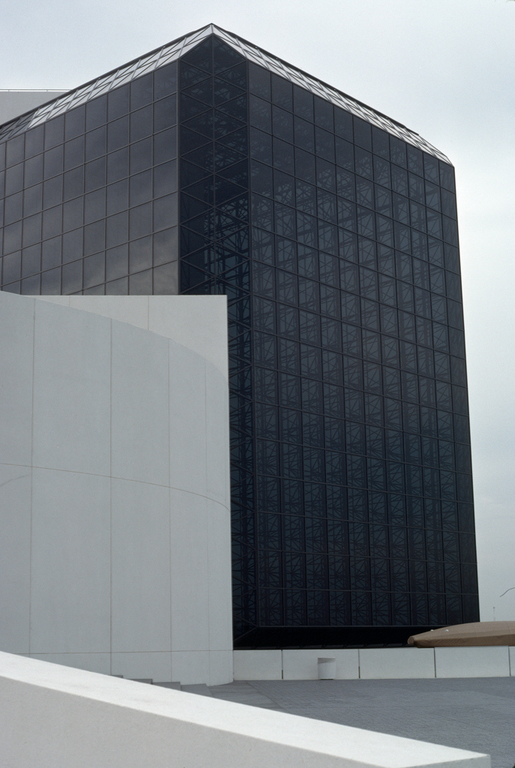
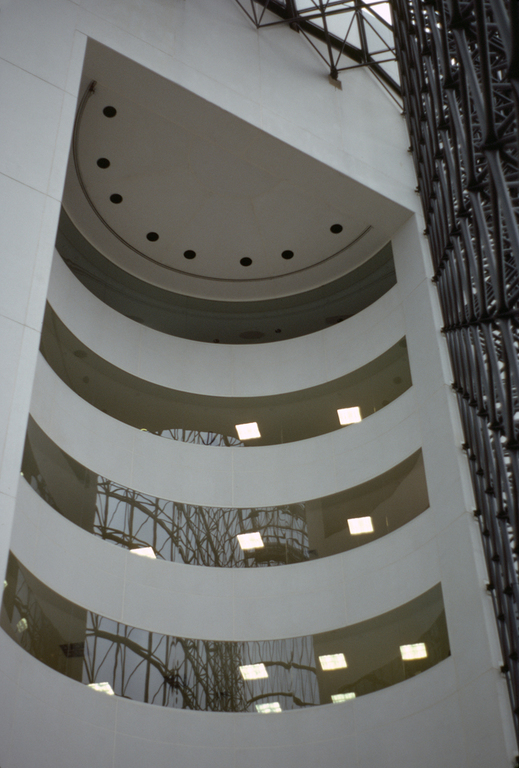
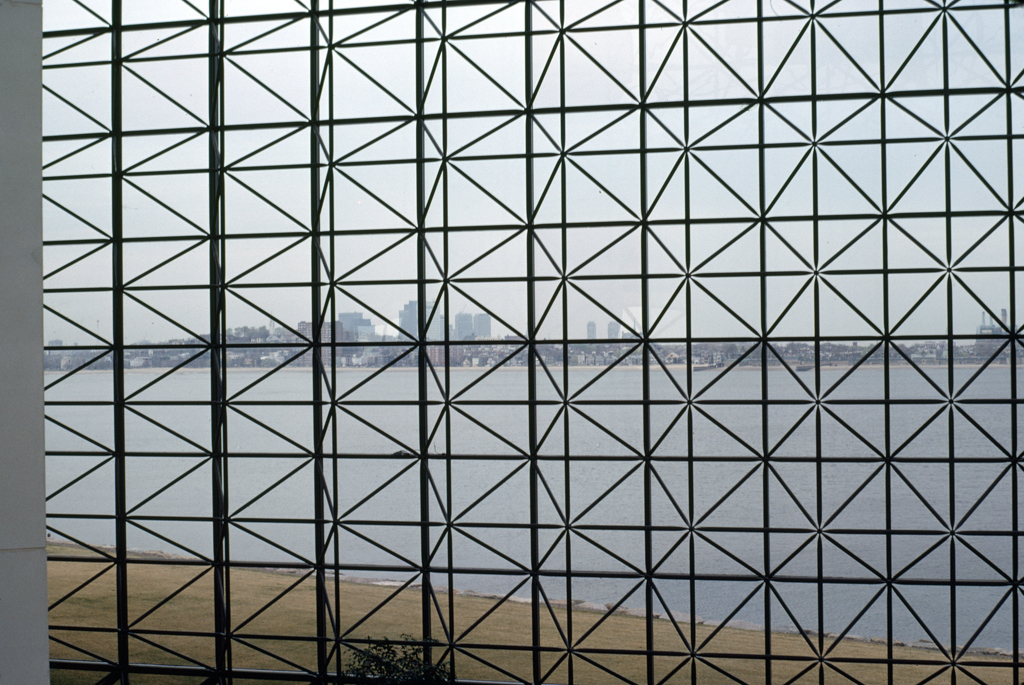
Many a viewer’s first sight of this library is from the air—flying into or out of Boston. Its highly visible three intersecting geometric forms are sharply delineated in contrasting black and white. Housing the papers and memorabilia of President John F. Kennedy, the library was built on a 9.8-acre landfill site to serve as an educational research center and museum, though the latter plays a dominant role. The grand gray glass pavilion—a ten-story space enclosed with solar double-glazing—is the center of the complex, its only decoration a huge American flag. Enlivened by the changes of light and atmosphere, the space draws us to the panorama of Boston Harbor, where JFK's sailboat is moored. Even the exterior landscaping attempts to replicate the vegetation of Kennedy’s beloved Cape Cod—pines, bayberries, and rugosa roses, with distant evocations of the island's dunes. Stark precast-concrete panels constitute the forms separating the triangular library, the arch of the theater, and the museum between with its focus on the glass pavilion. A curved stairway following the contours of the auditorium descends to the sea, giving the visitor visible access to the city across the harbor. Not surprisingly, this nautical composition has been deemed a lighthouse on the sea—a symbol of the optimism marking the presidency of John F. Kennedy.
John F. Kennedy Library and Museum
1977–1979, I. M. Pei and Partners. 1 John F. Kennedy Rd.