

The demolition of the John Hancock House (1737) on Beacon Hill in 1863 (the region's first preservation battle) inspired a series of copies. John Sturgis produced the first American measured drawings for the Hancock House and imitated the central pavilion with balcony and broken scroll–pedimented doorway as a frontispiece here, counterpointed by the Palladian window from the rear of the Hancock House and the staircase reworked within. He set these elements within a mélange of gambrel- and saltbox-roofed massing (now reconfigured as intersecting gambrels) with overhangs, best seen from the north end of the house. Carey later became the second president of the Society of Arts and Crafts, Boston, an organization that fueled the fire for Colonial Revival in architecture and related crafts.
Arthur Astor Carey House
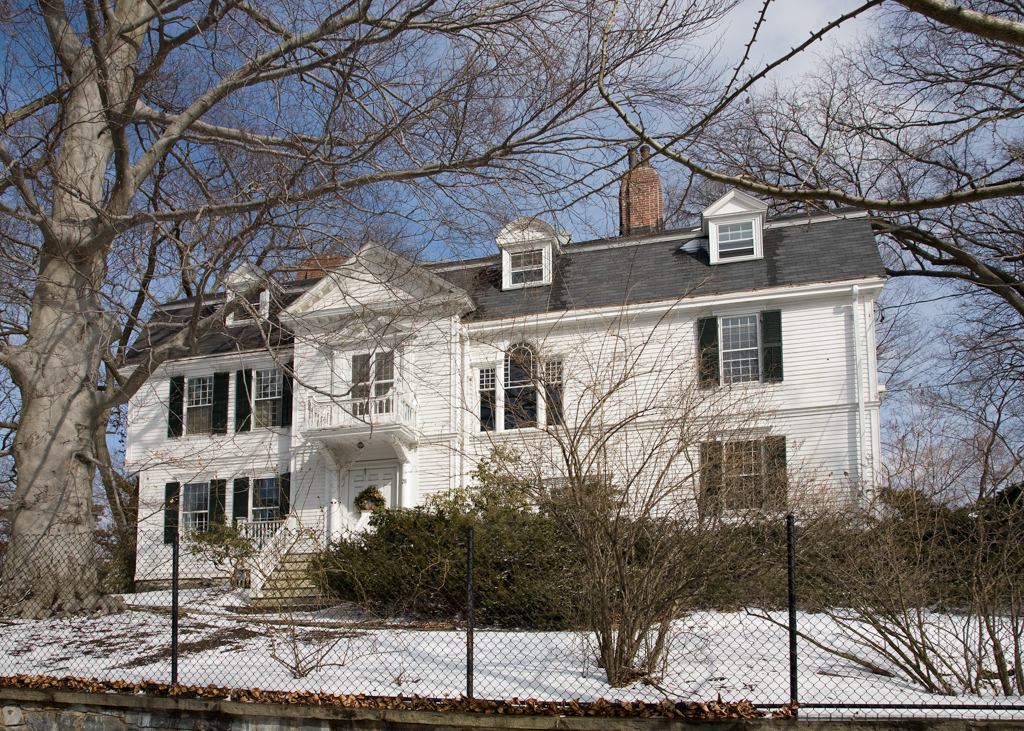 Peter Vanderwarker or Antonina Smith
Arthur Astor Carey House
1882, Sturgis and Brigham. 28 Fayerweather St.