

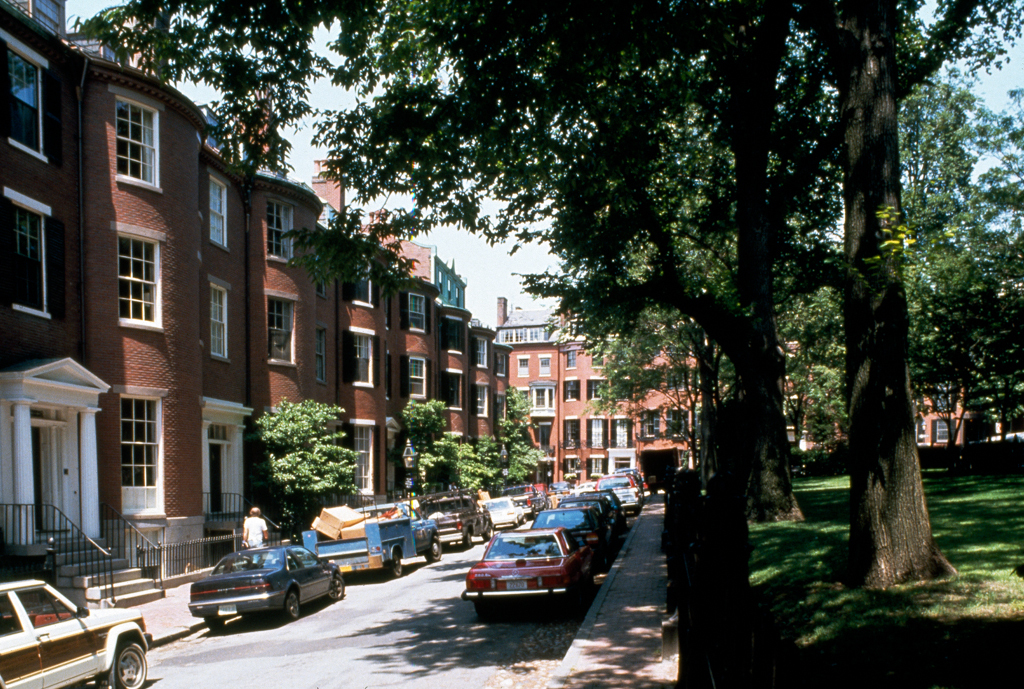
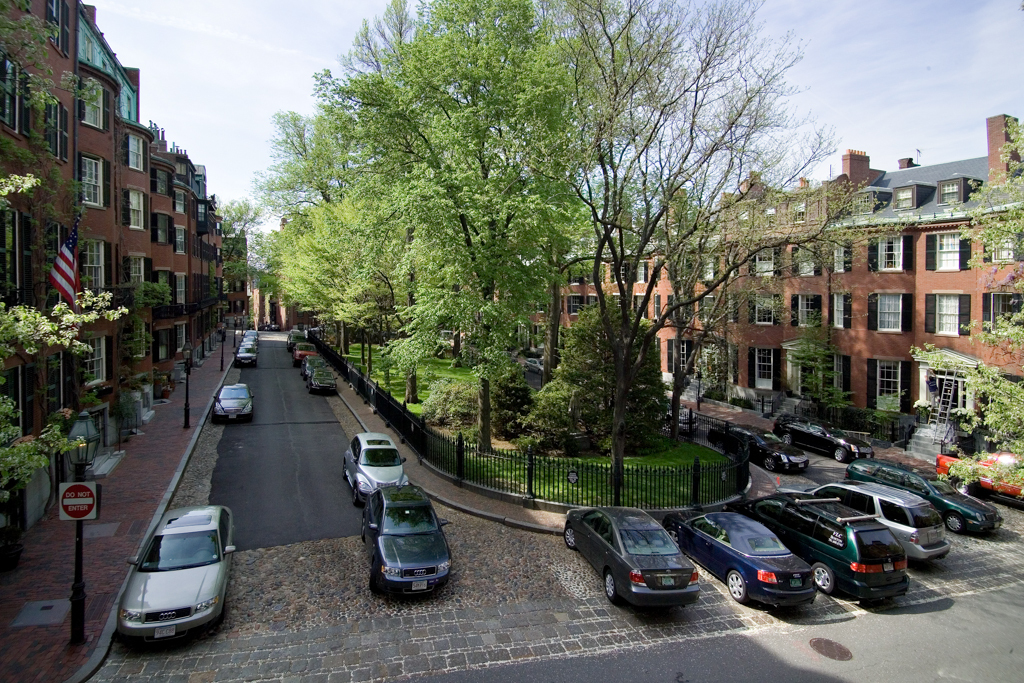
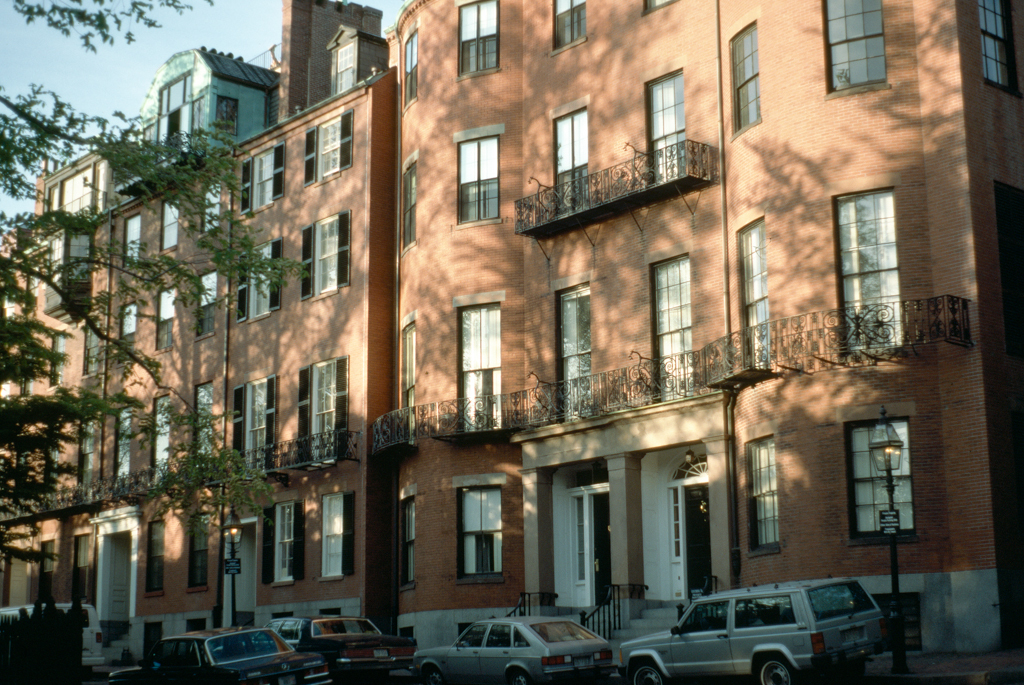
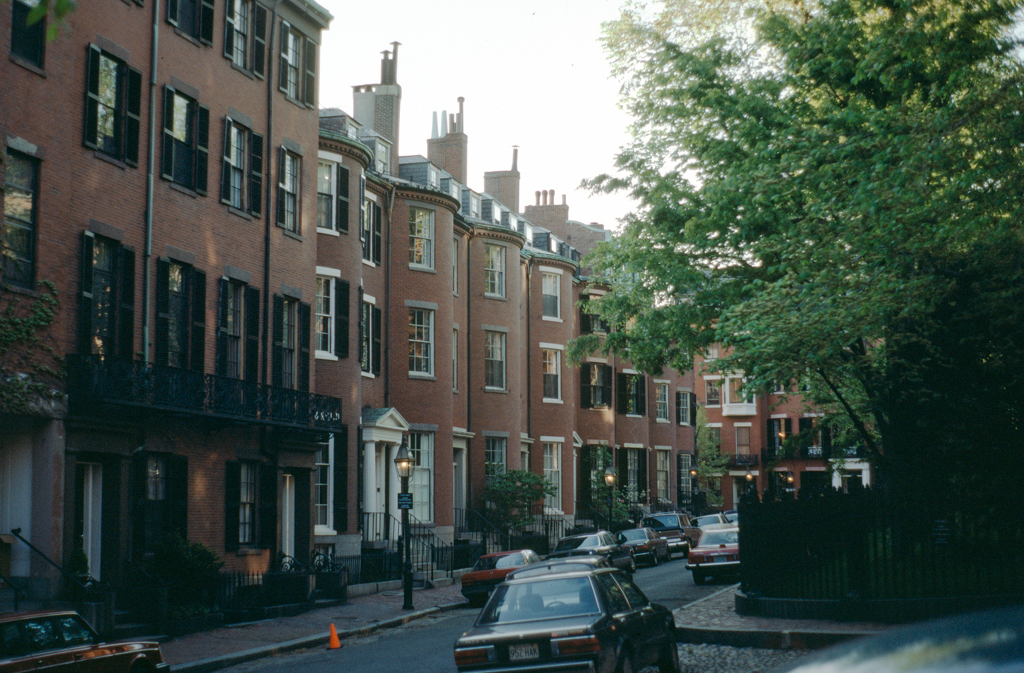
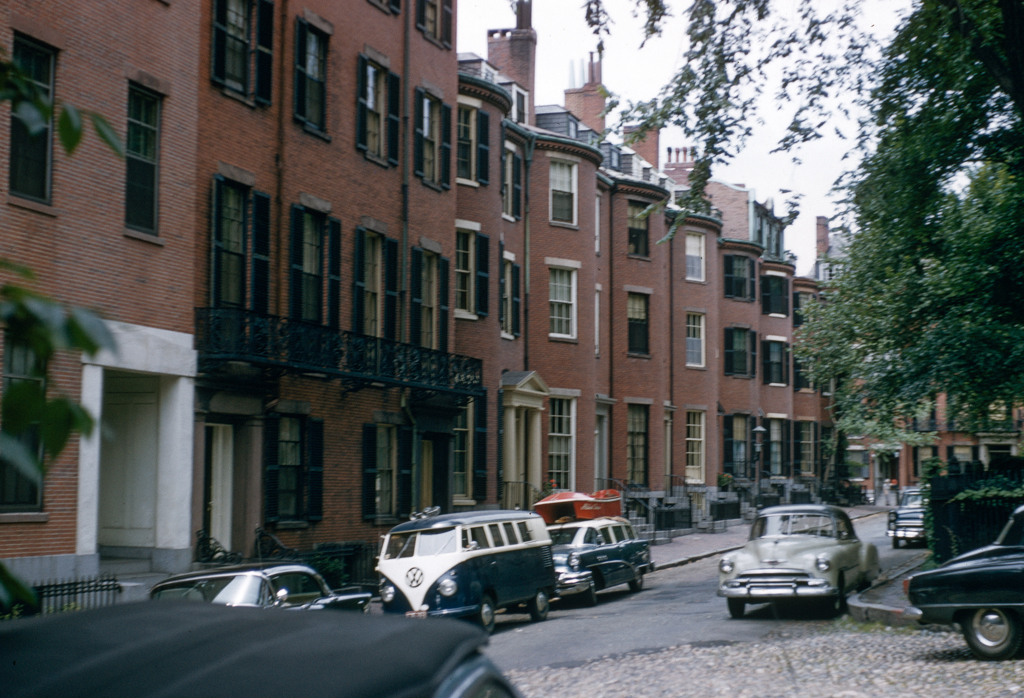
The premier survivor of the urban spaces inspired by Charles Bulfinch's Tontine Crescent (1793–1794), Louisburg Square ultimately emulates the controlled urban squares of Georgian London. Following the careful development of Bulfinch's scheme for Mount Vernon Street from the 1790s on, in 1823 the Mount Vernon Proprietors turned to the area bounded by Chestnut, Mount Vernon, Willow, and West Cedar streets. They hired surveyor S. P. Fuller to lay out a plan for the square and surrounding streets. A textile tariff in 1828 led to a financial crisis in 1829 that delayed the development of this area until the mid-1830s. From 1834 through 1847, interrupted by the depression of 1837, a series of architects and housewrights designed and built groups of houses around the square. Named for the battle of Louisburg (1758) in Nova Scotia, the square presents an elegant range of flat and bowfront brick Greek Revival town houses about a central landscaped and fenced private park. Statues of Columbus and of Aristides the Just, gifts from Joseph Iasigi, who lived at number 3, grace the short ends of the park. The genius is in the details, from the cobblestone gutters of the streets to the fine ironwork of bowing balconies. The urban development of the South End borrowed this formula on multiple occasions.
Louisburg Square
1826, S. P. Fuller; 1834–1847. Between Pinckney and Mount Vernon sts.