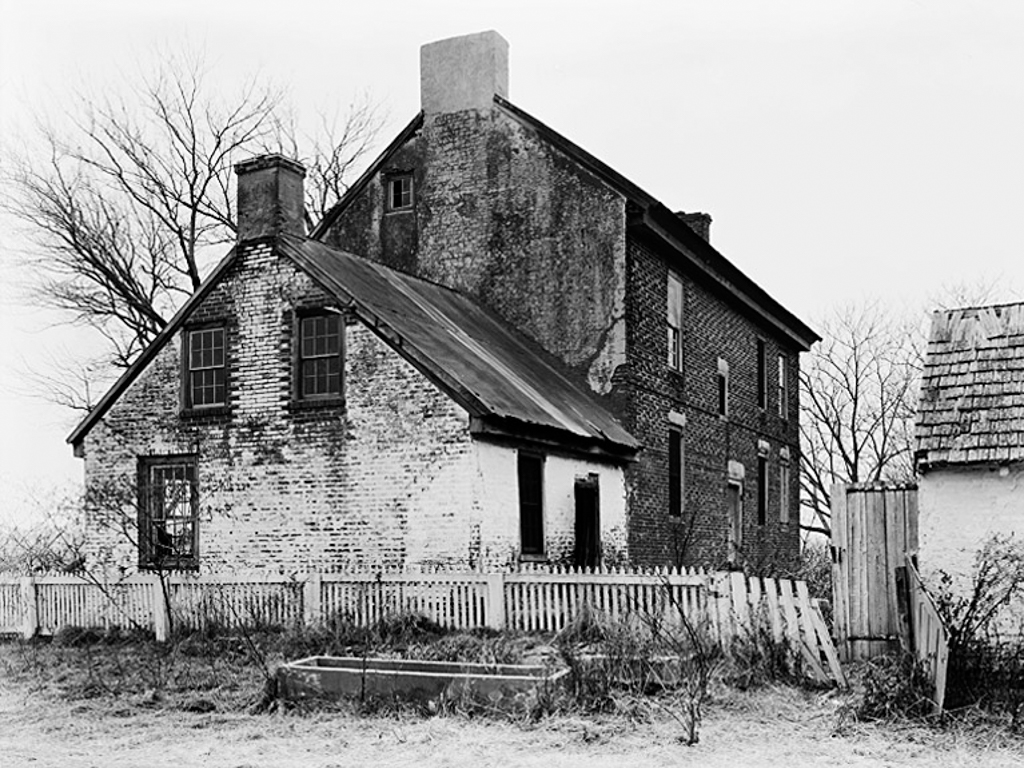
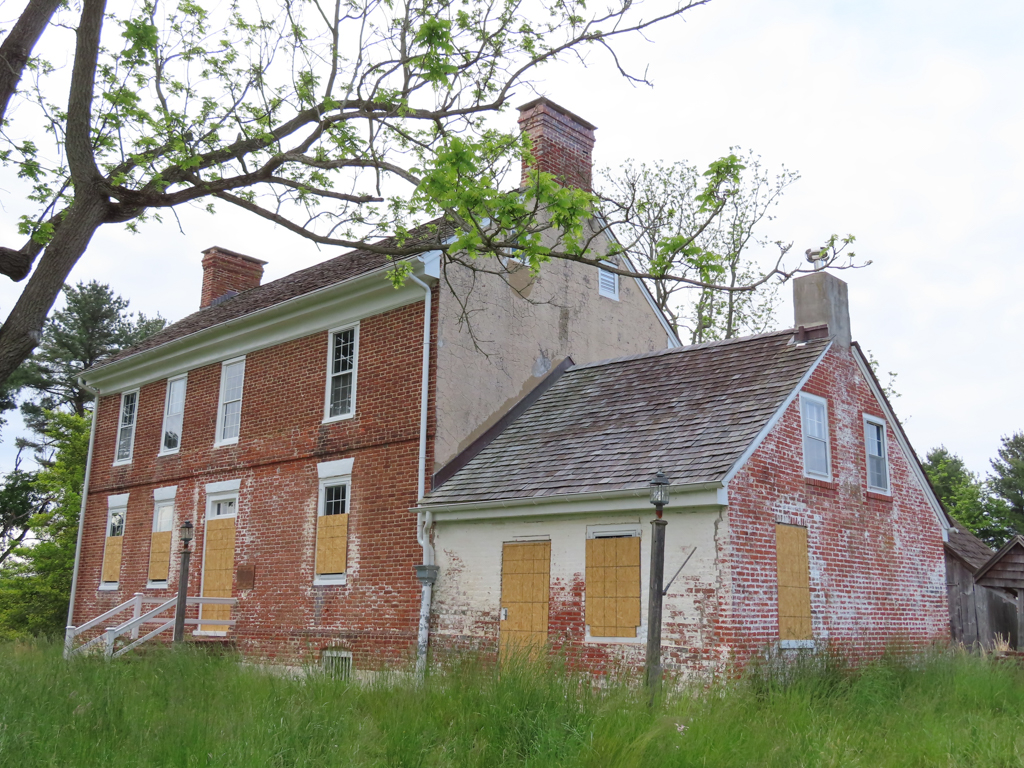
One of the earliest surviving Delaware deeds records a Dutchman's purchase of “Bompies Hook” from the Native American, Mehocksett, in 1679 for gun, powder, clothes, liquor, and a kettle. A Huguenot farmer, Abraham Allee, built the brick house decades later in a center passage, single-pile plan. Local tradition gives 1753 as the date, but a brick (left of the front door) reads “BR 1765,” perhaps, some have thought, the initials of the builder. The exterior is distinguished by a cove cornice, the interior by considerable paneling and a spacious wooden stair and cupboards. The rather extensive use of glazed-header bricks on the rear elevation is unusual (there are few elsewhere on the house). Allee's inventory (1770) included four slaves and an eight-day clock, his most valuable possessions. The extant outbuildings were in place by 1790. Time seemed to have passed the place by when, in 1937, the surroundings were condemned by the federal government for 11,000-acre Bombay Hook Migratory Waterfowl Refuge, and the Civilian Conservation Corps (CCC), using African American labor, erected an intricate system of dikes. In 1963, the government planned to demolish the abandoned house—in spite of its high quality and undeveloped setting—but state archivist Leon de Valinger convinced them to lease the property to the state. George F. Bennett undertook a restoration (1963–1966). By 2007, another was needed, and the house stood empty.

