

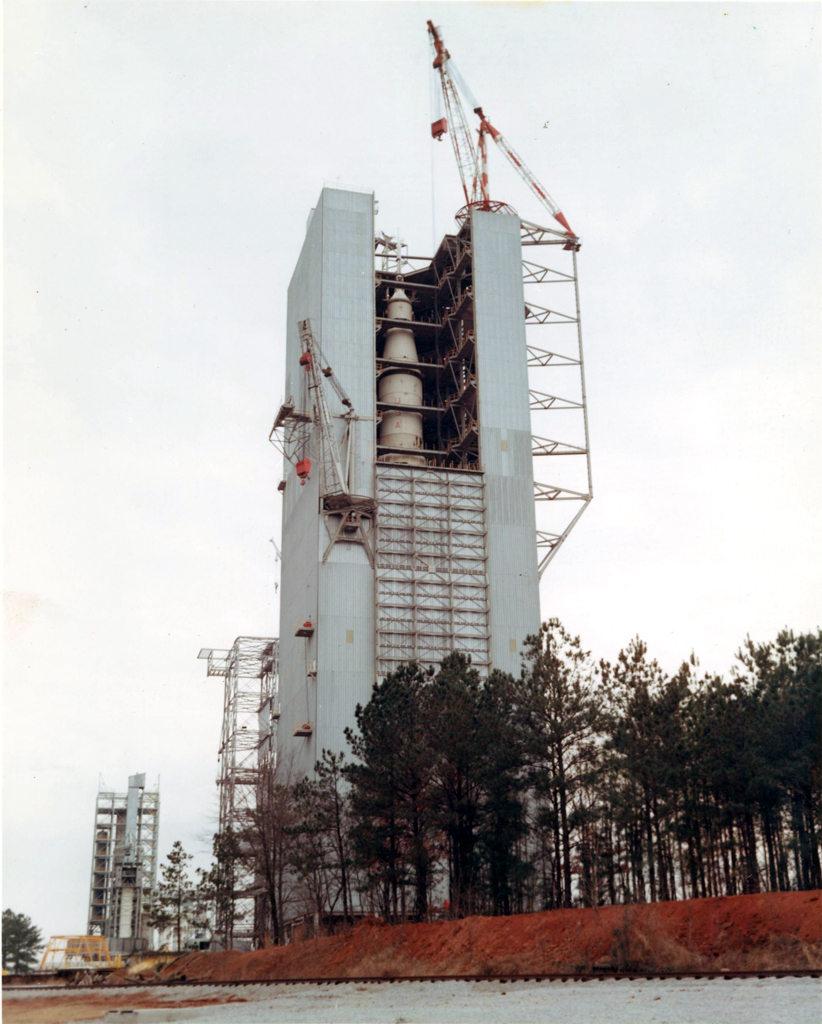
The Dynamic Test Stand is a unique structure designed to simulate free flight conditions by subjecting a vehicle to electrical and mechanical vibration tests. Unlike the other three stands at the Marshall Space Flight Center, this stand was not used for live-fire tests of the rocket engines; instead, the tests here evaluated the rocket structure. Built in 1963 to test the Saturn V rocket, the stand was later modified for testing of the Space Shuttle stack (the orbiter mated with the external tank and solid rocket boosters). In 1981 it was modified to allow for zero gravity and microgravity drop tests.
The main steel framing of the tower is 360 feet tall, with the height of the structure increased by another 115 feet when the topmost 200-ton derrick crane is fully extended. Originally 98 x 98 feet in footprint, it was necessary increase the footprint to 98 x 122 feet to accommodate testing of the Space Shuttle stack. The structure is sheathed in corrugated metal siding and is essentially open in the center for the test article.
In 1985 the Dynamic Test Stand was designated a National Historic Landmark.