

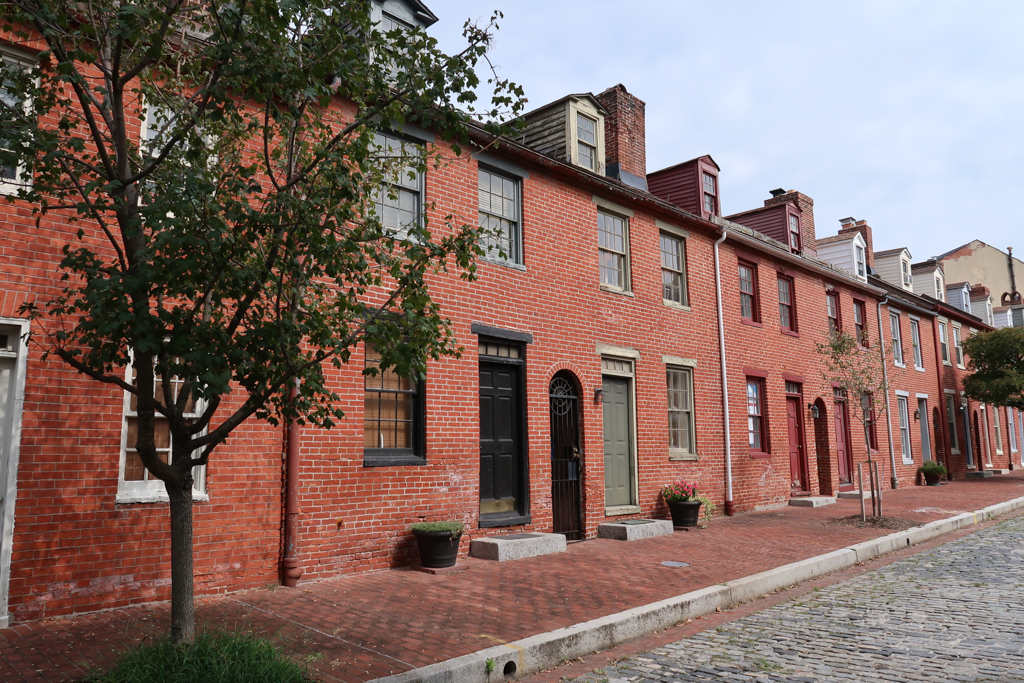
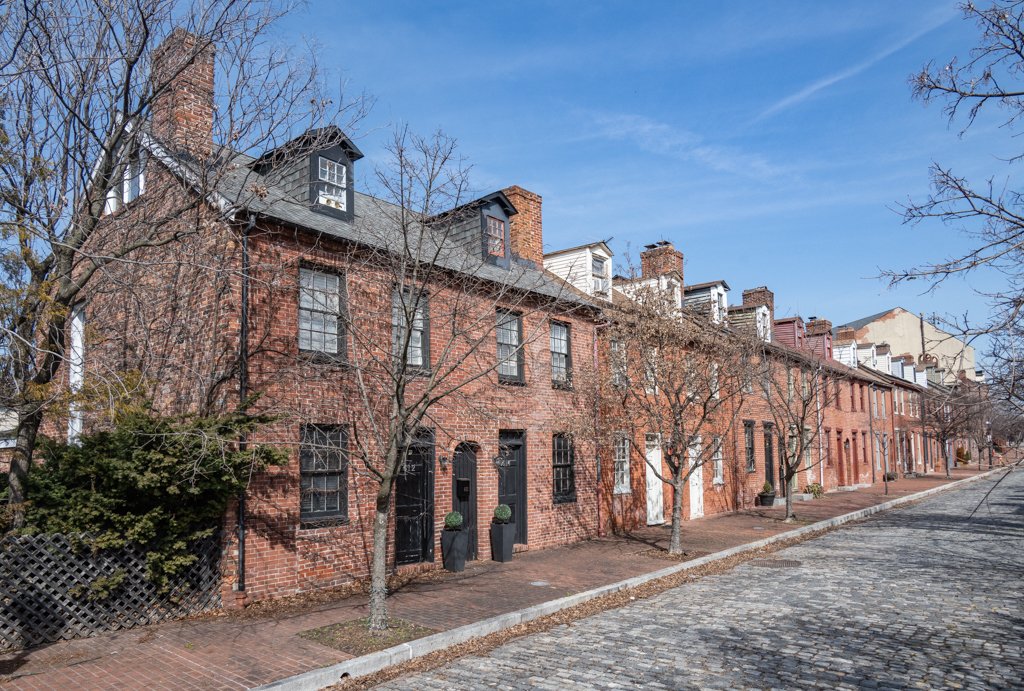
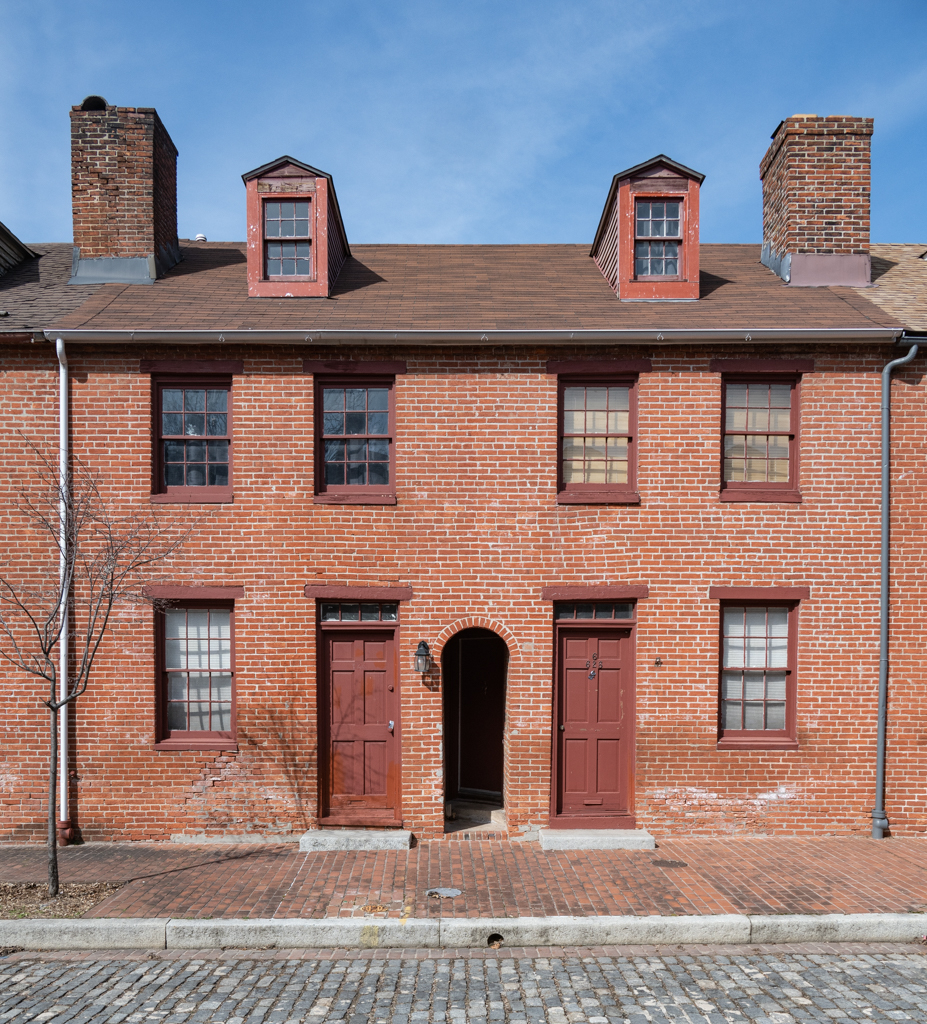
This row of the ubiquitous two-and-a-half-story Baltimore row house was among the first to be renovated under the city’s path-breaking 1970s Homesteading project aimed at the revitalization of abandoned city-owned houses. Under the program, any one of five thousand vacant houses could be purchased for $1 by a new owner willing to commit to its renovation. The highly successful program is credited with the resurgence of such older areas of the city suffering from deterioration and suburban flight as Federal Hill, Fell’s Point, and Otterbein. This was the most common row house form to appear in Baltimore from the 1790s through the mid-nineteenth century. The units are grouped in pairs with sally ports between units for access to the backyards from an otherwise impenetrable row. They originally provided housing for workers in Old Town’s early manufacturing district.
HOMESTEAD ROW HOUSES
c. 1830; 1970s renovated. 600 block of Stirling St.