

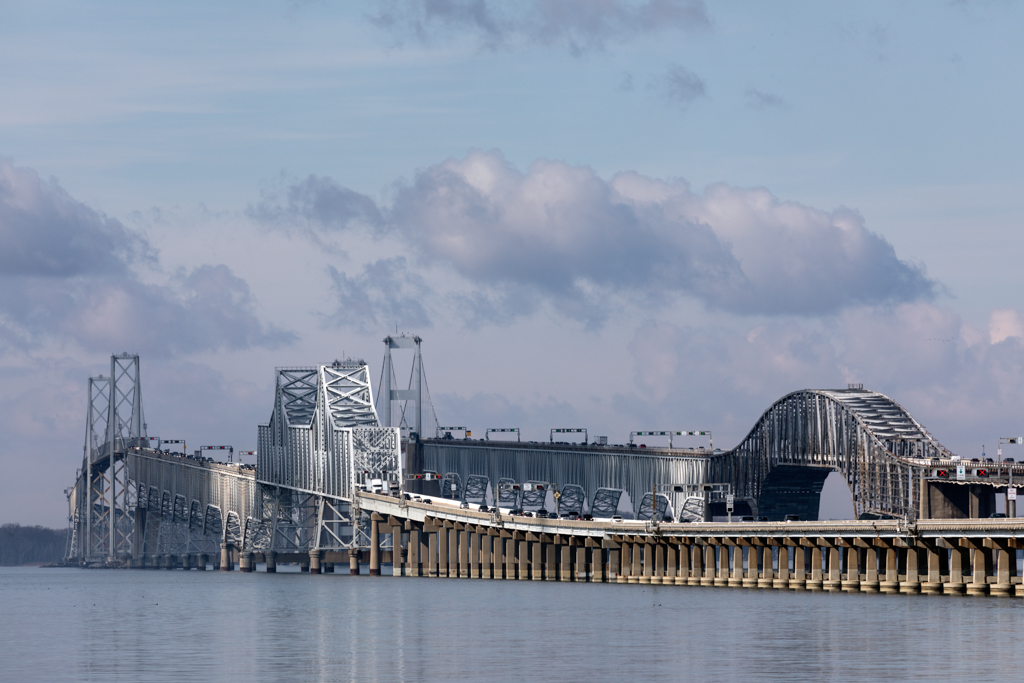
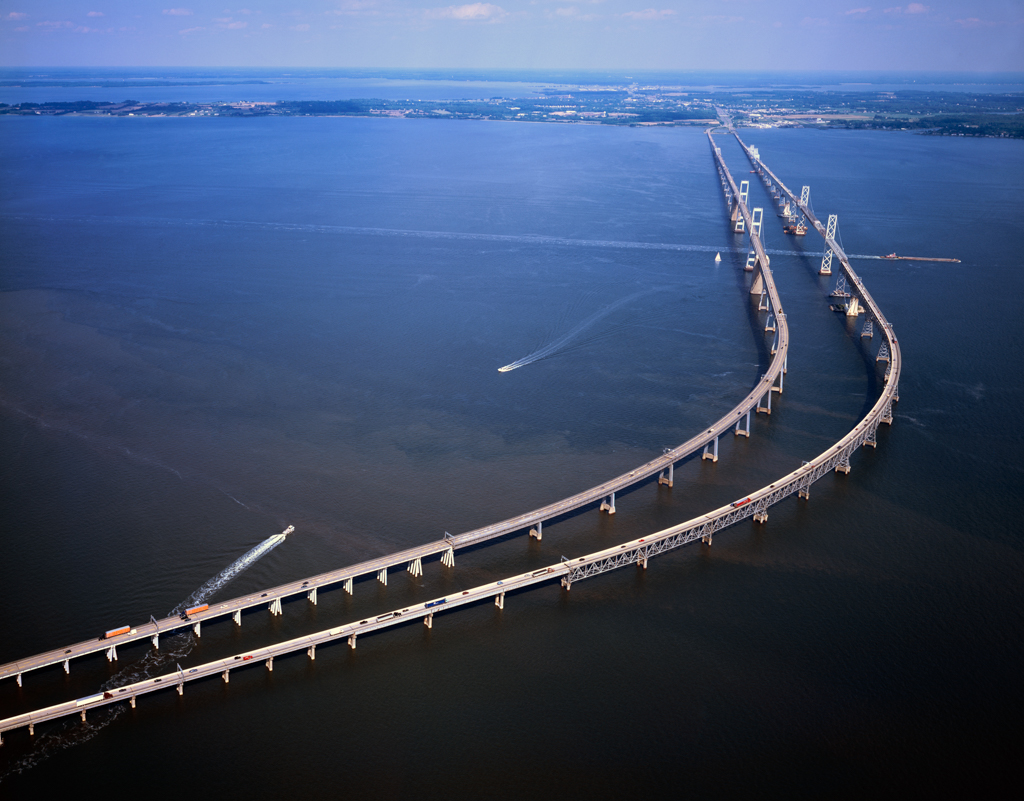
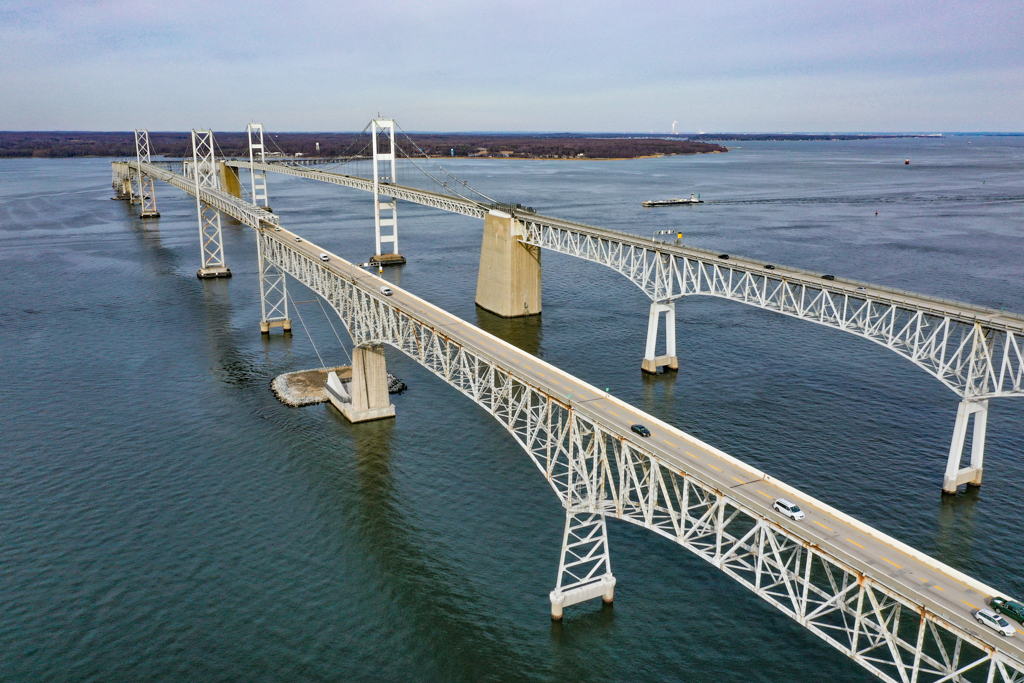
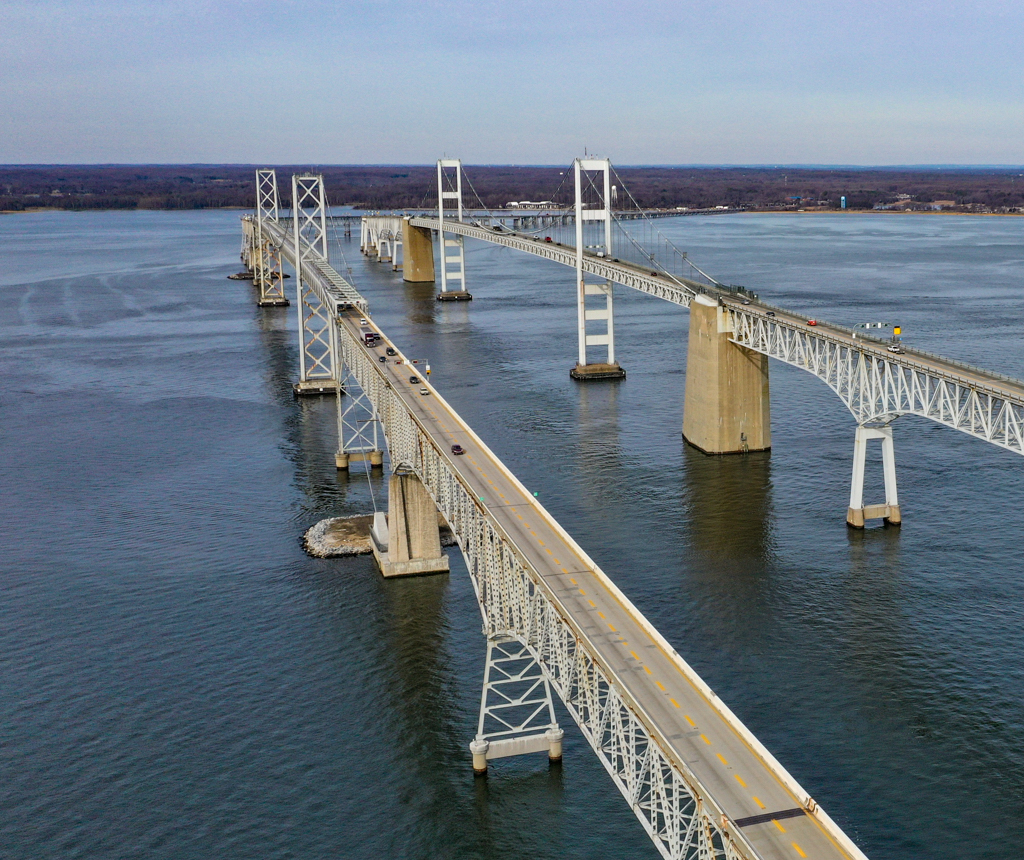
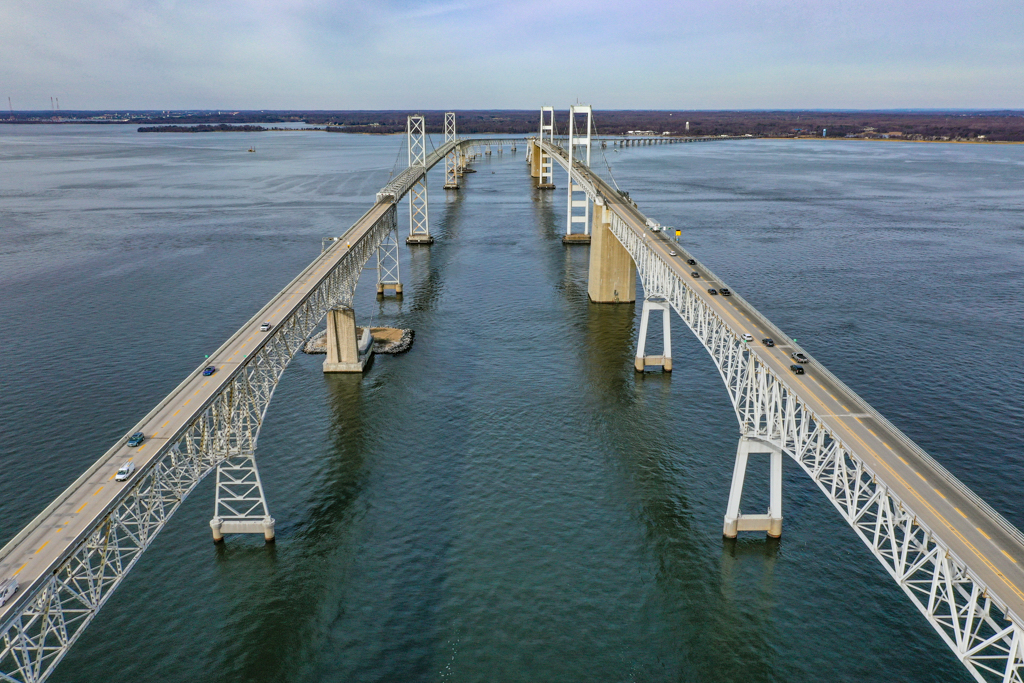
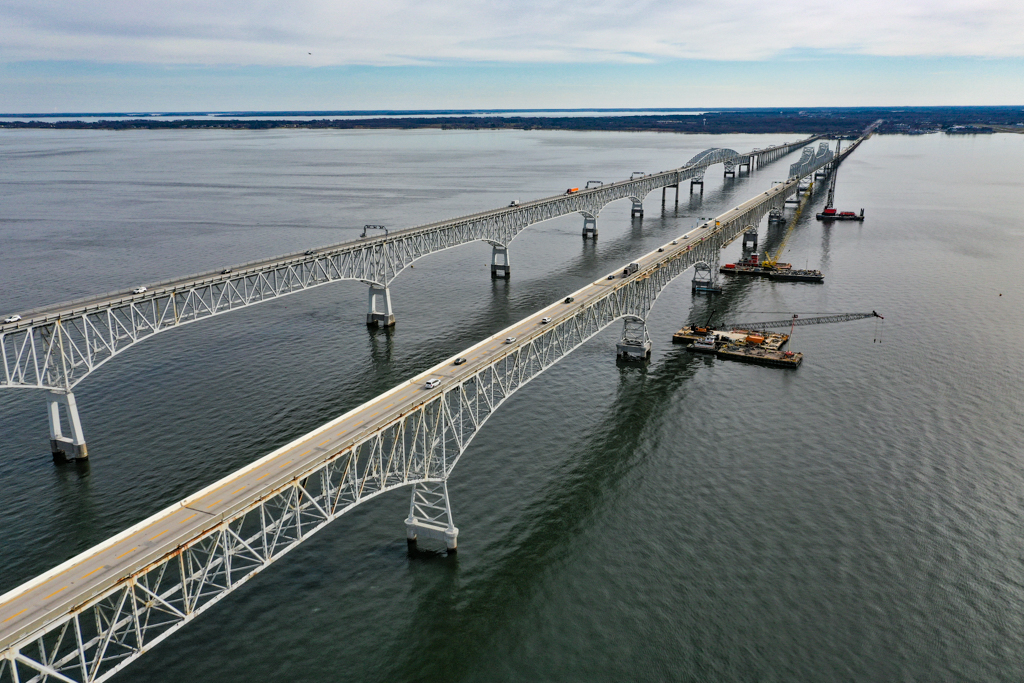
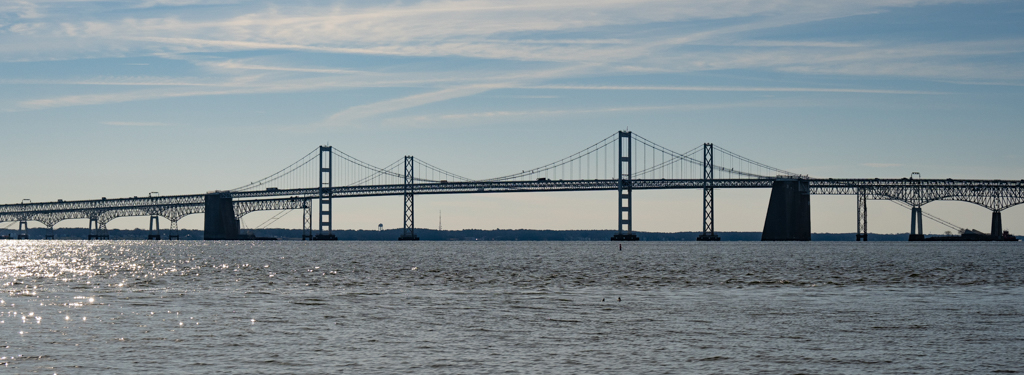
In 1938 the State of Maryland released the transportation planning study “Maryland’s Primary Bridge Program.” Proposed projects included a long-desired connector between the Western and Eastern Shores, where only ferry service was available. A new automobile connection would boost the economy, particularly on the Eastern Shore, and respond to the growing dominance of car travel. World War II delayed the bridge’s construction until 1947 when Governor William Preston Lane spearheaded legislation to jump-start the project. The designer was Baltimore-based civil engineering firm J. E. Greiner Company, founded by a former B&O Railroad bridge engineer in 1908. The older, two-lane, eastbound section consists of 123 steel spans, including the central cable suspension span supported by towers 354 feet above the water. Designed to accommodate ocean-going vessels in the shipping lanes and over four miles long, it was the longest continuous overwater steel structure in the world at the time it opened. In 1973 a second parallel three-lane span opened to expand capacity and allow one-way traffic on each span. Not only are the two spans of the Chesapeake Bay Bridge the only major suspension bridges in Maryland, but their economic impact has been profound, transforming access across the Bay and allowing Eastern Shore residents to commute to Washington and Baltimore. In 2019 both major repairs to the existing spans and discussion of adding another were underway.
WILLIAM PRESTON LANE JR. MEMORIAL BRIDGE (CHESAPEAKE BAY BRIDGE)
1949–1952 (eastbound span), 1969–1973 (westbound span); J. E. Greiner Company (now AECOM), engineers. U.S. 50/301 over Chesapeake Bay.