

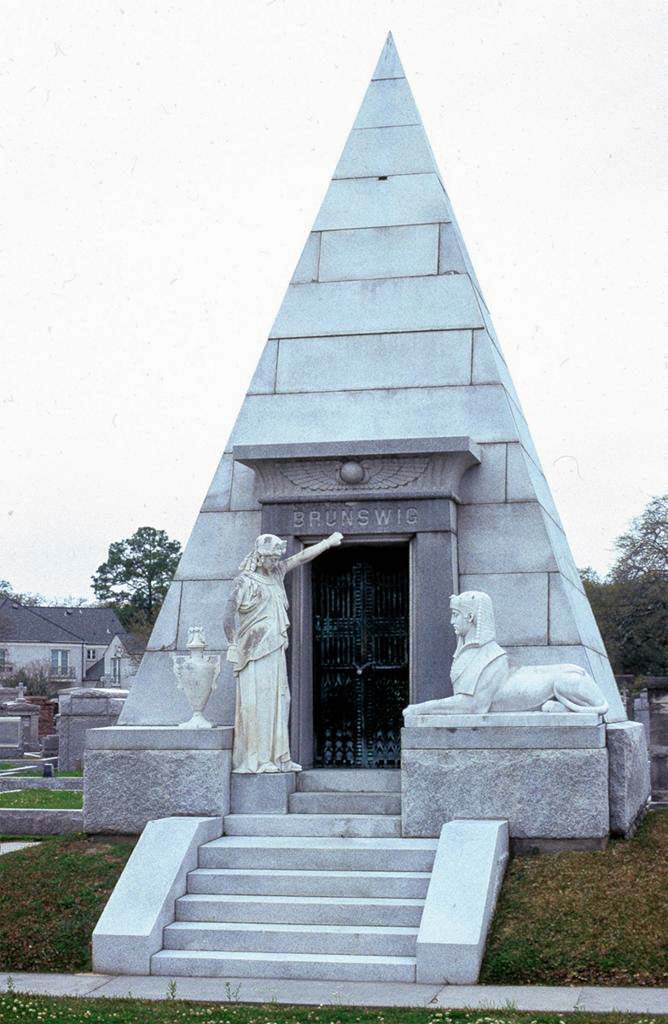
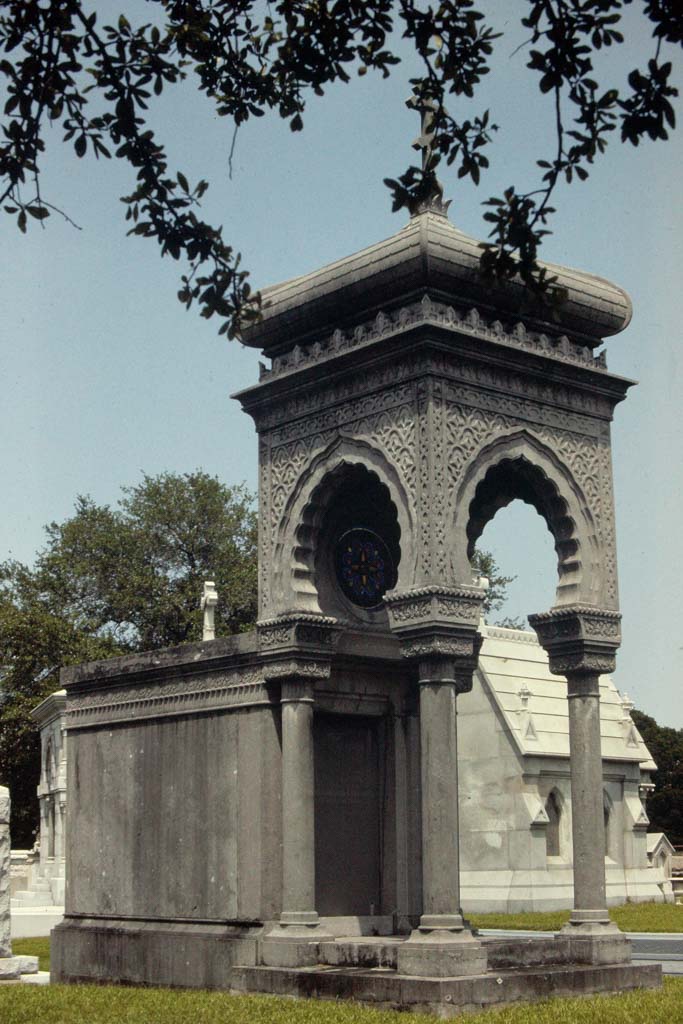
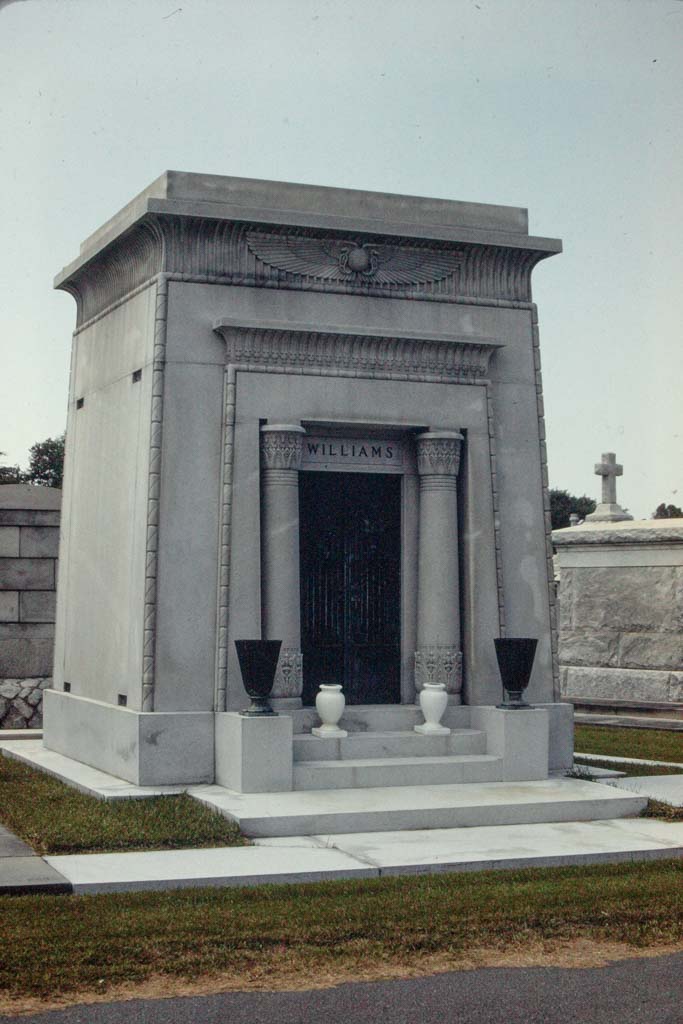
In 1872, the Metairie Cemetery Association purchased the then-just-closed Metairie Course racetrack (established 1838) and converted it into a sixty-five-acre landscaped burial ground. The elliptical track formed the basis of the plan, and three smaller ellipses were laid out within it to serve as paths. Cross avenues and diagonals creating circles and triangles, live oak trees festooned with Spanish moss, and, originally, a series of lagoons created a picturesque garden of the dead in the manner of the influential Père Lachaise Cemetery in Paris. Tombs at Metairie are more spaciously laid out than in other New Orleans cemeteries and constitute some of the most spectacular and grandiose funerary architecture in the United States. They include Greek temples, Gothic extravaganzas, Islamic pavilions, a Celtic cross, and tombs embellished with stained glass windows, broken columns, and allegorical figures. The early-twentieth-century tomb of Lucien Brunswig, designed by the Weiblen Marble Company, features a pyramid, sphinx, and female figure gesturing toward the bronze door. Metairie Cemetery merged with Lake Lawn Cemetery in the 1970s; Lake Lawn’s mausoleum dates to 1949.
Metairie Cemetery
1872, Benjamin F. Harrod. Pontchartrain Blvd, near Metairie Rd.