

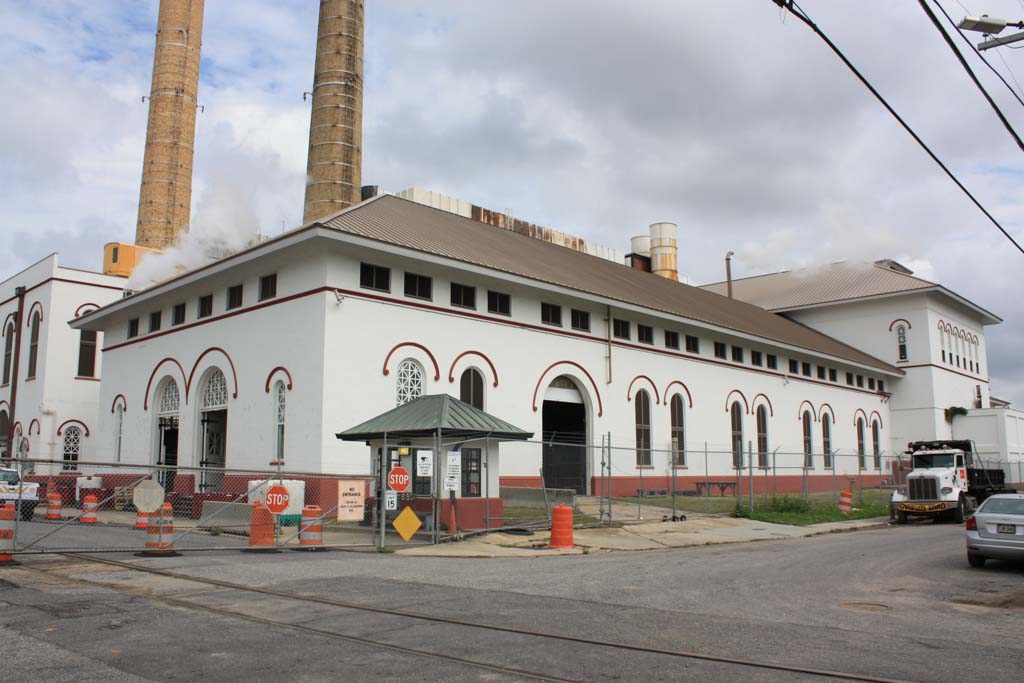
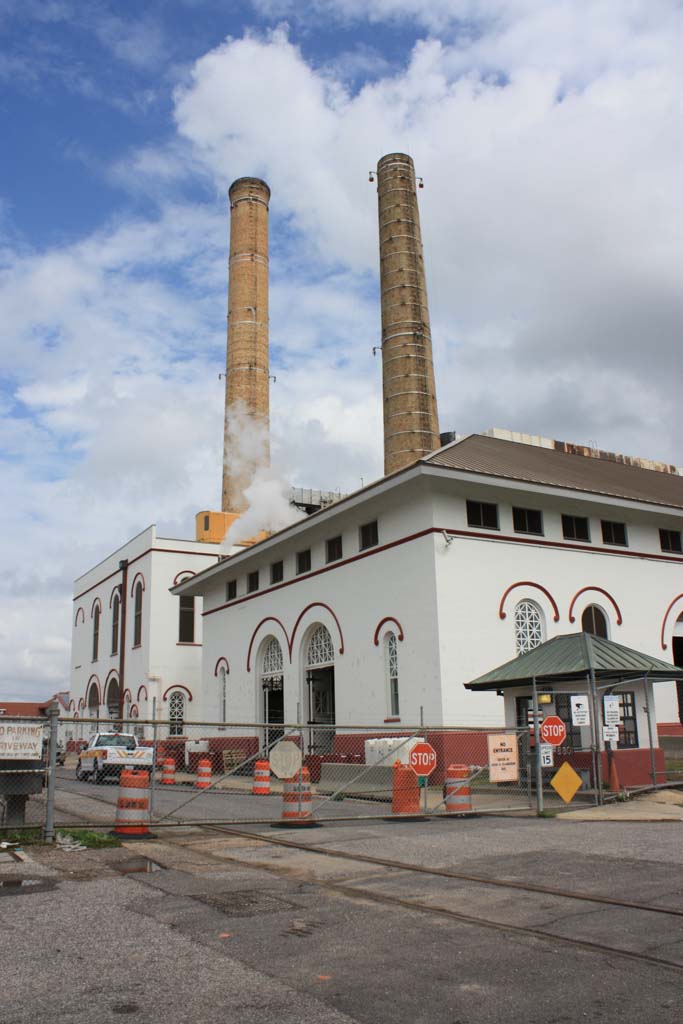
In 1899, two years after the city was quarantined during a yellow fever epidemic, voters passed a bond issue to finance and build a sewerage and drainage system and waterworks for the city. Construction began in 1903 to designs by Armstrong (1868–1953), who had studied engineering and architecture at the University of Illinois. The system began operating in 1907 in several parts of the city. Armstrong designed nine pumping stations and two large water-purification plants and established the exterior appearance and style of the buildings that house the pumps, boilers, and administrative offices, which the Water Board has followed in all new construction. The Water Board wanted buildings with a distinctive look, which the design achieved: red tile roofs with deep eaves, brick walls stuccoed in a cream color, and red terra-cotta outlining the round-arched openings. According to the waterworks superintendent, projecting eaves were ideal for the New Orleans climate, shading walls and saving the expense of gutters and downspouts. The buildings convey a clean, crisp image for the Water Board and were economical to construct. Engine floors in the powerhouses were built well above ground level, which reduced the amount of excavation necessary for the foundations and kept the machinery above the water table. The old filter gallery, twenty-eight filters in an open water tank subdivided into 8 x 8–foot-square units and surrounded by an arcade like a medieval cloister, reinforces the Mediterranean appearance of the buildings. By 1909, New Orleans had a water-purification system, and Armstrong completed his work the following year. The Mississippi River is the source of water for New Orleans, which uses approximately 135 million gallons each day. City water is treated at this plant for east-bank residents and at another plant in Algiers, on Elmira Avenue, for west-bank residents.
Sewerage and Water Board of New Orleans
1903 begun, James Wadsworth Armstrong. 8700–9300 S. Claiborne Ave.