

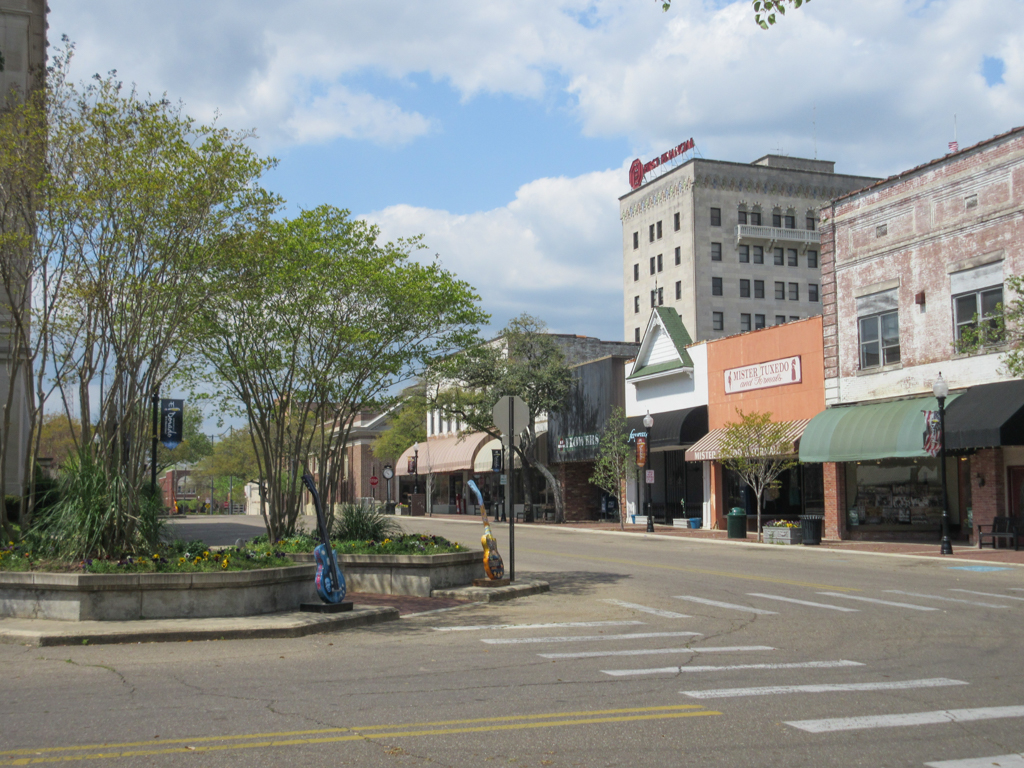
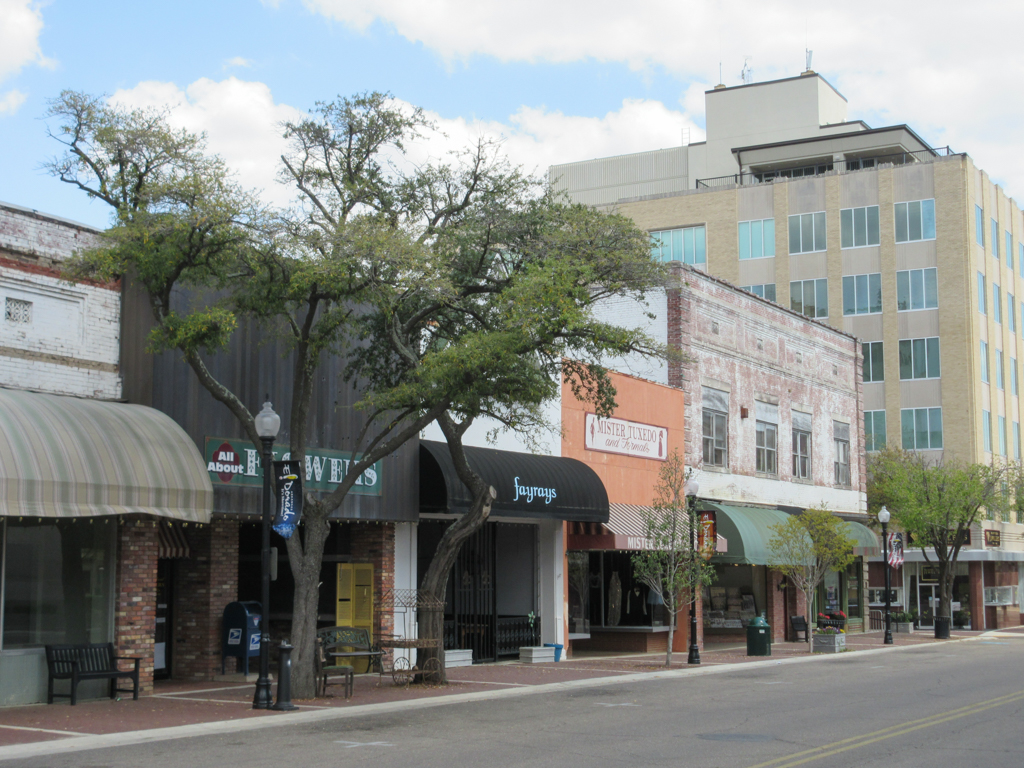
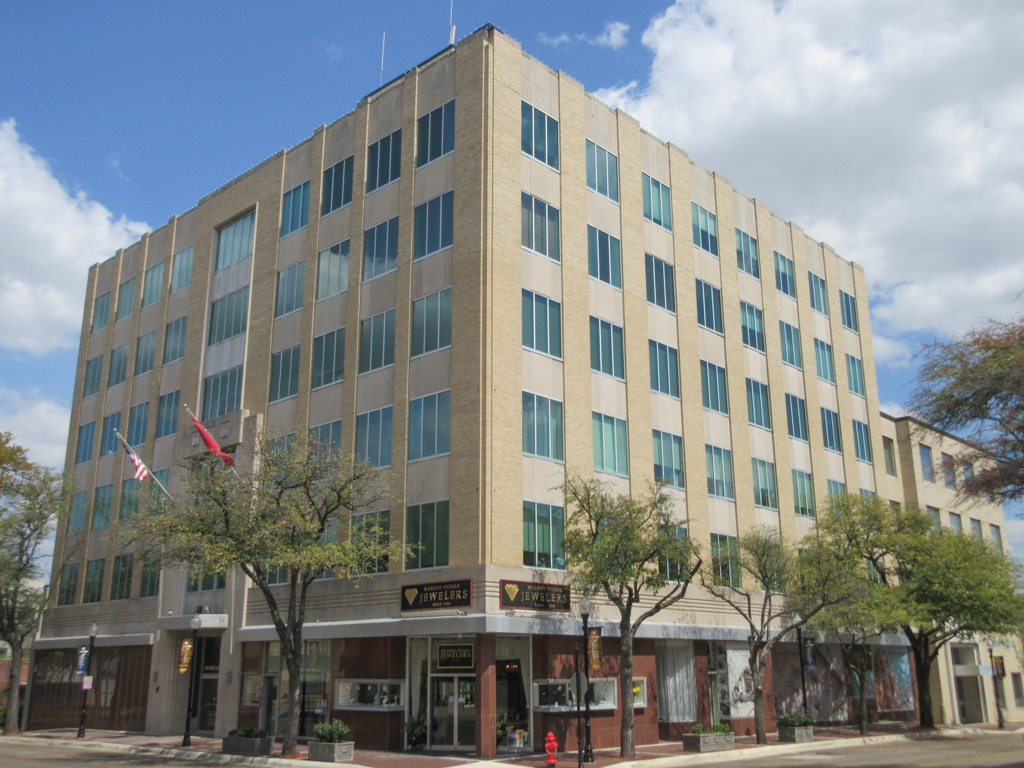
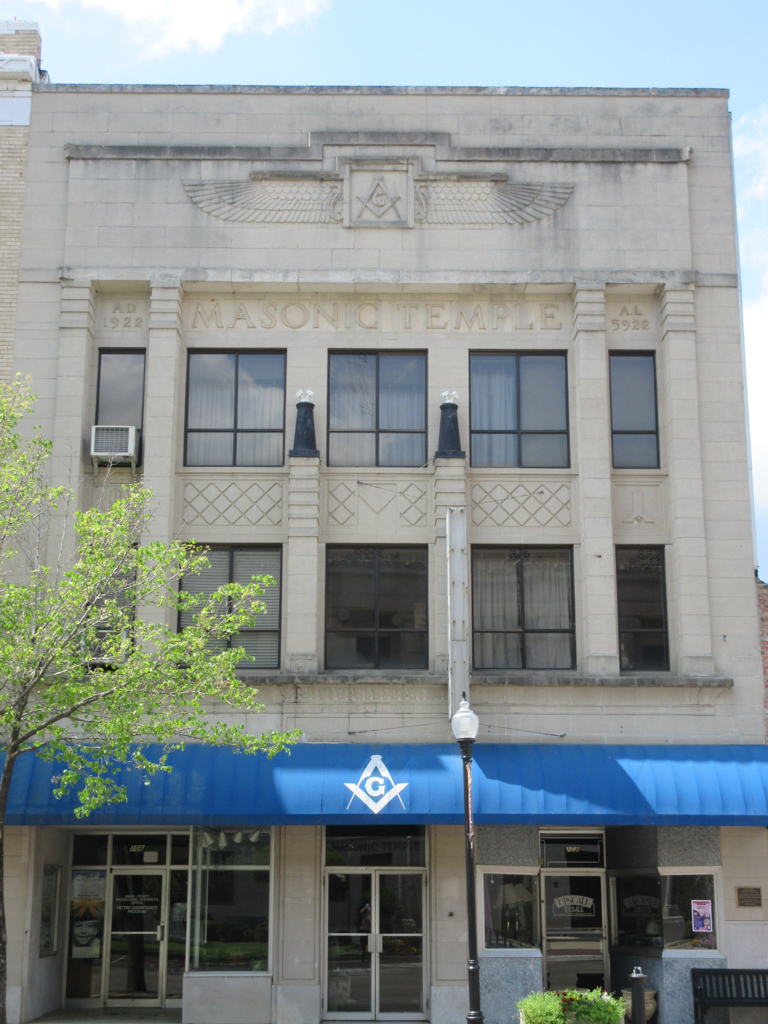
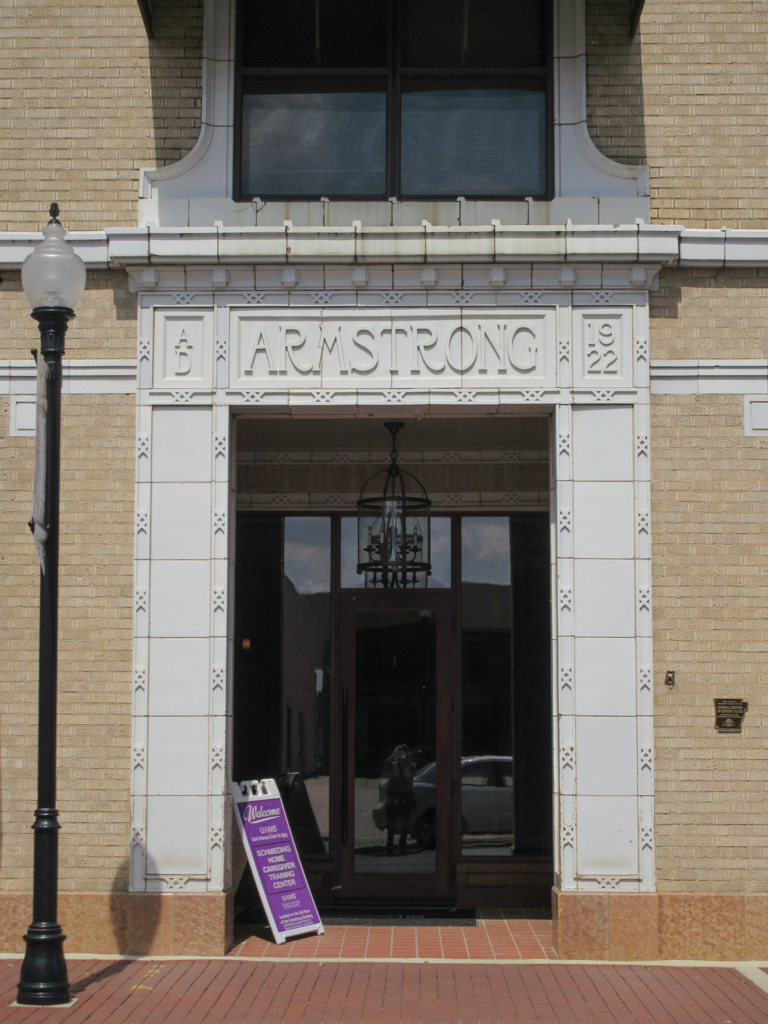
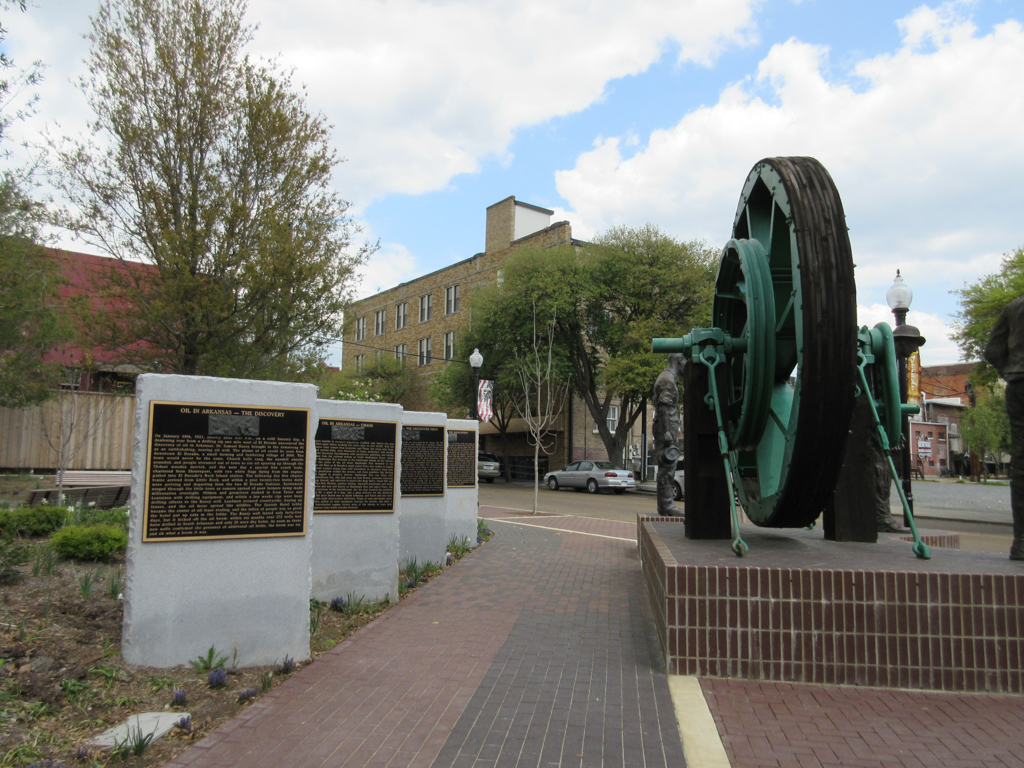
Although construction along the principal commercial streets around the Union County Courthouse (UN1) dates from 1879, the area primarily reflects El Dorado’s 1920s boom when more than half the structures were built. With the exception of the eight-story former Exchange Bank Building (UN6) and the six-story historic Murphy Building (1950–1953; 200 N. Jefferson) one- or two-story brick storefronts predominate. In a time when neglect, decay, and insensitive alterations and intrusions make many downtowns in small Arkansas cities appear blighted, El Dorado has maintained what is one of the state’s most attractive and vital city centers. Taking advantage of the Arkansas Main Street Program, the downtown now has tree-lined streets with rehabilitated storefronts, along with appropriate signage, street lights, benches, planters, and whimsical sidewalk sculptures, which create a visually unified and cheerful ambiance. The three-story limestone-clad Art Deco–influenced Masonic Temple (1922; 106–108 N. Washington) designed by Little Rock architect Charles S. Watts is noteworthy for its striking exterior relief sculpture featuring the Masonic emblem centered beneath outstretched wings. On the interior, the third-story Lodge Room is elaborately embellished with Egyptian motifs and paintings by artist Thomas G. Moses depicting the construction of King Solomon’s Temple. At the corner of E. Cedar Street and S. Jefferson Avenue is a pocket park showcasing pieces of oil-drilling equipment along with information markers describing the city’s oil history.
El Dorado Commercial District
1879–1950s. Bounded approximately by Washington and Jackson aves., and Oak and Locust sts.