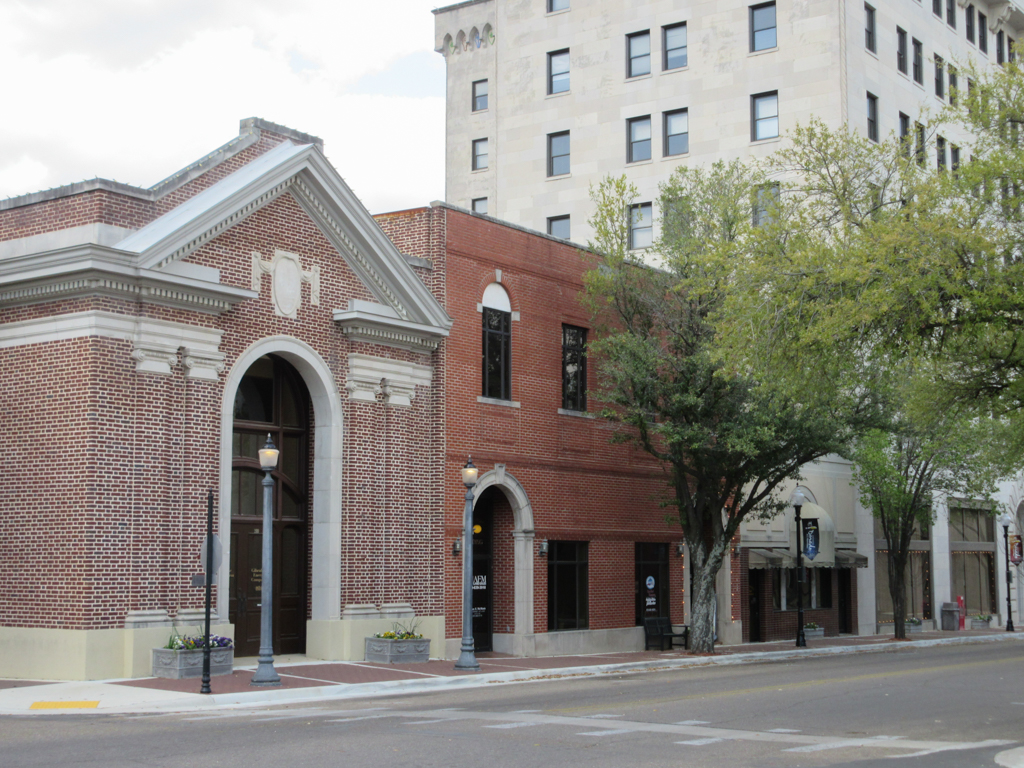
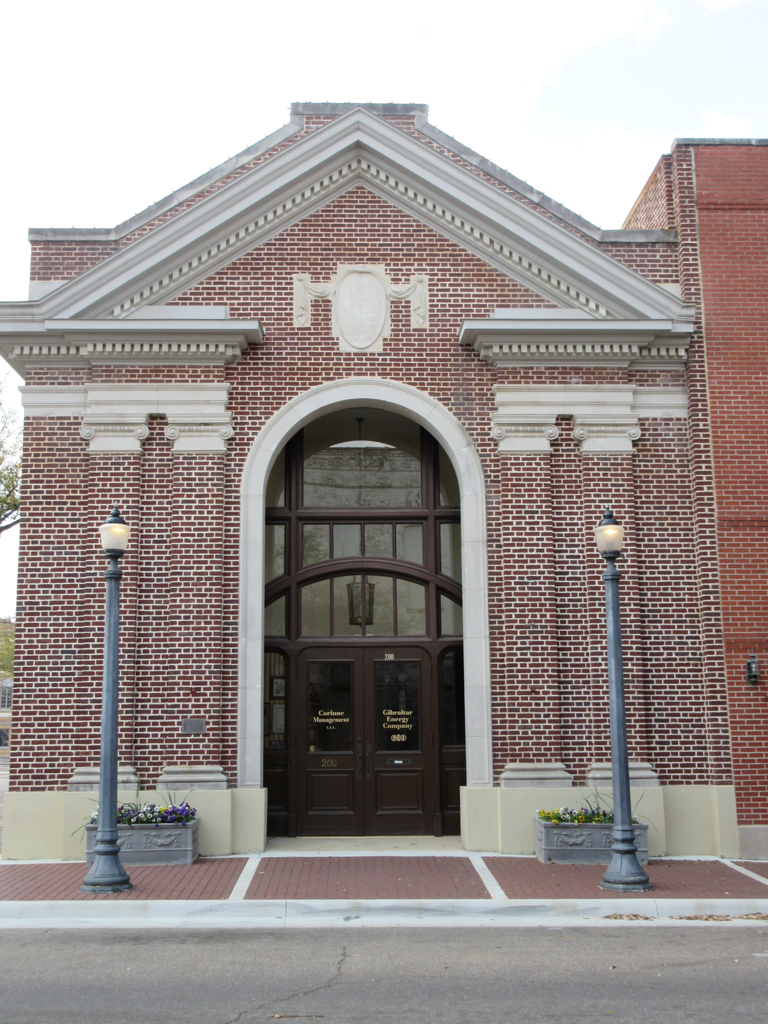
With remarkable prescience, the bank directors commissioned this sophisticated classical design in 1920 when the institution only served a small timber and farming community. Following the oil boom, the bank was reorganized and received a federal charter. Despite its modest size, the two-story Flemish bond brick bank has an air of monumentality. The arched entrance is framed by paired Ionic pilasters that support a broken pediment. A wide entablature unifies the front and side elevations. The south-side elevation has single-story brick piers capped by cast-stone spheres marking the window bays. After the bank moved in 1973, the building was converted for office space; no original interior fittings remain.

