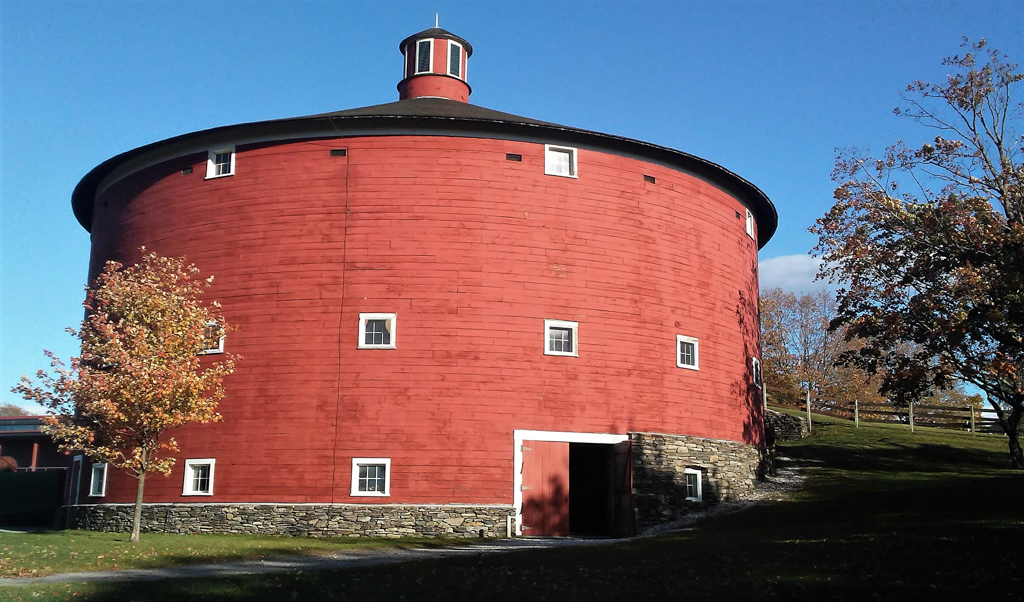
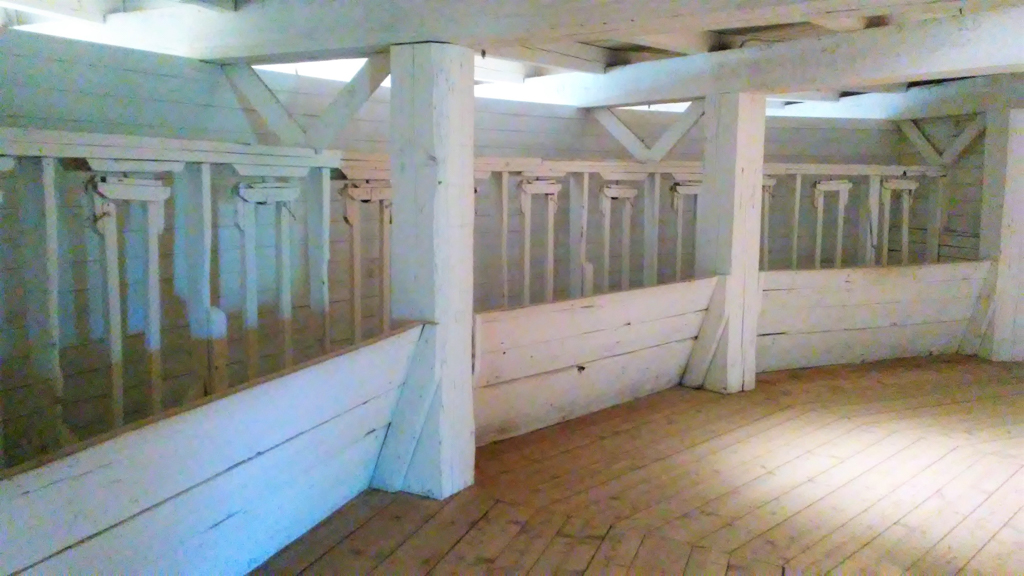
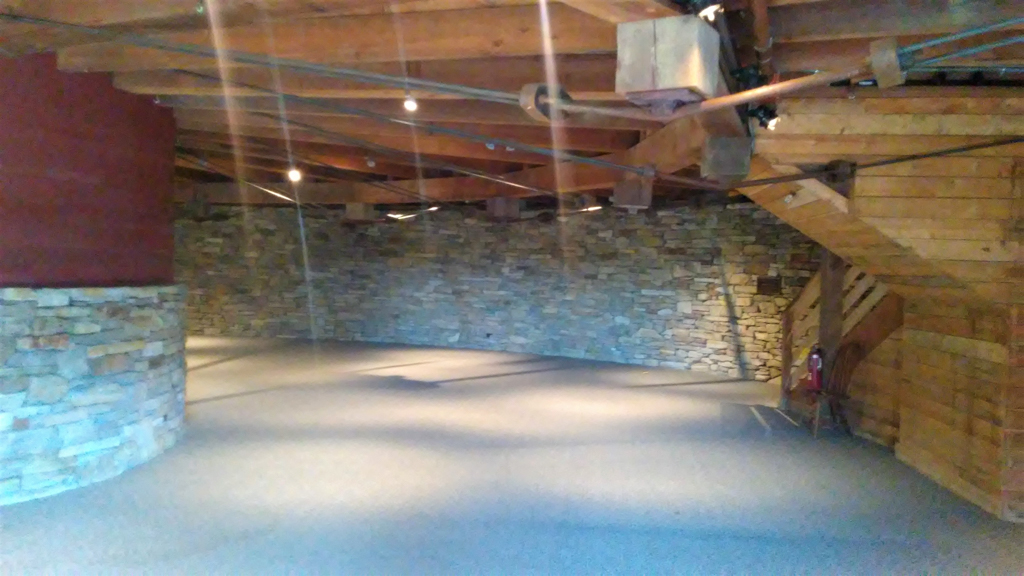
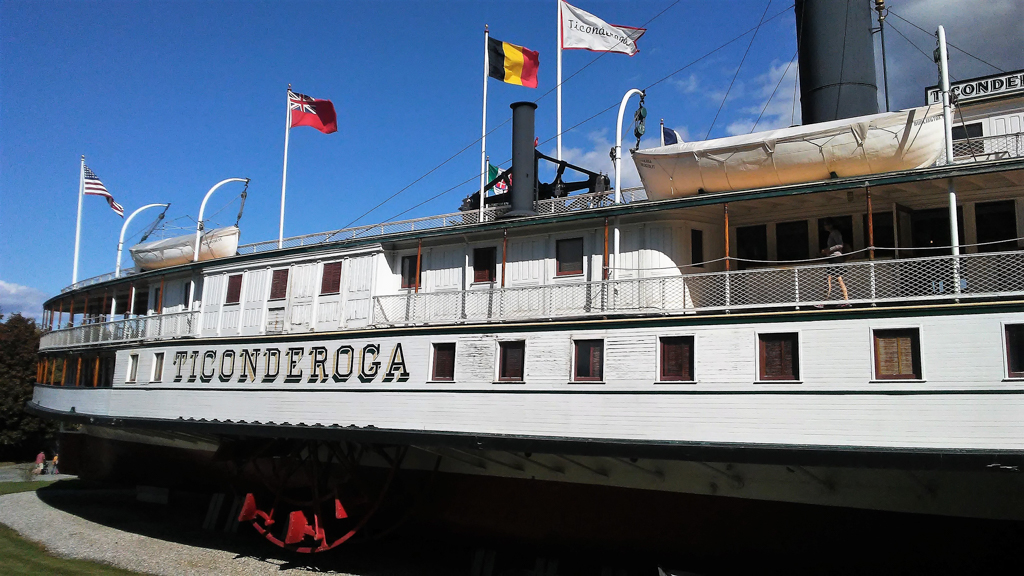
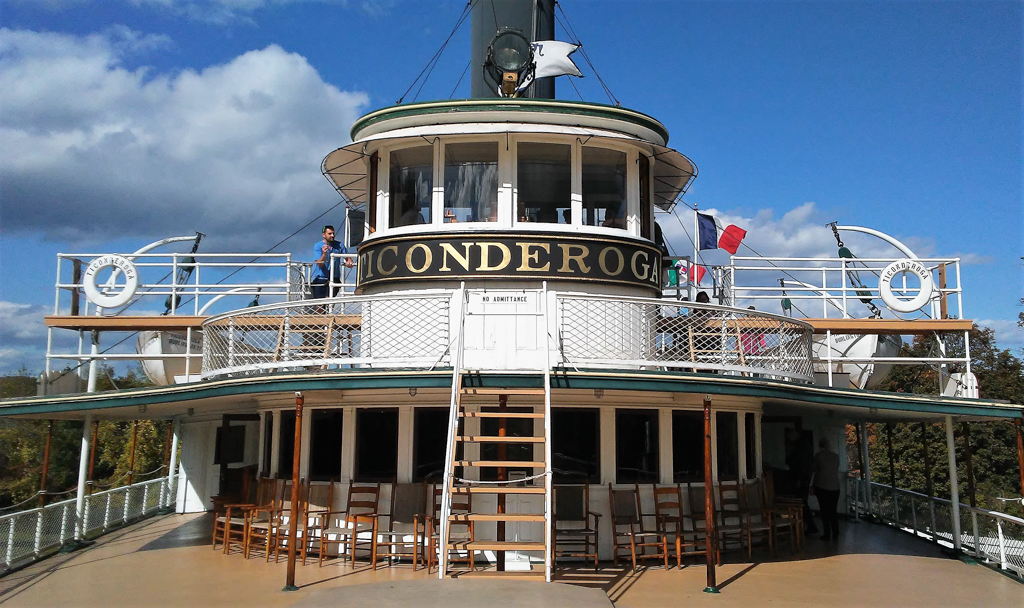
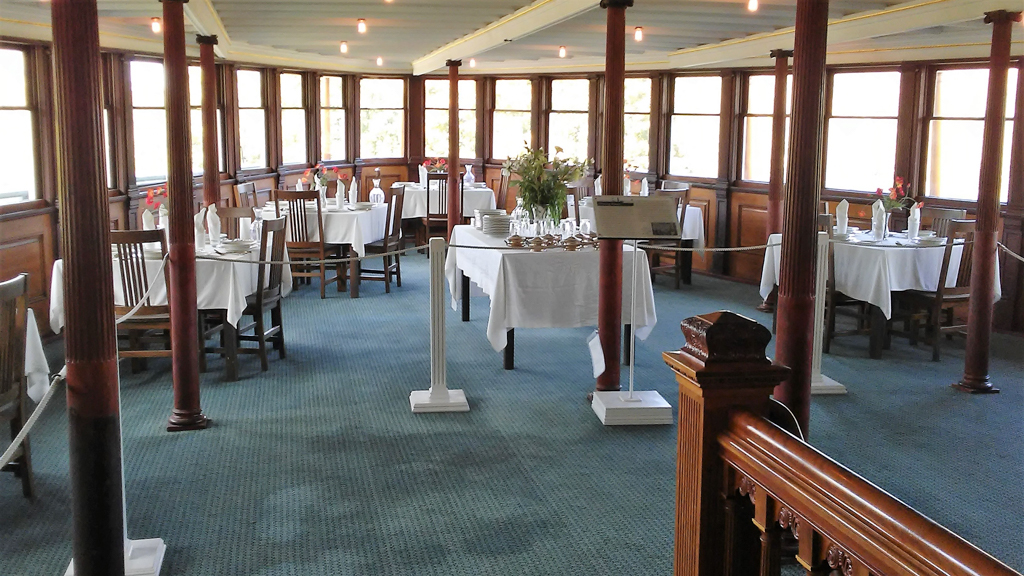
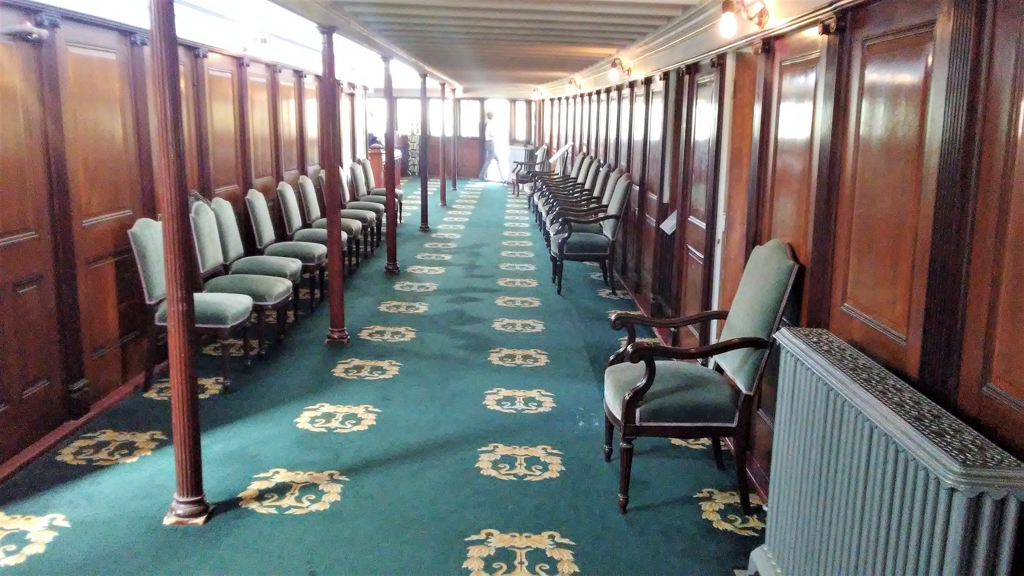
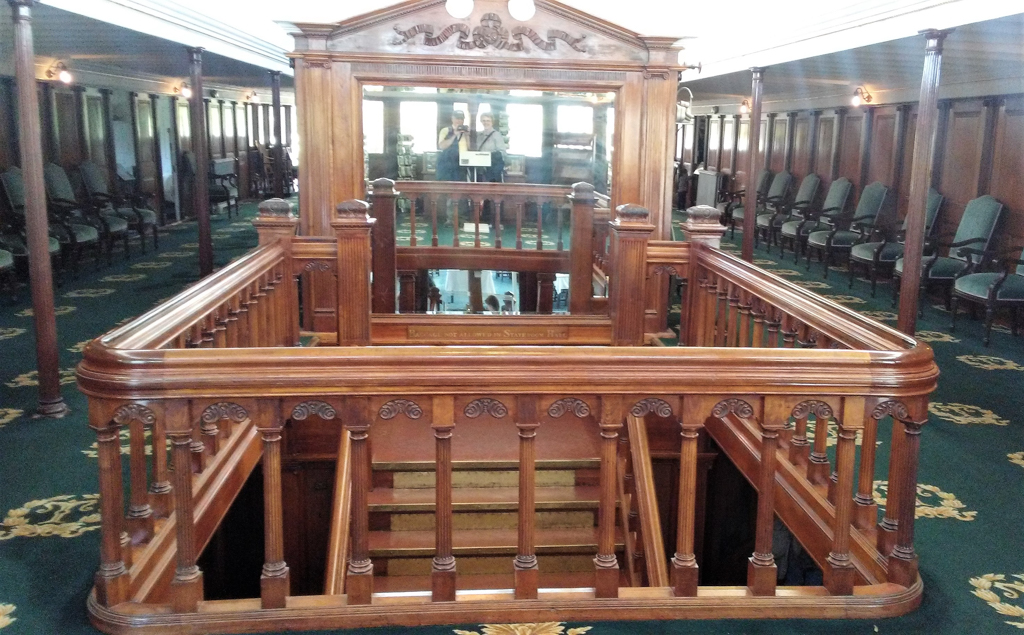
The Shelburne Museum was founded in 1947 by Electra Havemeyer Webb to house her collections of American material culture and folk art. Conceived in the mode of the recently opened Old Sturbridge Village in Massachusetts, it included buildings among its displays. For more than two decades Electra Webb assembled a forty-five-acre site at the edge of Shelburne village and filled it with thirty-seven buildings, some purposely constructed, but most acquired in Vermont and neighboring states and reconstructed on-site. Though these historic structures were decontextualized, and some were fitted out with interior details from other period buildings, this open-air museum preserves a remarkable cross section of regional building history. A center chimney saltbox (1733) is from Hadley, Massachusetts; a Cape Cod (1804) with remarkable stenciled interiors is from Columbus, New York; and a Shaker horse-stand shed (1834) is from East Canterbury, New Hampshire. The rest tell tales of building in Vermont. Some, like a brick blacksmith shop (1800), a Shingle Style railroad station by Robert H. Robertson (1890), and an authentically restored 1950s ranch-style house, are from Shelburne village. From elsewhere in the state came a stagecoach inn (Charlotte, 1783), a Federal brick schoolhouse (Vergennes, 1830), a Burr arch truss double-covered bridge (Cambridge, 1845), and an eighty-foot-diameter round barn (East Passumpsic, 1901). From Lake Champlain came the mansard-roofed Colchester lighthouse of 1871 and the grand two-hundred-and-twenty-foot-long lake steamer SS Ticonderoga (a National Historic Landmark). Among the museum's nineteenth-century domestic buildings, the grand temple-style house (Webb Memorial Building) that dominates the south lawn is a replica (1960–1967) of the Wilcox House of 1843 in Orwell that Electra Webb was not able to acquire. It reproduces English period interiors originally installed in J. Watson and Electra Webb's New York City apartment.

