

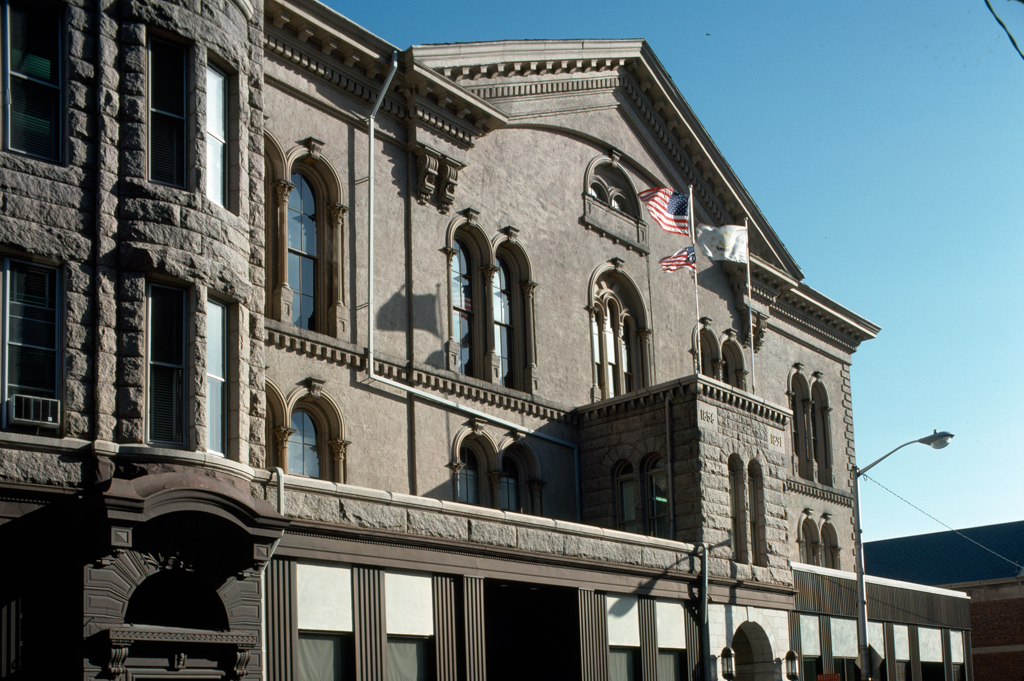
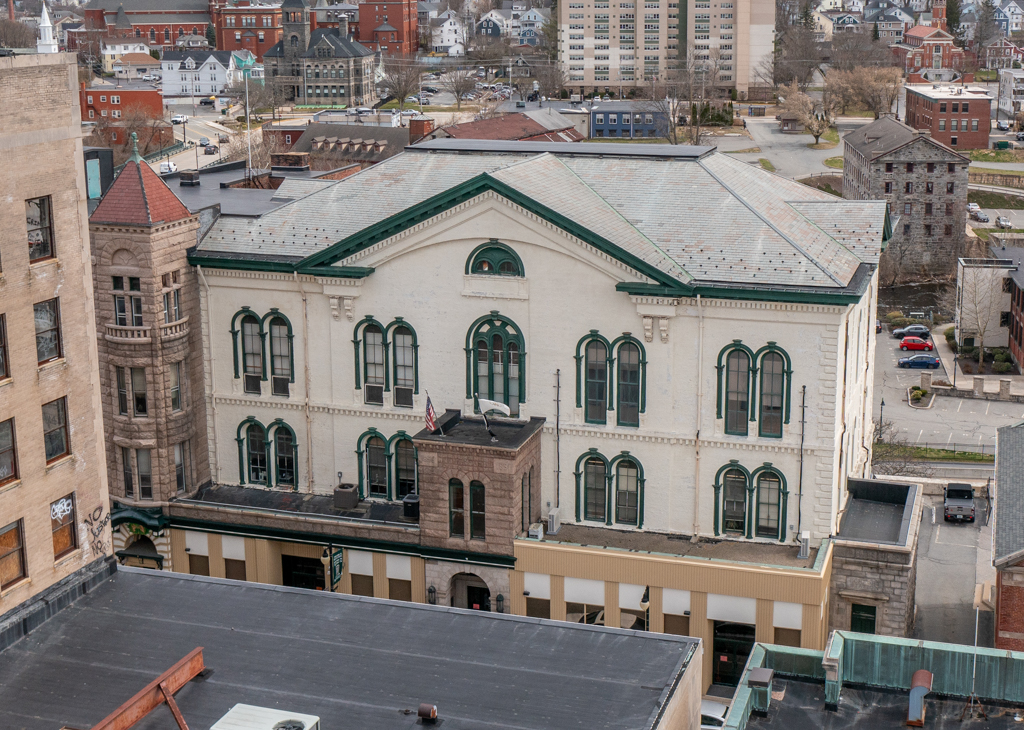
Above and behind its partial encasement by the Neo-Romanesque addition (built when this, the city's first large-scale civic building, officially became the city hall), can be seen the tall, paired, round-arched windows of the original facade of the Harris Institute. The obscured building was commissioned by the industrialist Edward Harris. In both design and function the institute combined the pragmatic economic attitudes of a good businessman with the philanthropy of industrial paternalism. Built to look as if it were of fashionable and expensive brownstone with stone trim, the high-style Venetian Renaissance–inspired facade is in fact of stuccolike mastic, while the columns and surrounds of the windows are cast iron. On its top floor the building housed an assembly hall with 1,100 seats that placed Woonsocket on the national lecture circuit. (Abraham Lincoln spoke here in 1860 during his presidential campaign.) The floor below contained a “Sunday school”—not a religious institution, but a free school for mill workers, where they could learn to read and write and otherwise improve themselves on their days off. Street-level stores generated income to help finance the social and civic programs of the building. Modern streetfront excrescences to accommodate the city's bureaucracy seriously deface a building which deserves a better fate, for both architectural and historical reasons.
Woonsocket City Hall (Harris Institute)
1856, 1891. Mid-20th century, streetfront remodeling. 169 Main St.