Précieux Sang

Précieux Sang

Précieux Sang Photographs by Sterling Vernon
Photo 2 of Précieux Sang Photo 3 of Précieux Sang Photo 4 of Précieux Sang
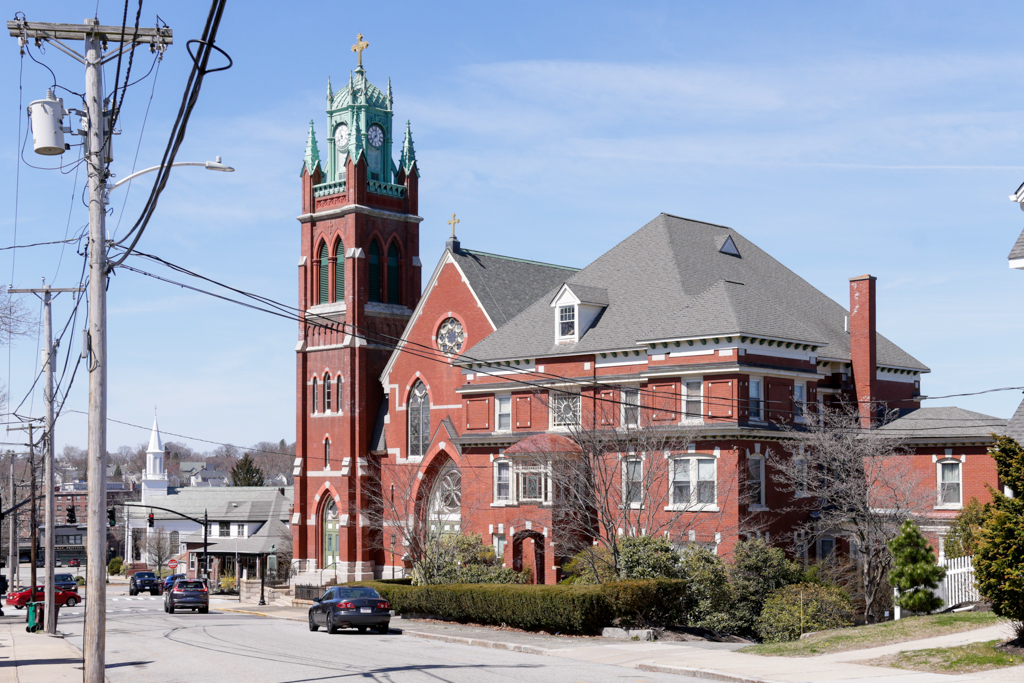
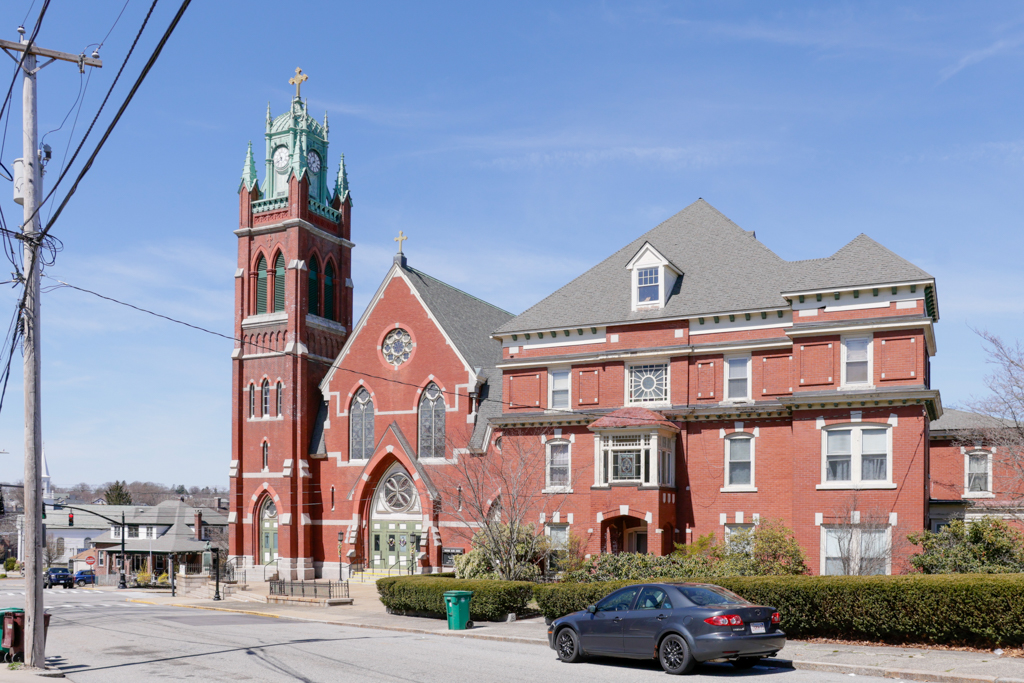
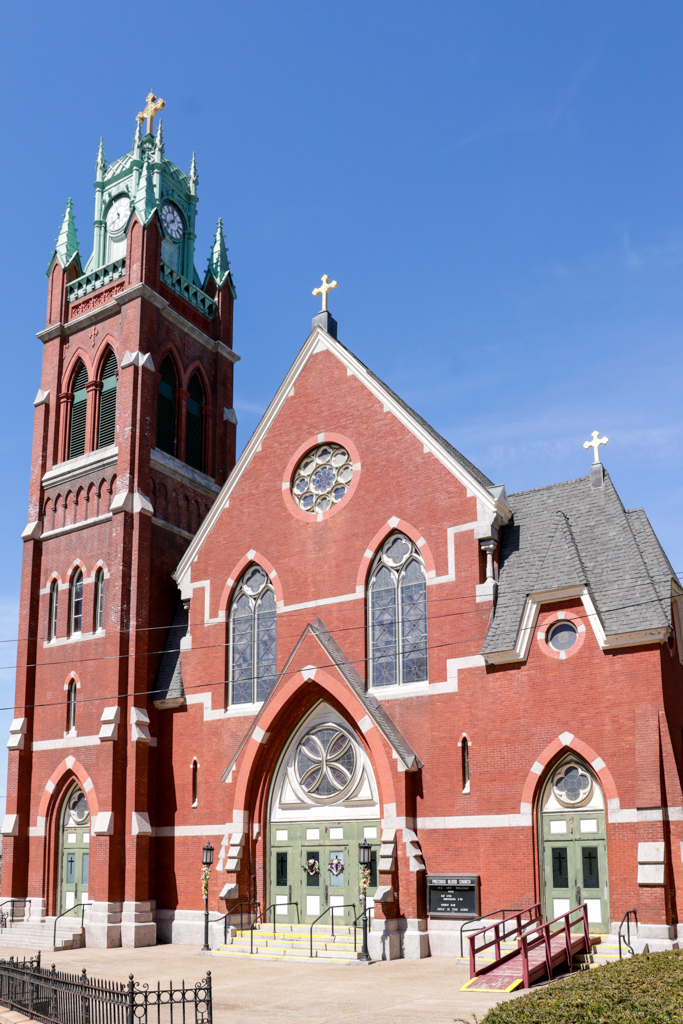
1881. Copper belfry, early 20th century, Walter F. Fontaine. 92 Carrington Ave. (at Park Ave.)

Until this church was built, the French Canadians of Woonsocket had no parish of their own. Instead they worshiped at the Irish Catholic church of St. Charles Borromeo ( WO32). Although Précieux Sang has a similar asymmetrical elevation with corner tower and gabled nave, unlike the earlier church, which is built in gray stone, this is of more economical brick with desultory white masonry trim. As in much polychromatic Victorian design, color changes emphasize the plethora of small-scale features—now a gable, now a pointed-arched opening, now a diminutive rose window—that seem to have been assembled piece by piece, as a collection of motifs, rather than to have been composed as a whole. The result, at this scale and with this degree of contrast in colors and materials, is quaint, but also compelling in the manner in which the components assert themselves as primal signs of “architecture” and “Gothic church,” like pieces in a box of Victorian polychromatic building blocks.

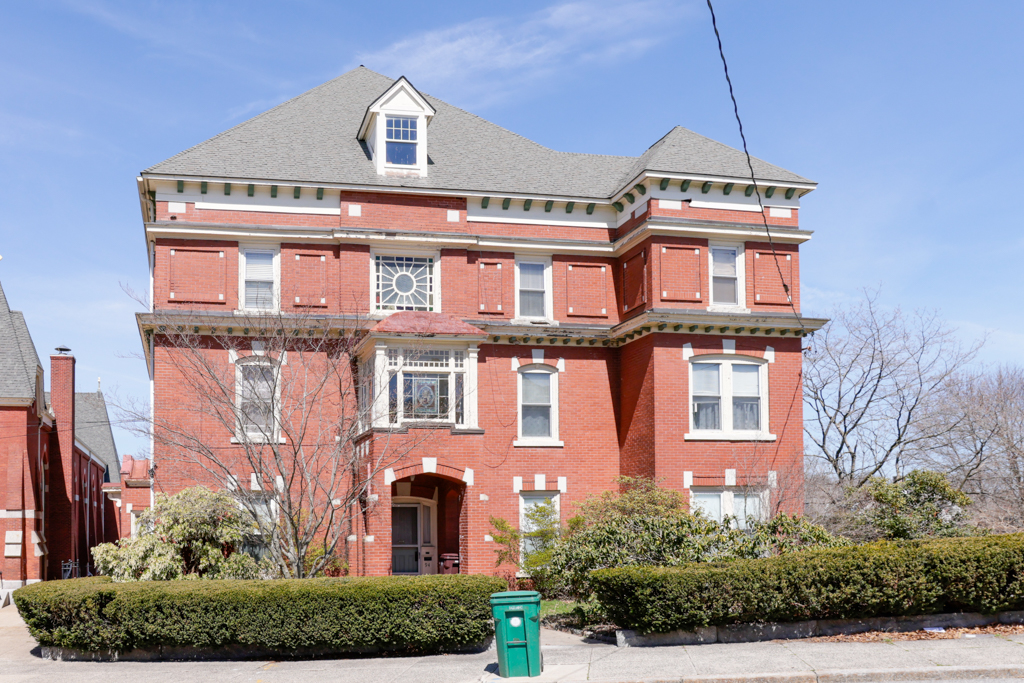
Allegedly the design of Précieux Sang derived from that of St. Charles Borromeo, the composition of this facade generally recalling that of the earlier church. Inside are far greater similarities in the comparable handling of the pointed ribbed plaster vaults and their focus on a delightful Gothic Revival altarpiece. Here the saints stand in niches outside a miniature replication of a Gothic church which seems to have been lifted from an illuminated medieval manuscript. The balconies (once also in St. Charles Borromeo, but there removed) are here squashed under the aisle arcades with their railings nudging the capitals. They betray an unsophisticated designer, as do the tiny arched windows where a generous clerestory should be. So also the voussoirs of the vaults taking off from bracketed capitals tucked into the forkings of the arcade arches, the capitals recalling bird nests in the branching of a tree. Clearly the vaults do not consistently rest on supports that come to the ground, but arc as a plaster canopy, its lathing hung from wood or metal ties off the roof structure above. Such, indeed, is the case with most Gothic Revival interiors of the period—St. Charles Borromeo and St. Joseph's in Cumberland ( CU9) providing two nearby examples. But one also senses in this interior the commitment of the parish and its designer to creating an impressive ecclesiastical setting which, like that at St. Charles, is today among the best-preserved mid-to-late-nineteenth-century Gothic Revival interiors in the state. Guido Nincheri, who much later painted the murals at St. Ann's ( WO1), here executed the stained glass windows. Across the street, at 61 Park Avenue, stand St. Clair High School and Convent, the latter especially of considerable architectural quality, and now converted to housing. Taken together, they suggest the extent and visibility of the parish and measure the rise of French Canadian dominance in the culture and politics of Woonsocket.

Writing Credits