

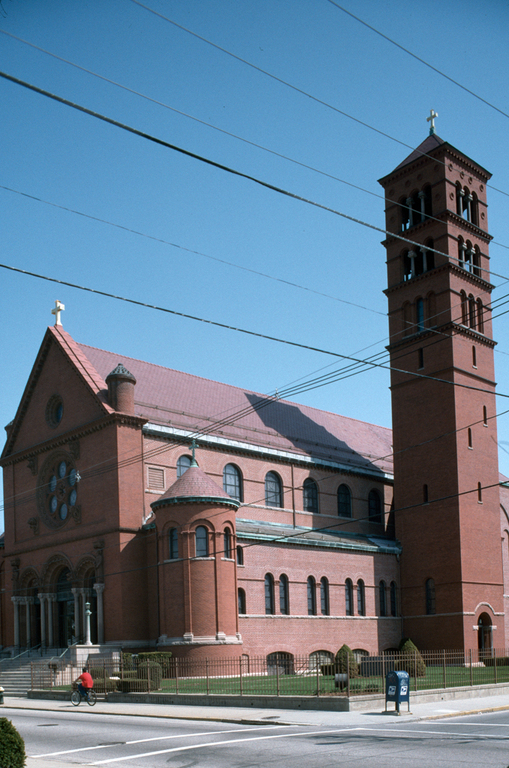
From the 1890s through the first decades of the twentieth century, late medieval and early Renaissance Italian churches in brick such as those in Siena and Verona became very popular models for American Roman Catholic parishes. Interest in artistic brickwork and terra-cotta was substantial at the time—so much so that The Brickbuilder became a popular professional journal. Moreover, this type of church, with its exposed timber construction to support a gabled roof, avoided the problems and expense of vaulting in stone, and its square-planned campanile also eliminated the complexities of spires. In any event, the western part of Providence and other industrial cities around it are dotted with parish campaniles in brick, all of the period of the Church of the Blessed Sacrament. This is the finest example of the type in the city for both exterior and interior. Apart from the fine quality of the brickwork, the triple-arched Neo-Romanesque portal and wheel window above it are handsomely trimmed in red granite, and the staging of the arched windows at the top of the almost freestanding campanile is nicely proportioned. But the special attraction of this church is its richly finished basilica-plan interior, with fittings and fixtures by Heins and La Farge together with several windows by the architect's father, John La Farge. Changes at the altar occasioned by Vatican II have little harmed it.
Church of the Blessed Sacrament
 Richard W. Longstreth
Church of the Blessed Sacrament
1899–1905, Heins and La Farge. 169 Academy Ave. (at Regent Ave.)