

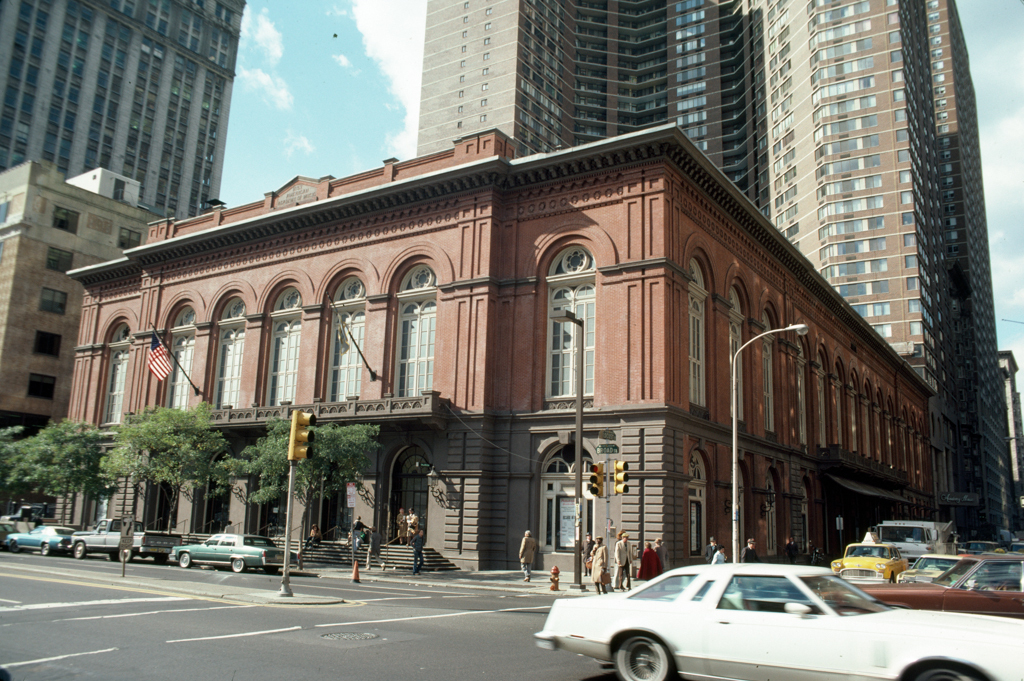
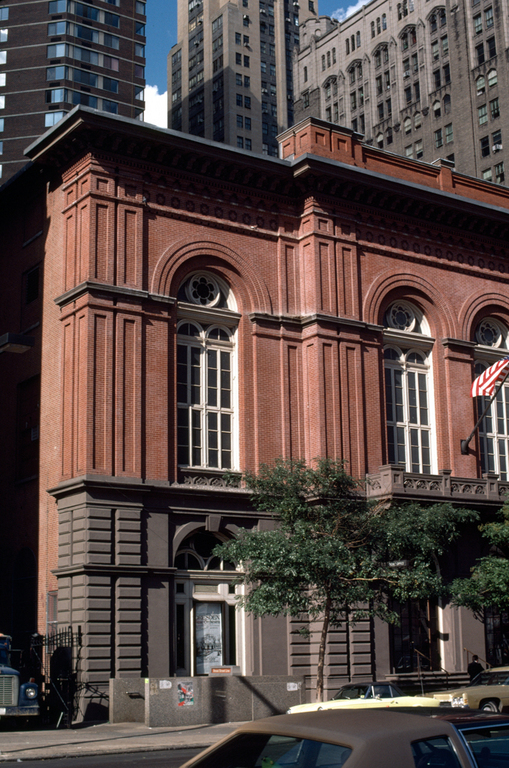
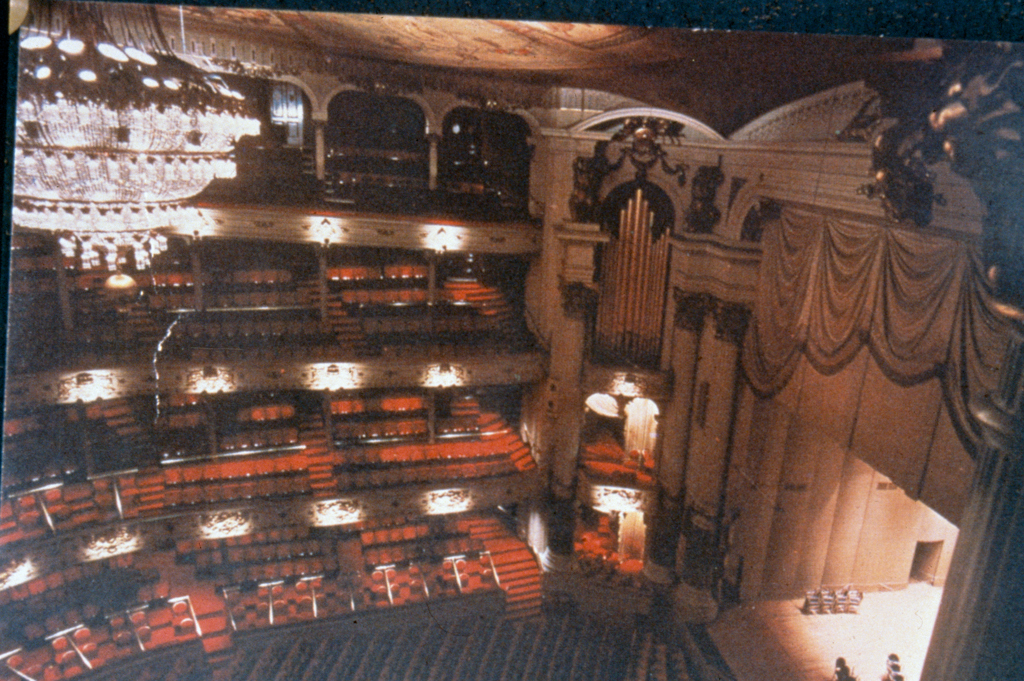
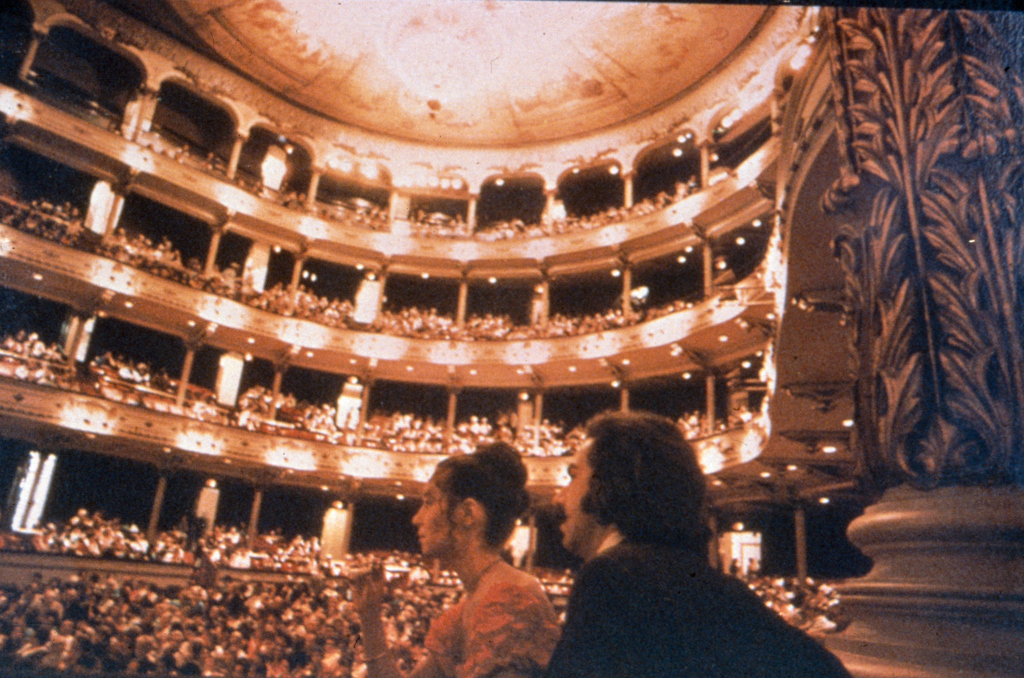
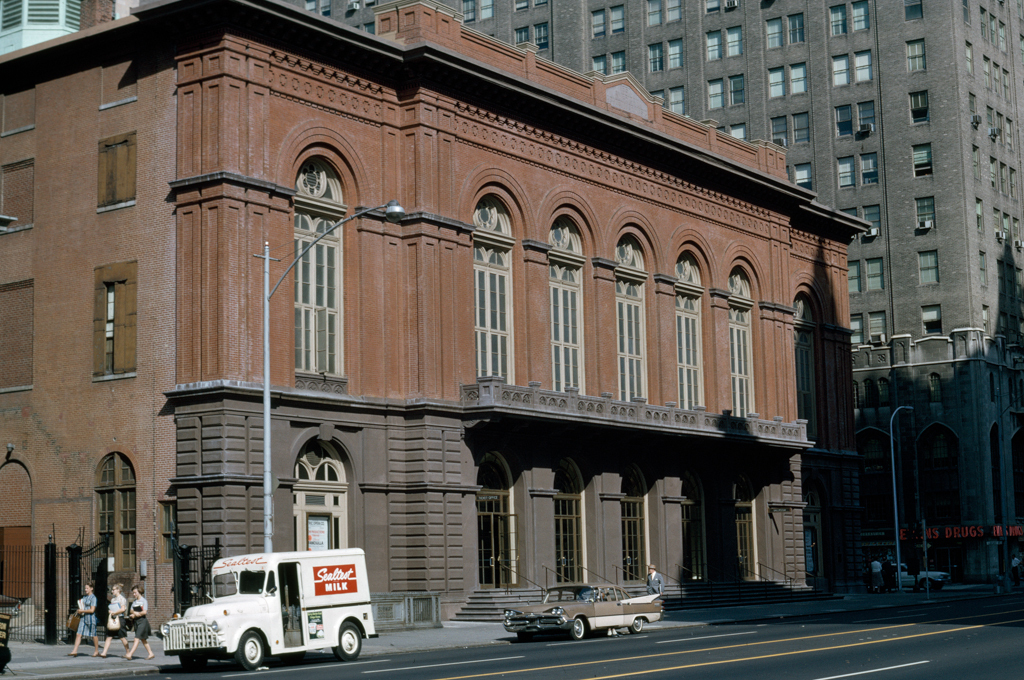
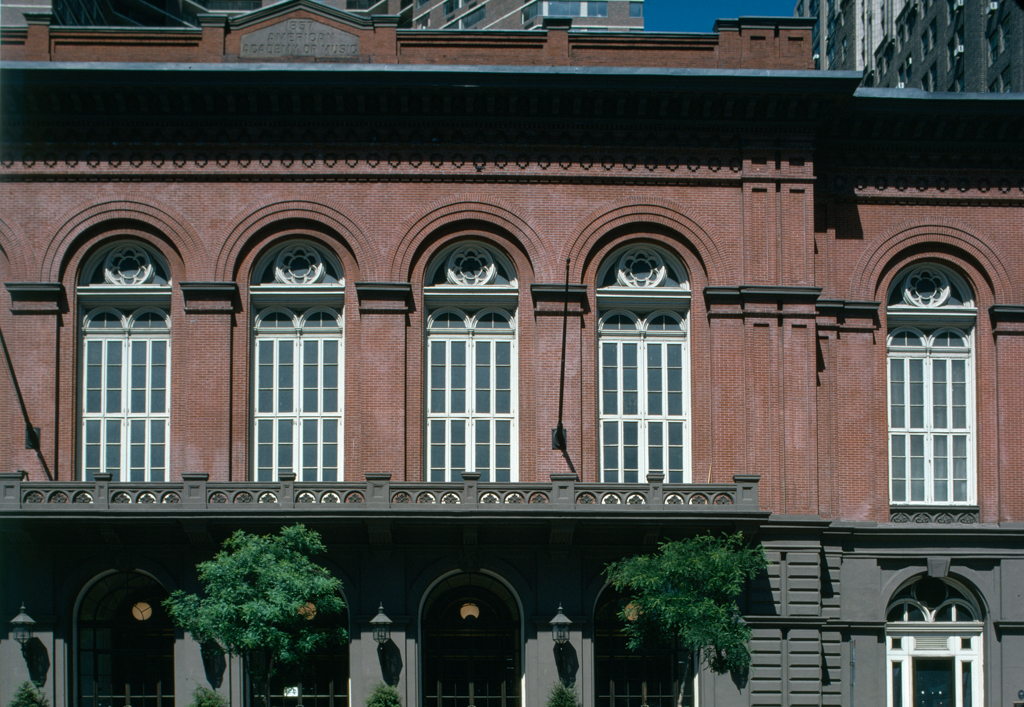
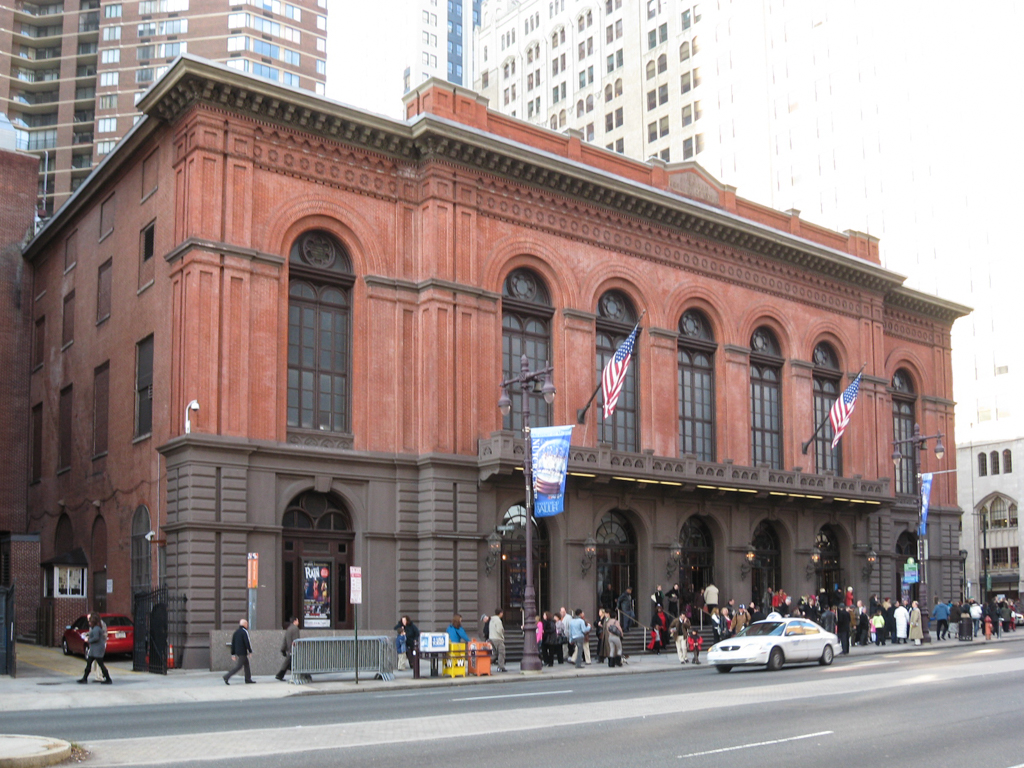
Napoleon LeBrun was the last in the line of classicists who led from Benjamin Henry Latrobe to William Strickland, and then to LeBrun's master, Thomas Ustick Walter. LeBrun's brief partnership with Gustav Runge, a German who had trained at the prestigious architectural schools of Berlin and Karlsruhe, accounts for the rather Germanic exterior, an economical and nearly industrial Rundbogenstil essay. The architects originally proposed a Venetian Renaissance design, sheathed in marble, but funds were not forthcoming. With the completion of the Kimmel Center (
PH59), the academy now returns to its original purpose as the city's venue for opera and ballet, bringing the orchestra into the pit below the stage as in the hall's model, Milan's Teatro
American Academy of Music
1855–1857, Napoleon LeBrun and Gustav Runge; 1990s restoration, Hyman Myers of the Vitetta Group. 240 S. Broad St.