

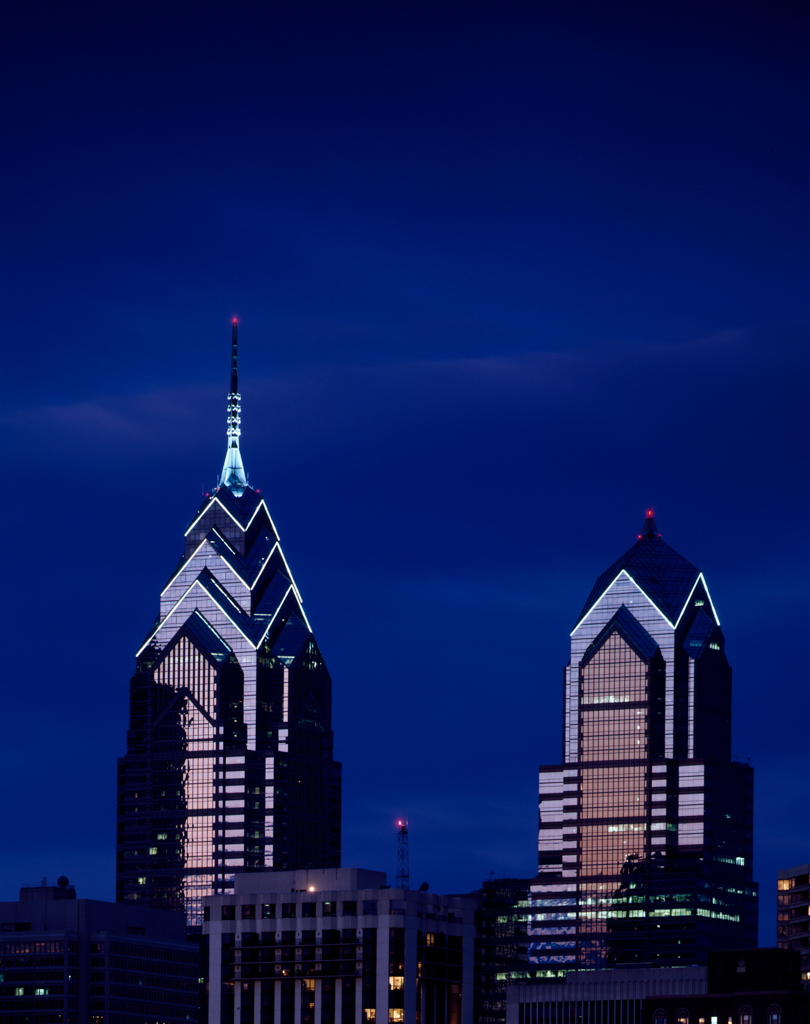
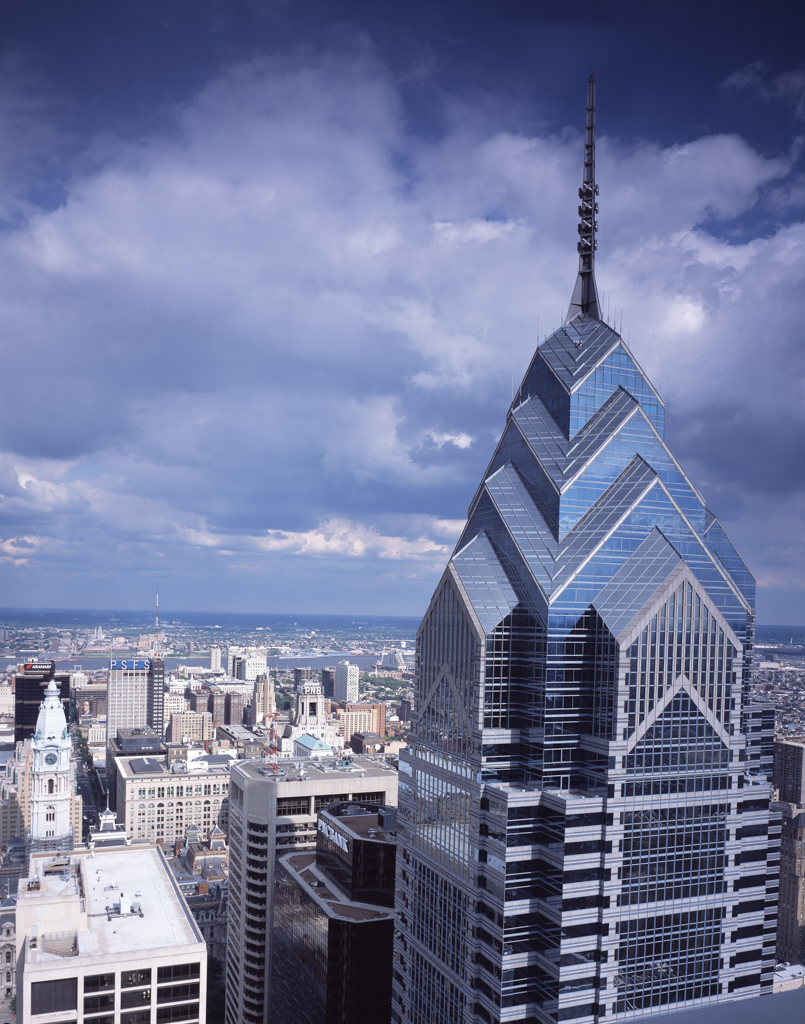
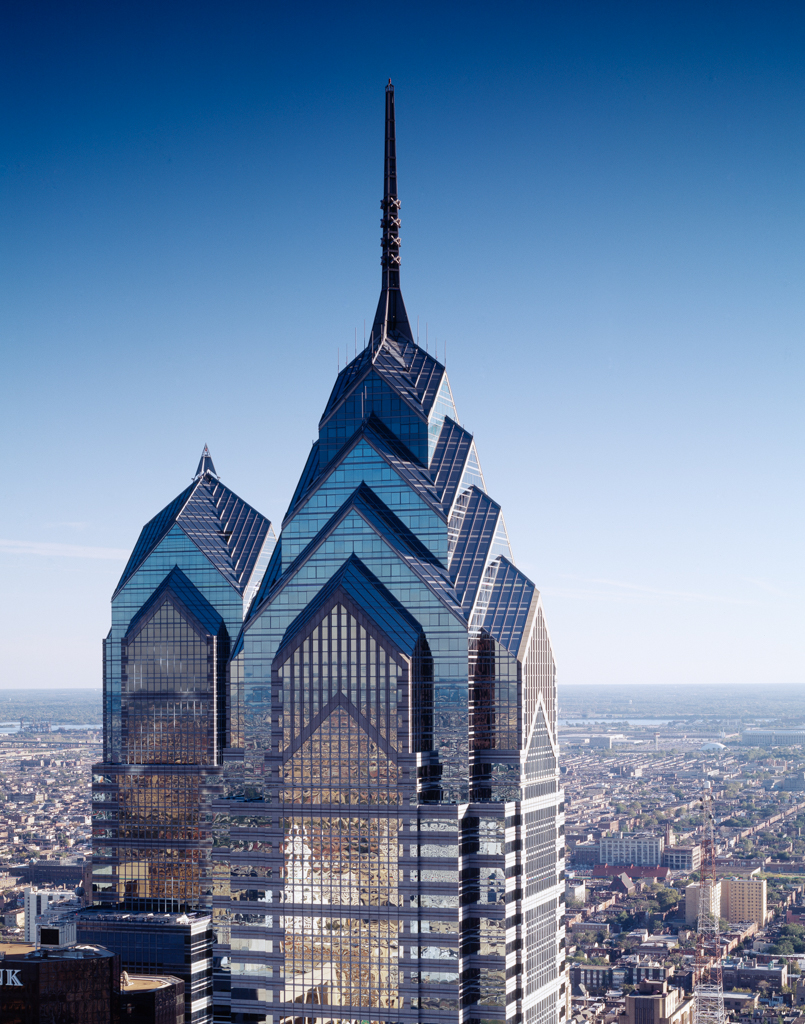
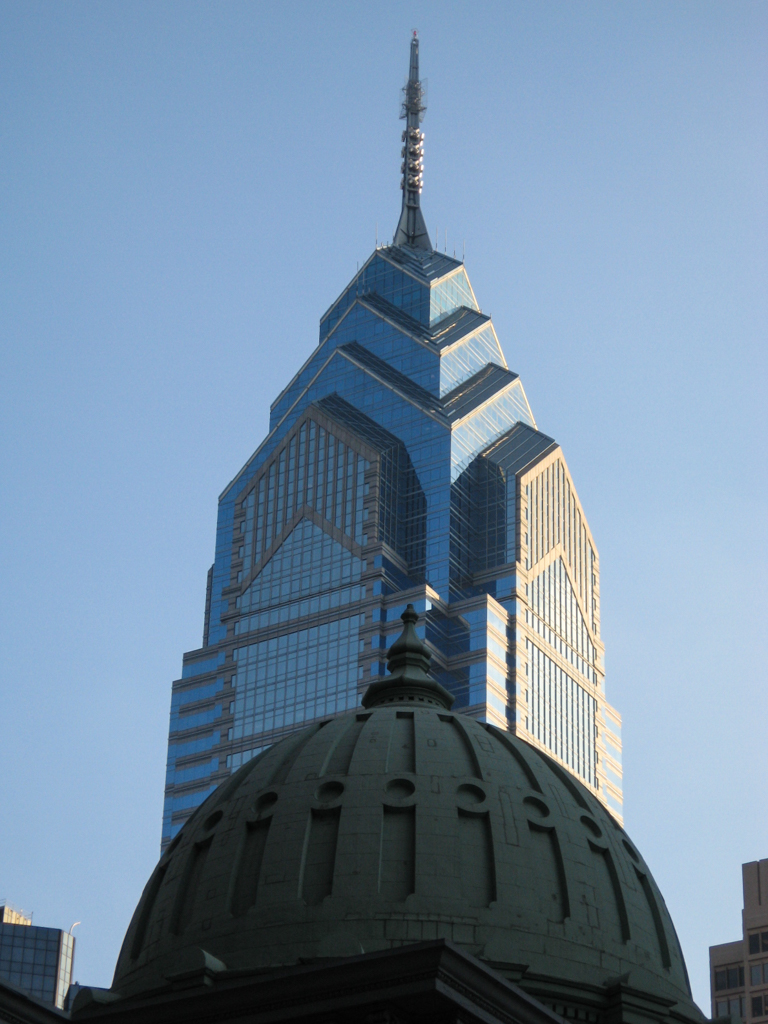
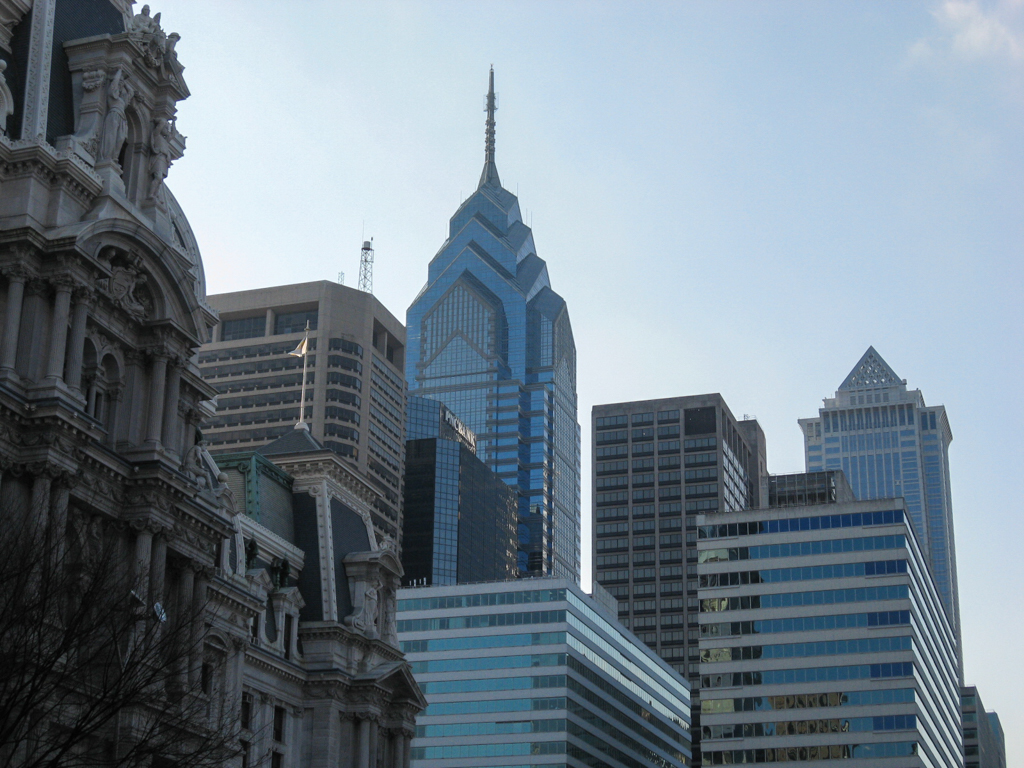
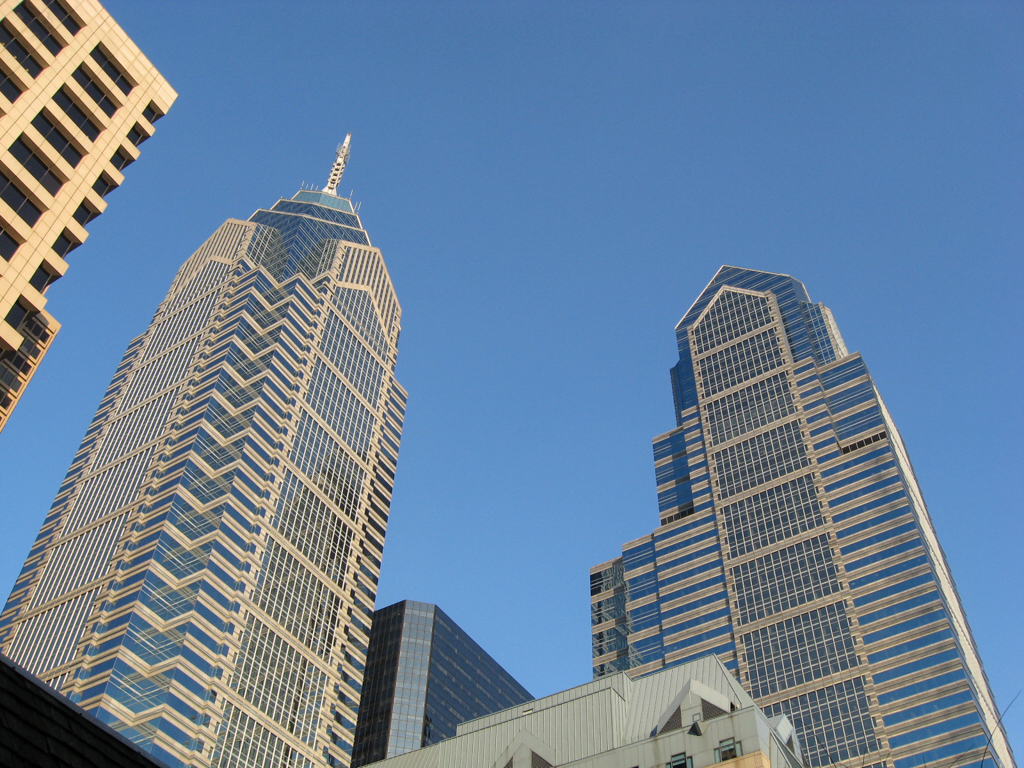
By the 1980s, in a telling moment, Philadelphia clients were looking to other cities for architects. Here, Helmut Jahn of Chicago paid homage to the iconic forms and height of New York's 1920s skyscrapers but in the contemporary metallic blue glass and twinned scheme. A granite base with acid blue trim houses a shopping arcade and forms a transition between the office tower on the north and the hotel on the south. The forms and color have little to do with traditional Philadelphia, not necessarily a bad thing here because they link the city to the larger currents of the global media culture. The buildings’ ever-changing range of colors from dark blue to silvery metallic gray to brilliant oranges and yellows, depending on the direction of light and the time of day, gives them an important role in the image of the city. Liberty Place has become the principal icon of the city, appearing in calendars and city promotions and marks the city's transformation from a monoculture to the more open future.
Liberty Place
1987–1990, Murphy/Jahn, and Zeidler Roberts. 1650 Market St.