

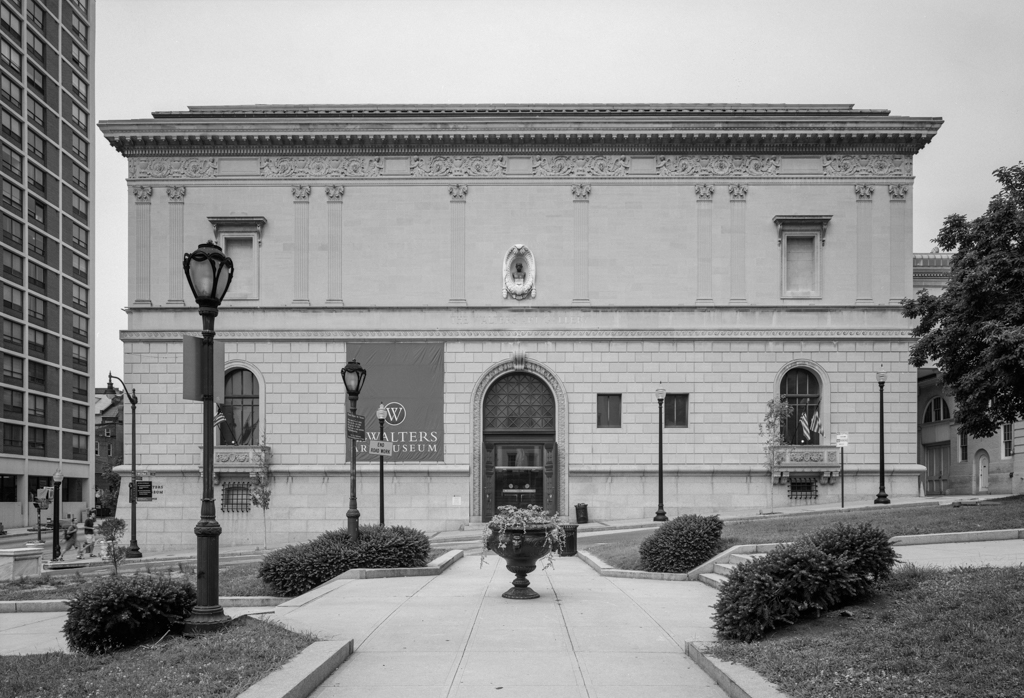
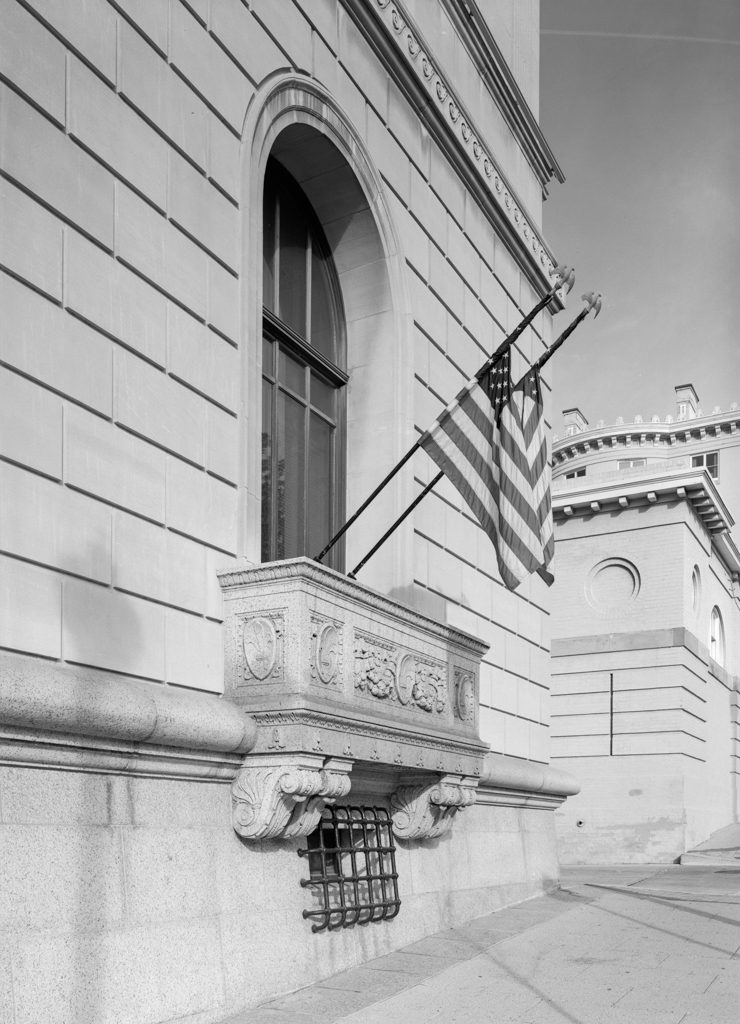
Built between 1905 and 1907, the Walters Art Museum is one of the architectural and cultural anchors of the Mount Vernon Place neighborhood of Baltimore. It is the legacy of philanthropist Henry Walters and his son William T. Walters, developed from their extensive personal collections of art and artifacts from around the globe. The origins of the museum date to 1874 when the elder Walters opened his house at 5 West Mount Vernon Place for public viewing on selected days. He installed paintings in the space over a rear stable building in the 1870s and in 1883–1884 expanded to create a new gallery on the lot behind his residence. In 1905 Walters finally hired Delano and Aldrich to design a purpose-built structure to hold the burgeoning collection. In the tradition of the Ecole des Beaux-Arts, the gallery is a Renaissance Revival palazzo that rises from a battered stone ground level to form rusticated granite-block walls topped by ashlar, limestone masonry. The windows are either blind or covered by iron grilles, or both, which contributes to the solid (or sealed) aura of the structure.
The contractor was J.C. Vreeland Building Company of New York. L. Marcotte and Company, also of New York, was responsible for designing the four period rooms on the north side of the court at the ground floor level (Gothic, Francis I, Louis XIV, Louis XVI), along with Durand et Compagnie of Paris who created the reproduction furnishings for these period rooms. The museum opened to the public in early February 1909, and upon his death in 1931, Henry Walters bequeathed his house, museum building, and collection to the City of Baltimore.