

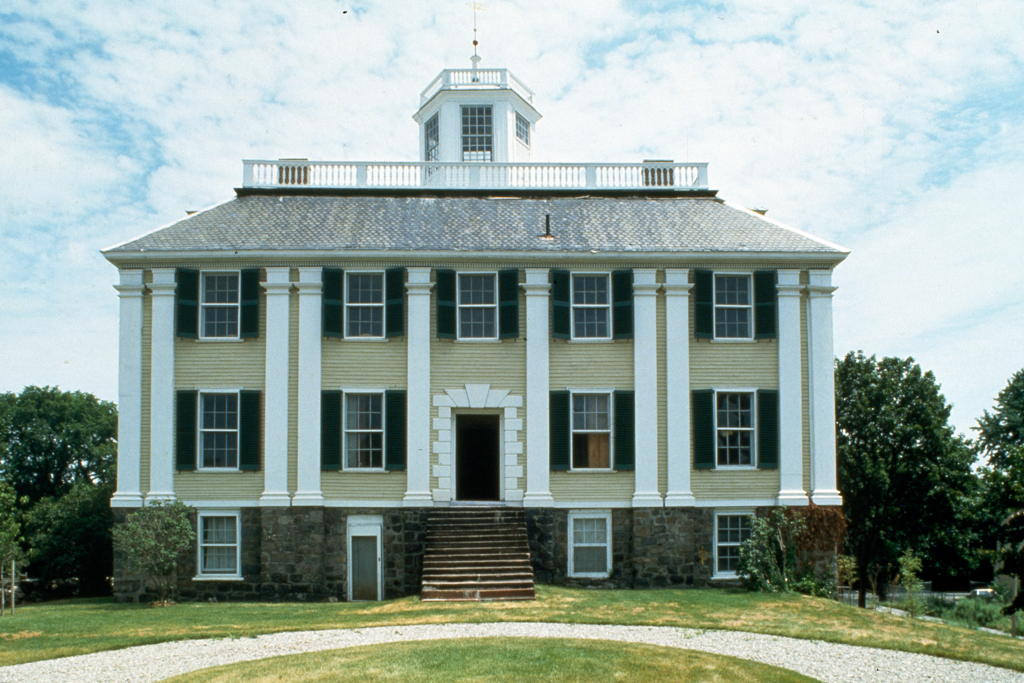
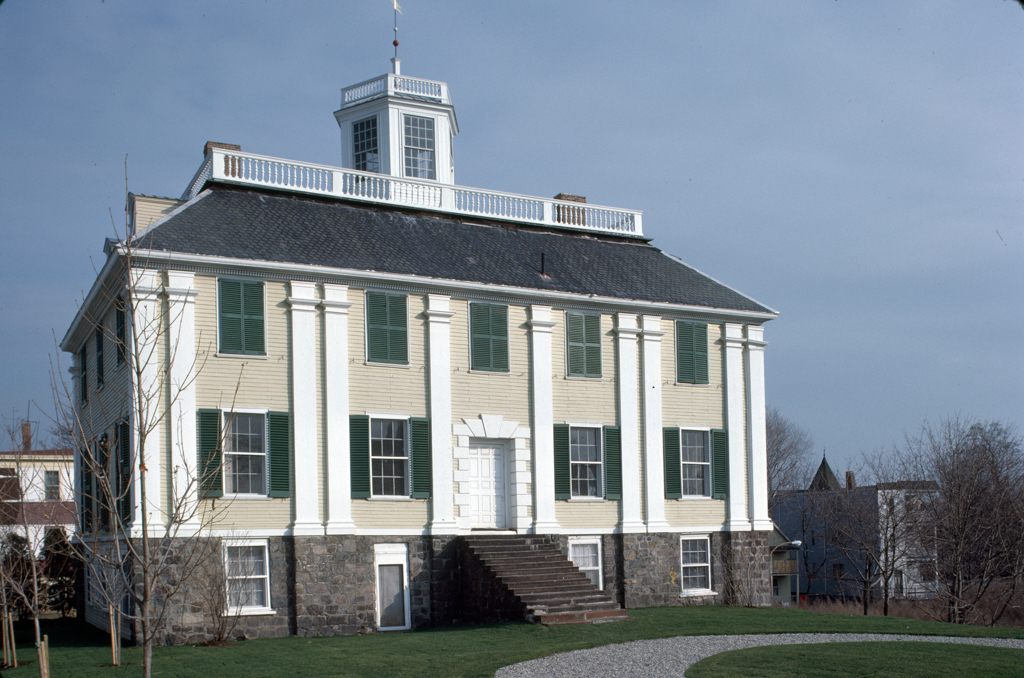
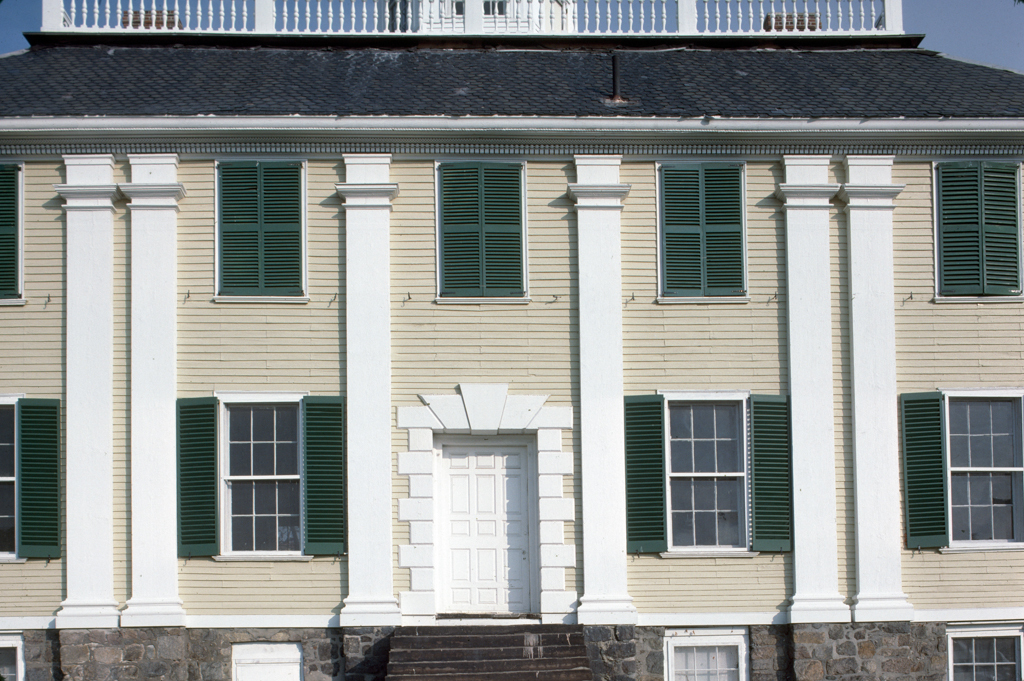
Royal Governor William Shirley built Shirley Place, a rare surviving colonial governor's mansion. On a high granite basement, the hip-roofed structure displays monumental Doric pilasters, among the earliest in the Boston area. Shirley provided generous entertainment space in the central two-story great hall, with a Palladian window facing the garden. Confiscated during the Revolution, the house was used for barracks during the siege. Notable individuals then occupied the house, including Colonel John Read, émigré J. B. DuBuc (Counselor to Louis XVI), and China-trade captain James Magee. Governor William Eustis bought the house in 1819, entertaining Lafayette here in 1824. New owners subdivided the property in 1867, moved the building sixty feet back from Shirley Street, and split it into tenements. The Shirley-Eustis House Association, founded in 1913, completed its restoration in the 1980s. The house is a fascinating mélange of various periods. The roughly 1805 Ingersoll coach house is being relocated here from Green Hill (BR35), the Gardner estate in Brookline, to house Eustis's coach.
Shirley-Eustis House
c. 1747–1751, Peter Harrison or John Smibert, probable architects; Federal period remodeled, attributed to Samuel McIntire or Charles Bulfinch. 33 Shirley St.