

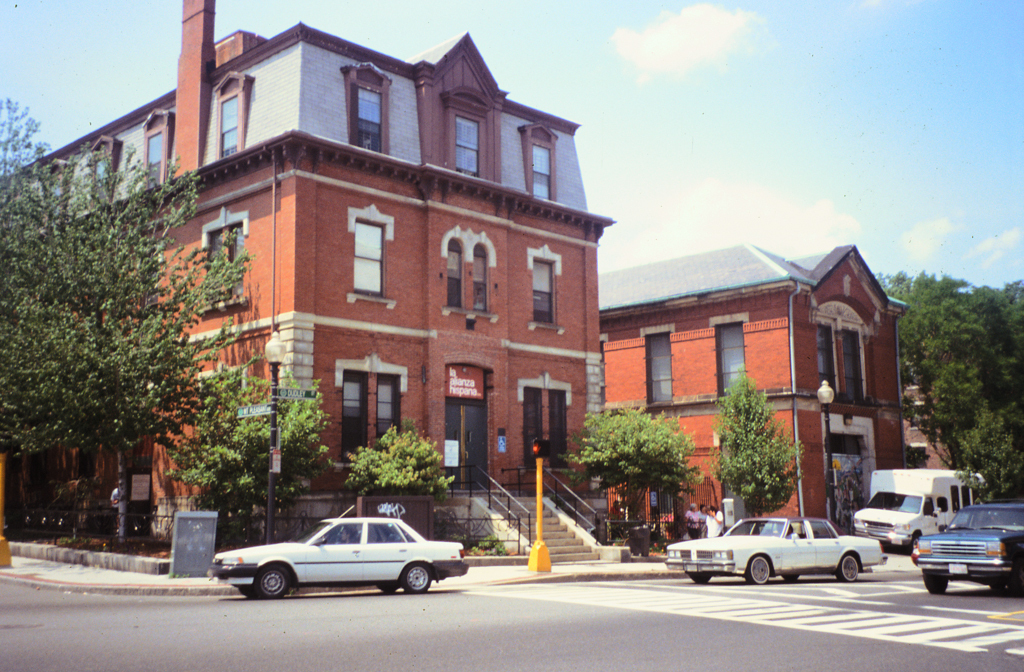
When Roxbury voted to accept incorporation into the City of Boston in 1867, supporters argued that benefits would include increased development and improved municipal services. The police and fire stations in the Roxbury Highlands neighborhood illustrate the city's early commitment. The number of policemen increased from forty-eight to sixty-four in 1870, with a new building completed three years later. Alden Frink, a Boston architect who lived in Roxbury, designed the large red brick station in the popular Second Empire style to be compatible with many of the houses then under construction in the area. The station included twelve cells in the basement, offices and roll-call room on the ground floor, bedrooms on the second floor, and a gymnasium in the mansard roof.
Nathaniel J. Bradlee designed the fire station next door. Known as Steam Engine Company No. 12, the red brick station is T-shaped, with the front section for the equipment and the rear section for a stable with sleeping quarters above. With the Dudley Street facade only one bay wide, Bradlee employed paired windows set in a segmental arch under a pediment to give the station a distinctive architectural character. The stone tympanum above the double windows is incised with a floral pattern. La Alianza Hispaña, a social service agency, now uses both buildings.