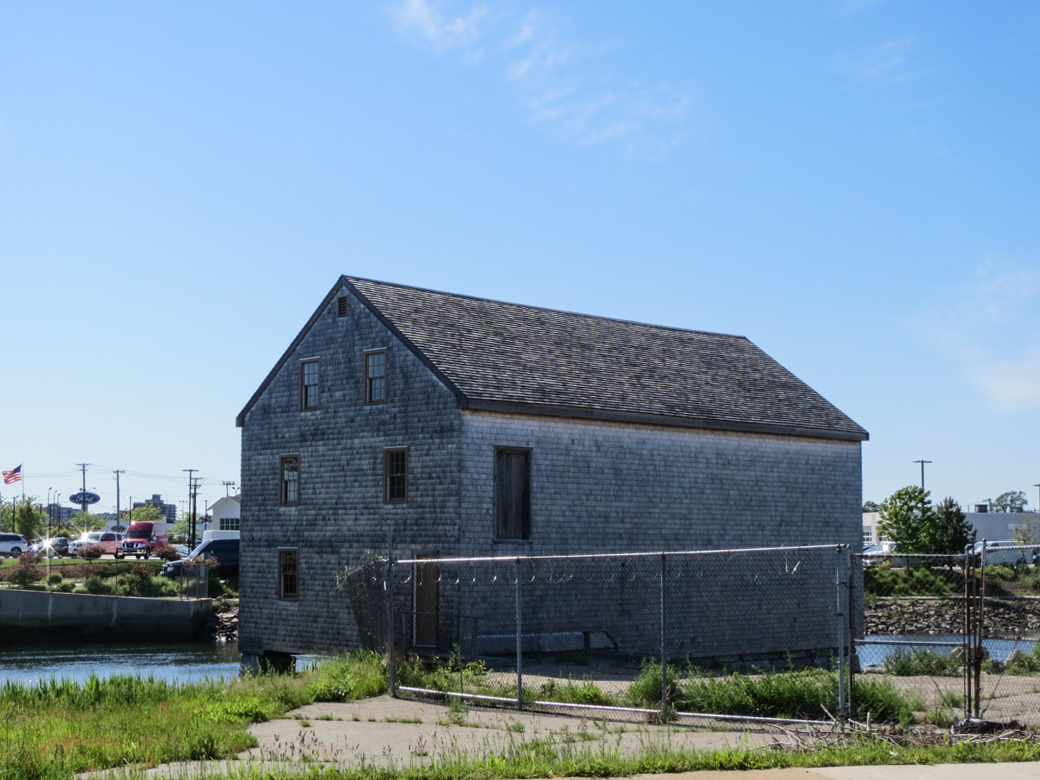
The Souther family began milling and shipbuilding at this site in 1815. The older of two tidal mills surviving in Massachusetts, the gabled and shingled Souther Mill was built in 1854 to replace an earlier mill that had burned. It is located on a mill dam constructed c. 1806, which is the best preserved element of the Quincy Canal (1826–1870), engineered to transport granite from the Quincy quarries. Edward Souther built the current gristmill and sold the property in 1873 to Wilber Lakin, who converted the site to a lumberyard (a function it continued to serve until it closed in 1893). First used on the Mill Pond in Boston's West End, tidal mills were once common elements on the early industrial landscape of the area. Only ten currently remain along the Atlantic coast. The mill with an attached, later clapboard structure is currently “moth-balled,” awaiting restoration and adaptive reuse.