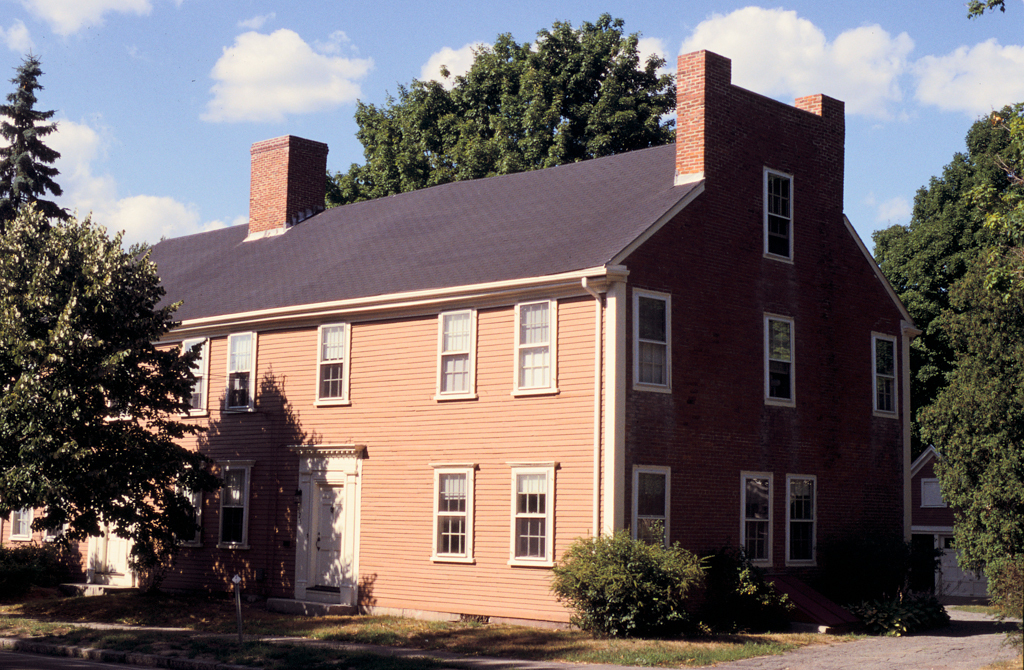
Significant for its well-preserved architectural features, Simonds Tavern symbolizes Lexington's thriving tavern economy that catered to the needs of drovers bringing livestock and produce from New Hampshire and beyond to Boston markets, until the advent of railroads in the 1840s provided more efficient transport. Operated by Joshua Simonds from 1802 to 1828 as one of twelve taverns in Lexington, Simonds Tavern was built about 1795 as a center-chimney-plan dwelling, and enlarged lengthwise by three bays about 1810. The structure retains significant late Georgian interior woodwork, and a well-integrated clapboard facade featuring two pilastered doorways.

