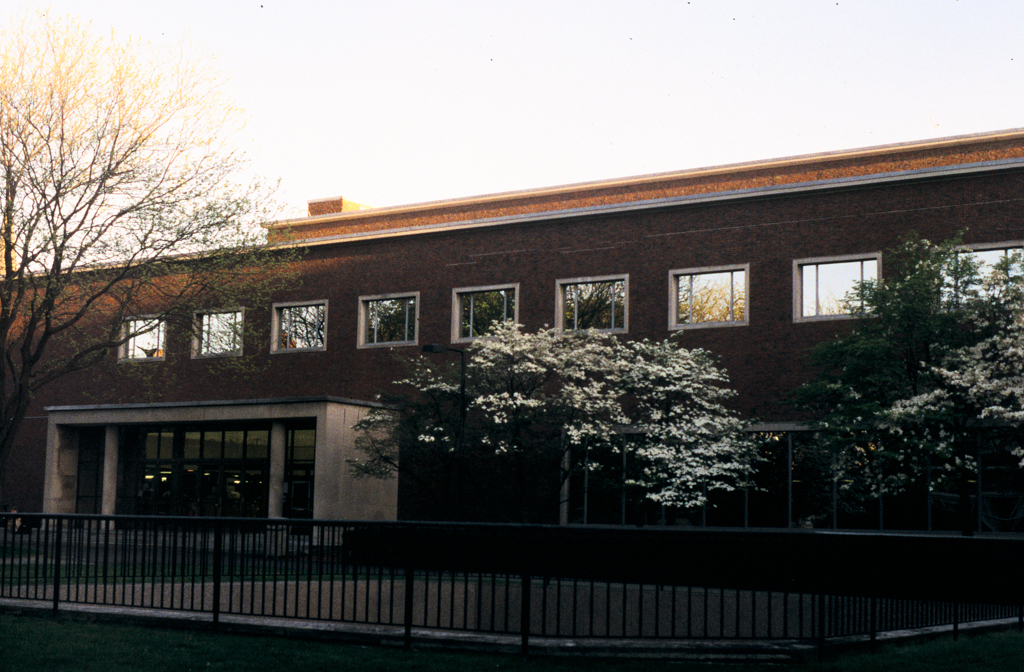
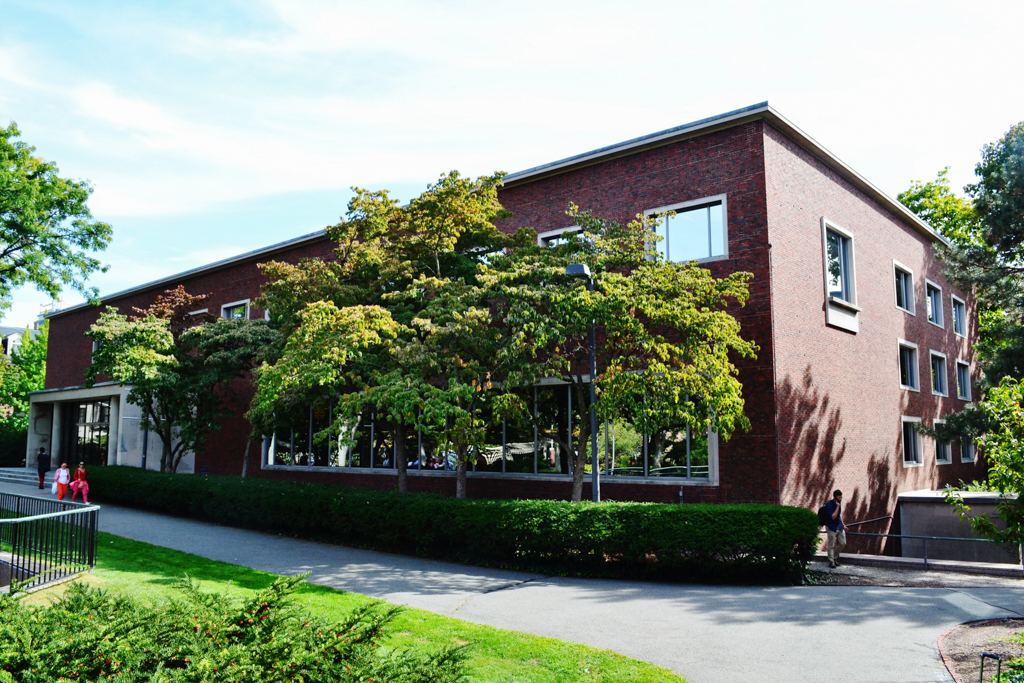
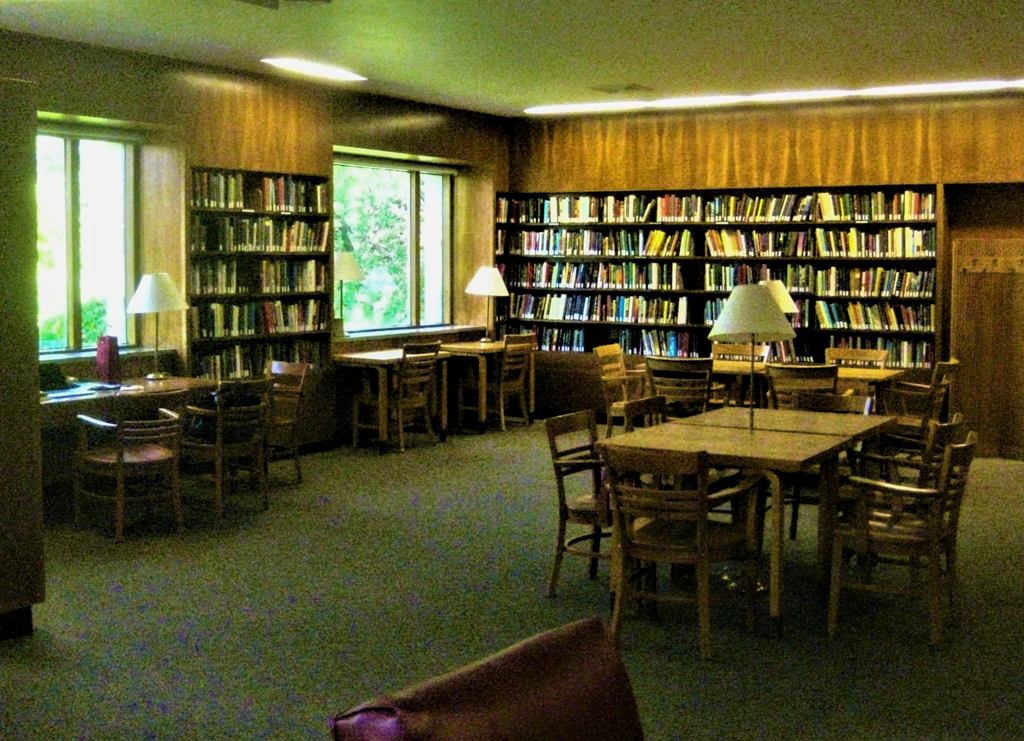
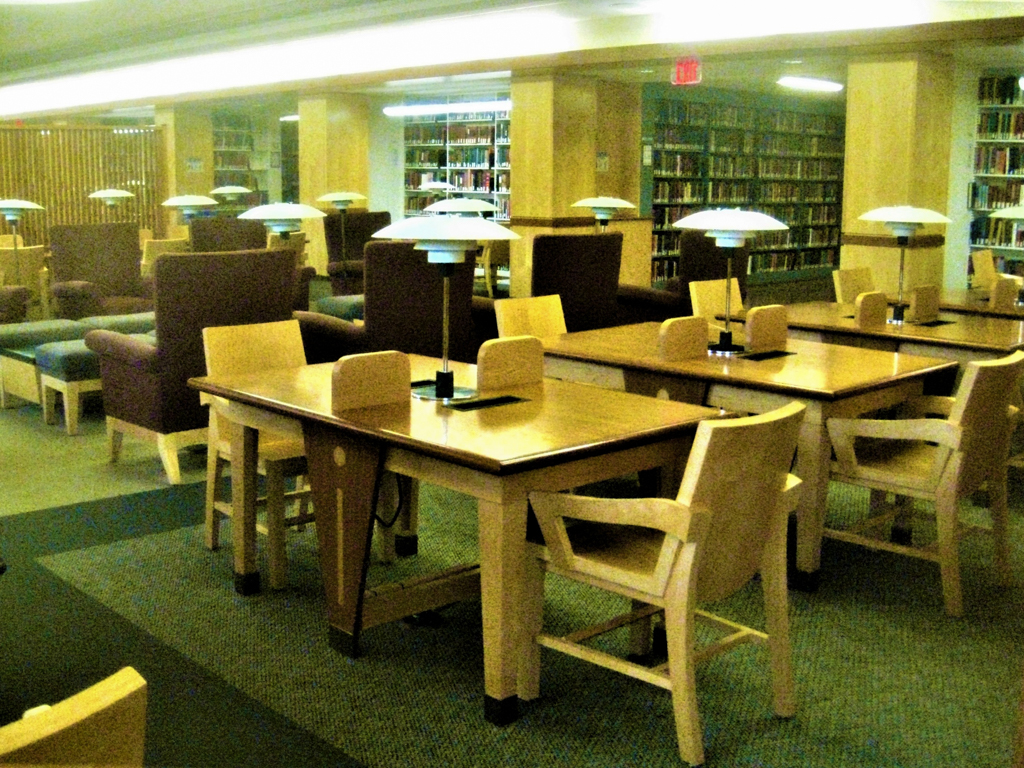
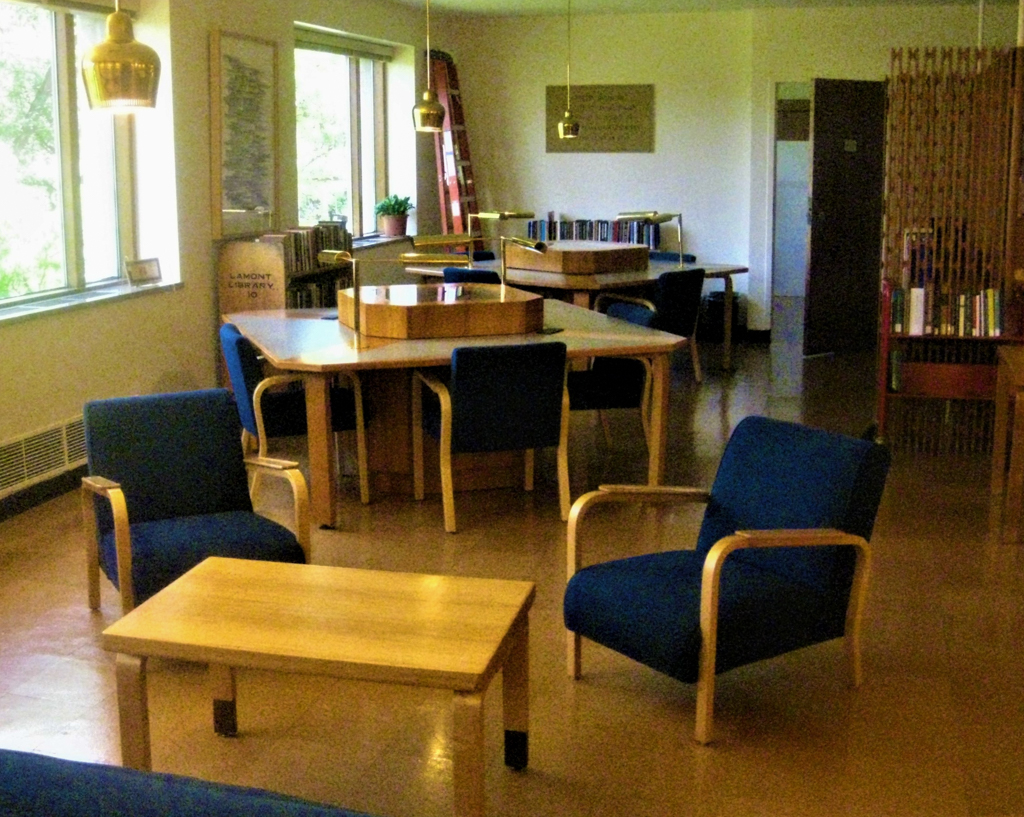
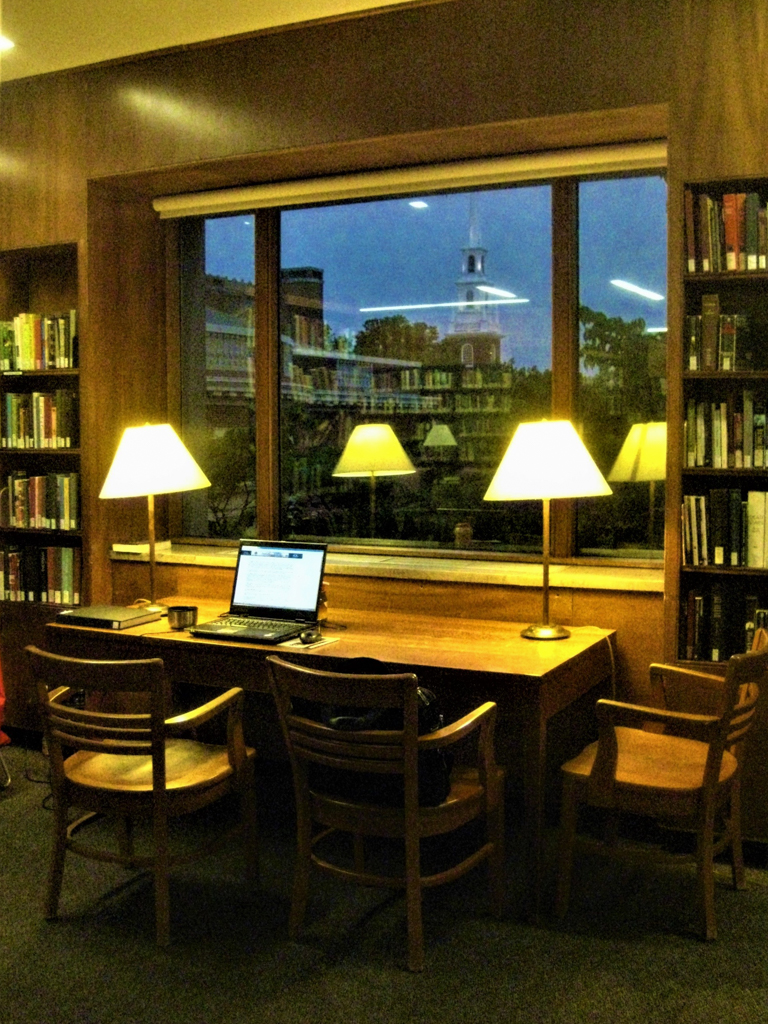
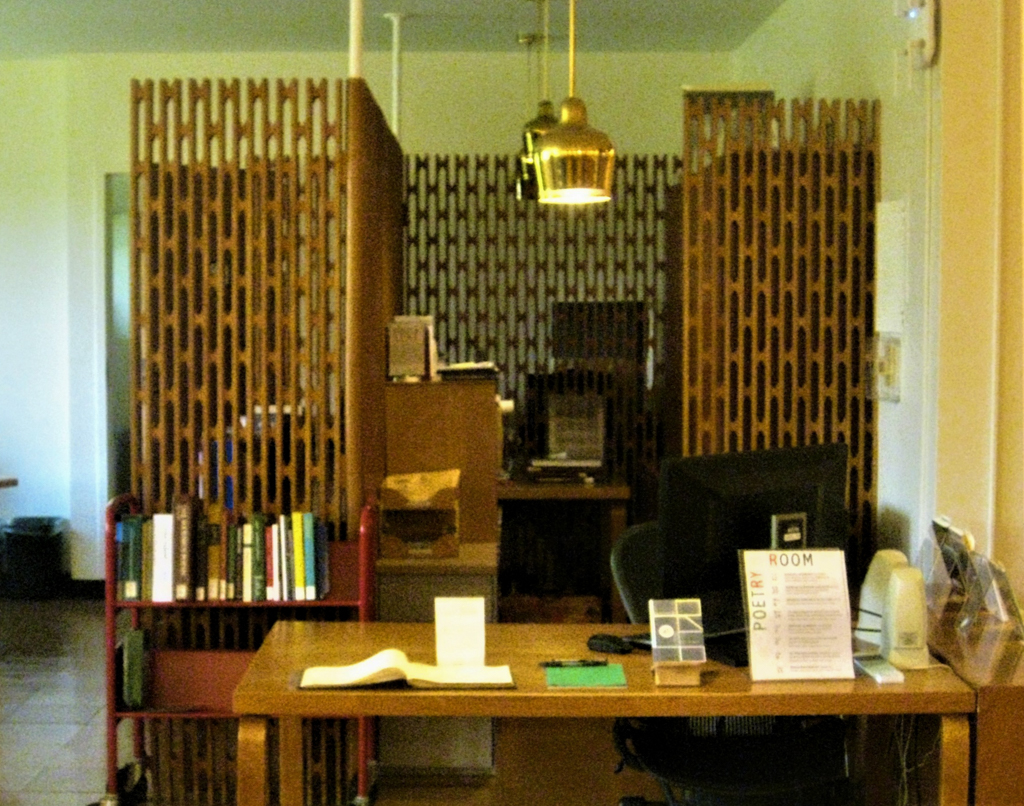
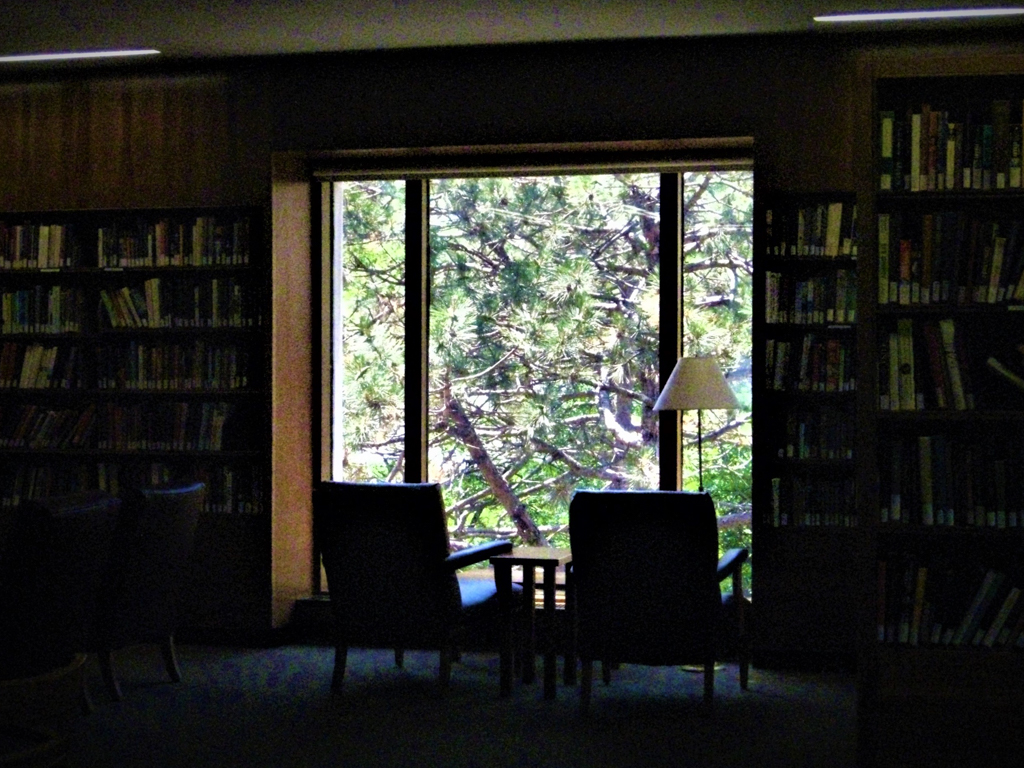
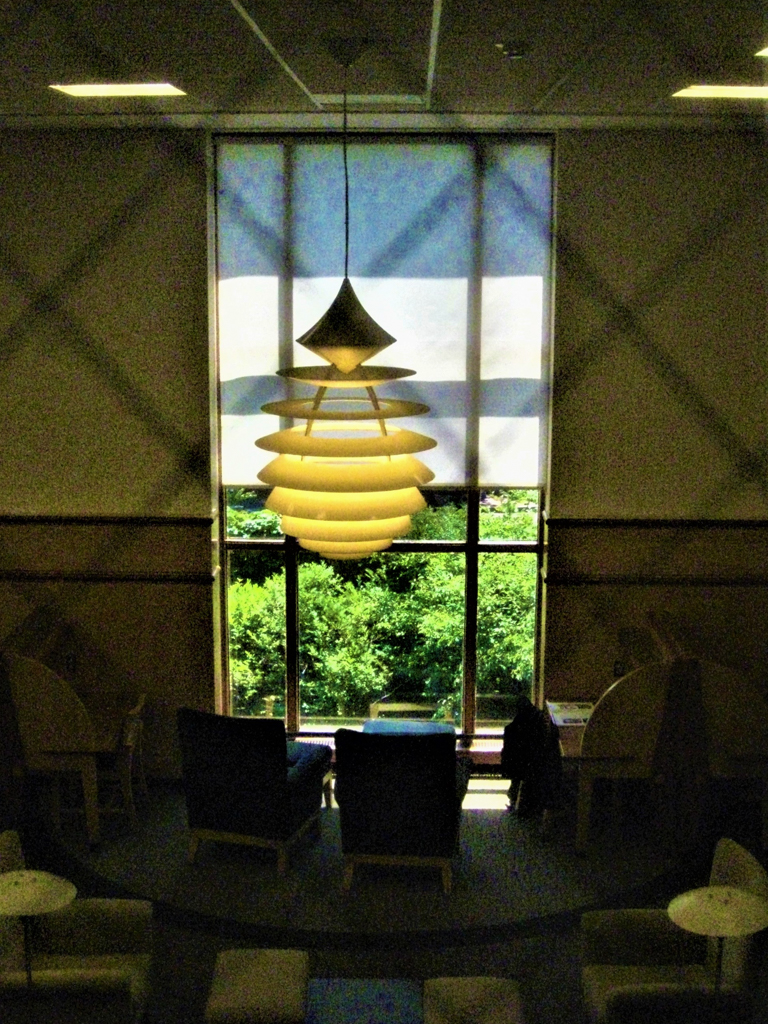
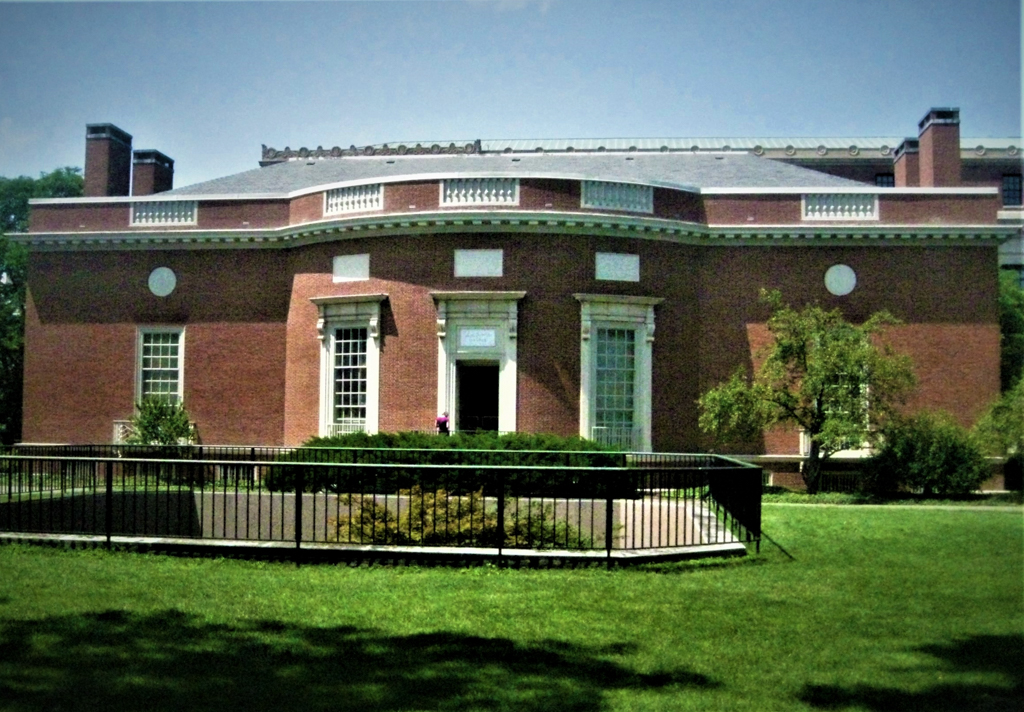
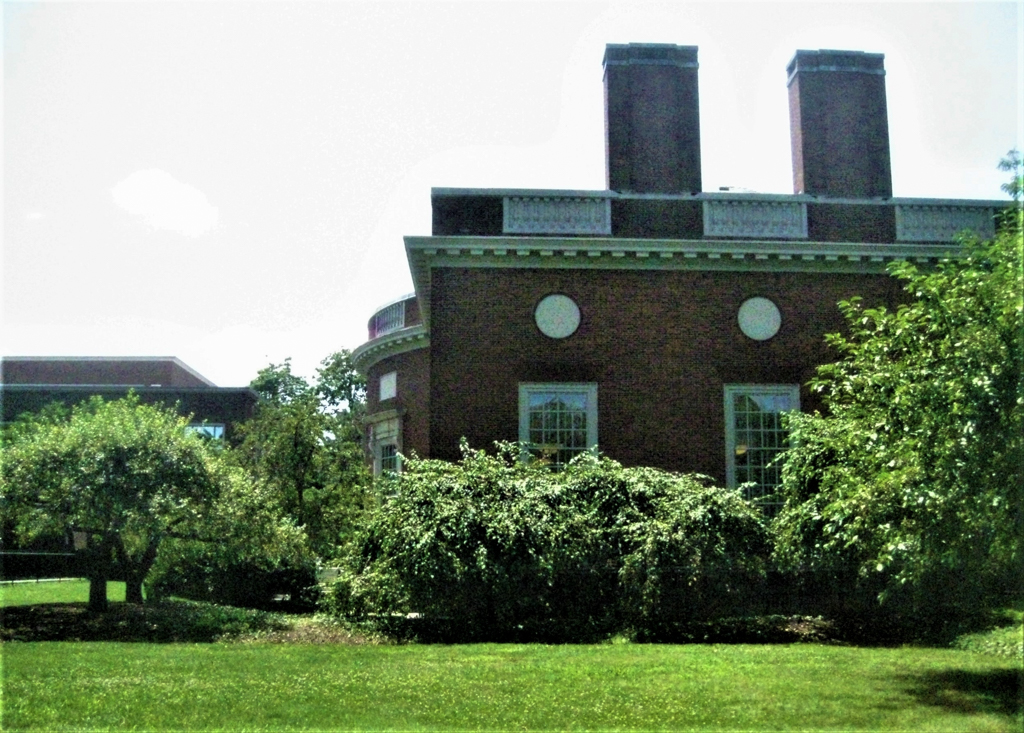
Across Quincy Street, three specialized libraries anchor Harvard Yard's southeastern corner. Richard Dean of Perry, Shaw and Hepburn created Houghton Library (1941) as a repository for rare books; it represents the last major academic revival building constructed on campus before the American entry into World War II. Like the neighboring president's house by Guy Lowell, Houghton Library is Federal Revival—even Bulfinch Revival—in its fine classical detailing and bowfronted entrance facing Quincy Street. Elaborate wooden paneling enhances the interior spaces; a copper-covered bridge connecting Houghton to Widener Library (HY11) was removed in 2004. Nearby, Coolidge, Shepley, Bulfinch and Abbott designed Lamont Library (1947–1948), the first prominent modern building at Harvard. Boxy and unadorned, it nevertheless relates to its neighbors through the red brick and limestone of its exterior. Alvar Aalto designed a poetry room inside. Hugh Stubbins gained a reputation for remarkable discretion when he designed Pusey Library in 1973–1976. The home to the university archives and a theater collection, it is mostly underground, maintaining a corner of open space in front of Houghton and Lamont libraries and respecting an existing pedestrian path.

