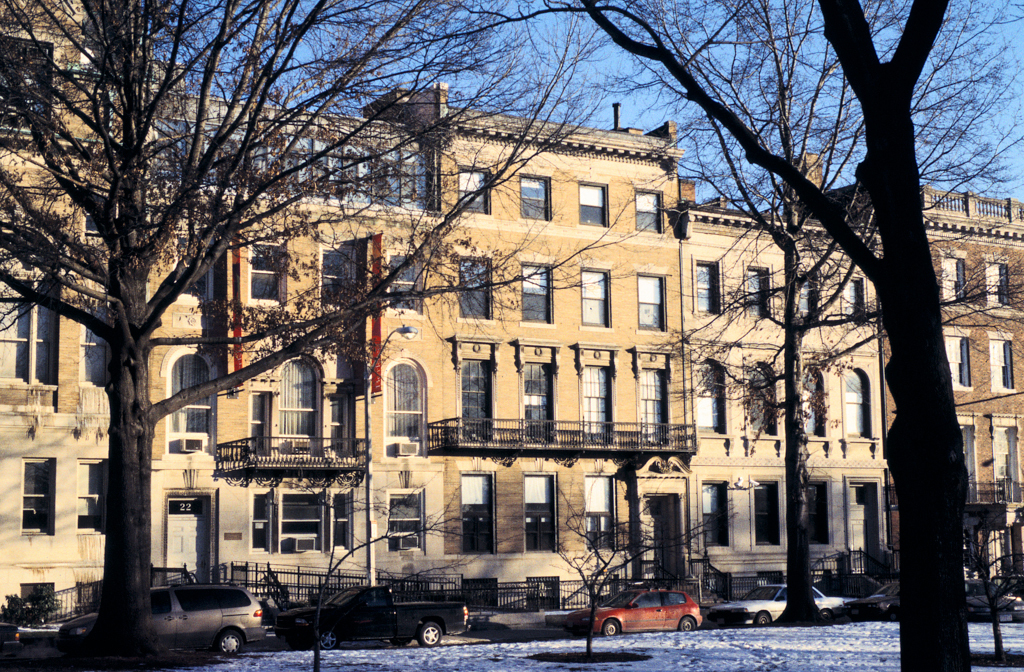
Deed restrictions in the Fenway area stressed architectural harmony and high-quality construction, as represented by these three Peabody and Stearns town houses. Robert Swain Peabody designed his own residence at 22 The Fenway with a sweeping limestone arch above the Palladian window, centered in the tan brick Federal Revival facade. Moorfield Storey, the prominent civil rights leader and Peabody's Harvard classmate, built number 24. A leaded-glass fanlight doorway with scroll-pedimented architrave and fluted, engaged columns highlights its tan brick Federal Revival facade. Fanny Foster's Federal Revival residence at number 26 was the last of the three, distinguished by its use of light limestone as the primary building material. Miss Foster, the only surviving child of John Foster, an influential Boston merchant and real estate promoter, actively supported the New England Historical Genealogical Society. Although the exteriors of the three town houses are in large part original, the interiors have been substantively changed, currently serving as dormitories for the nearby Boston Conservatory of Music.

