

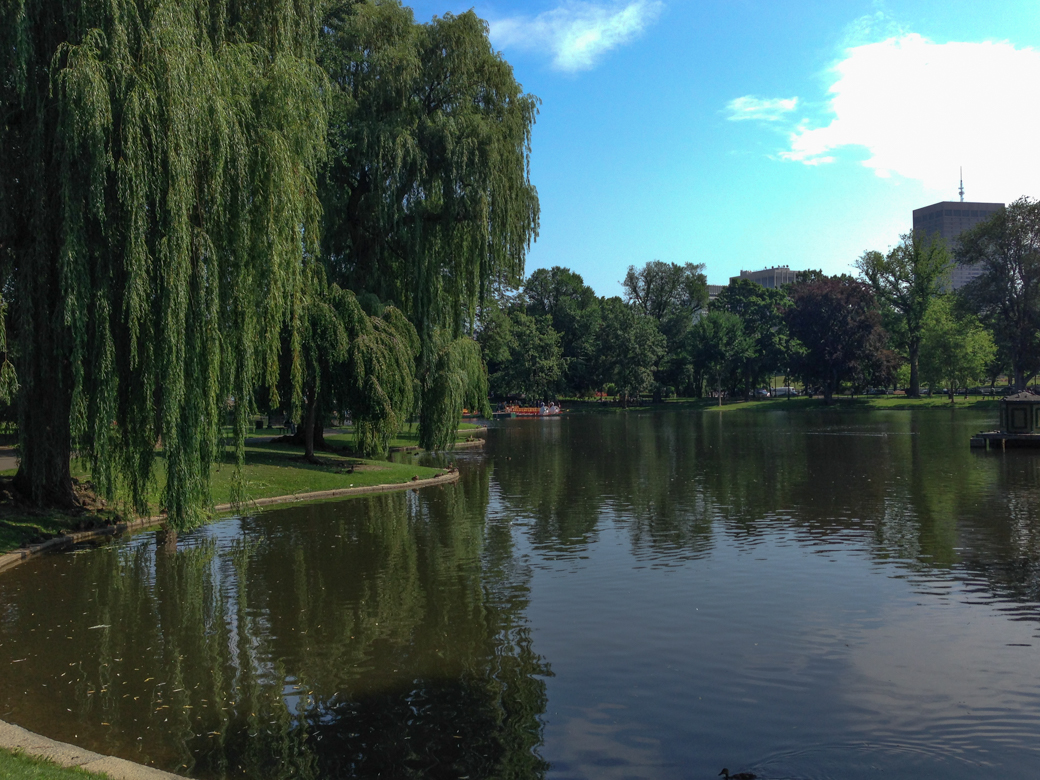
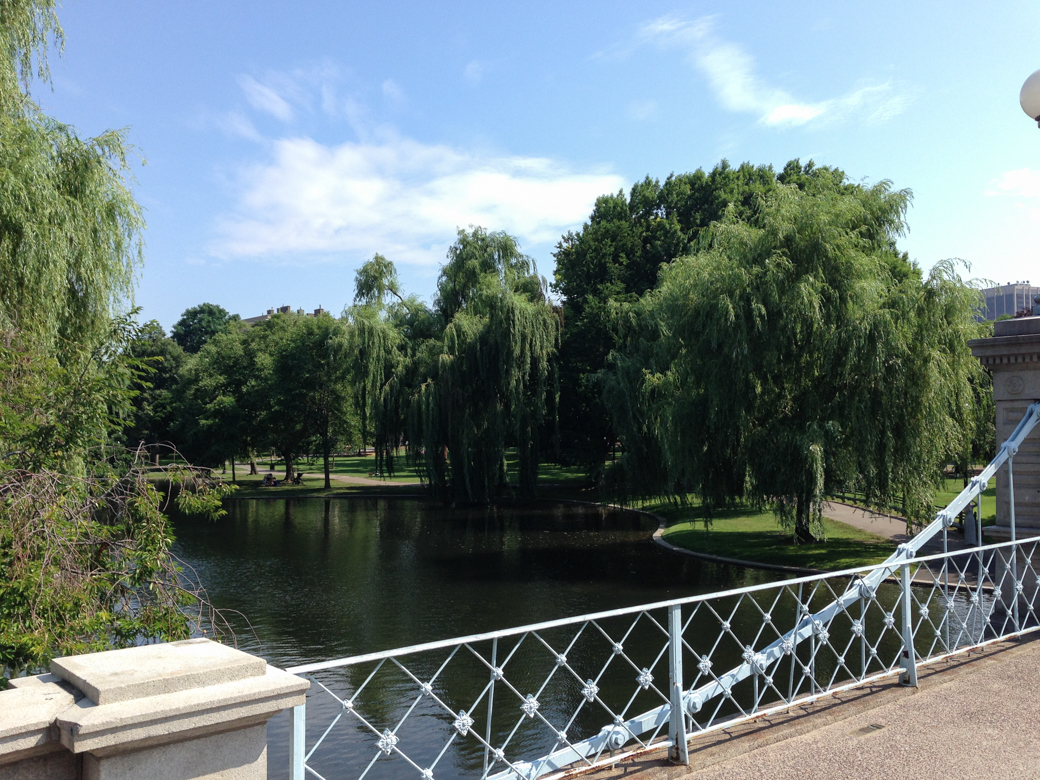
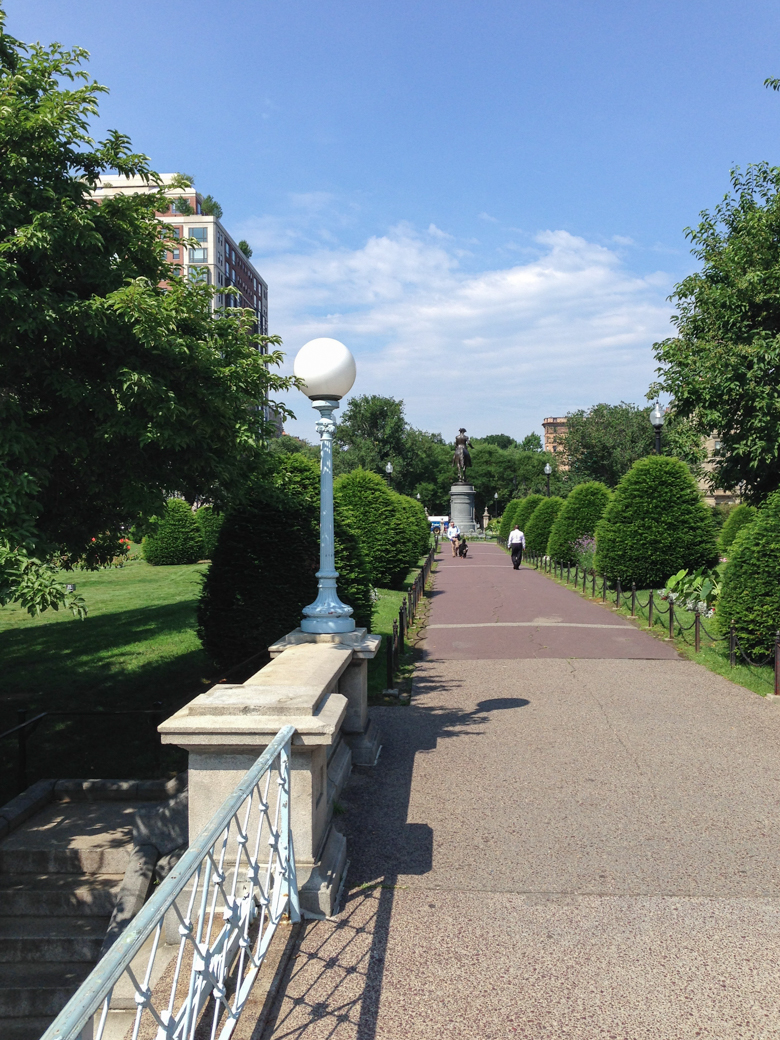
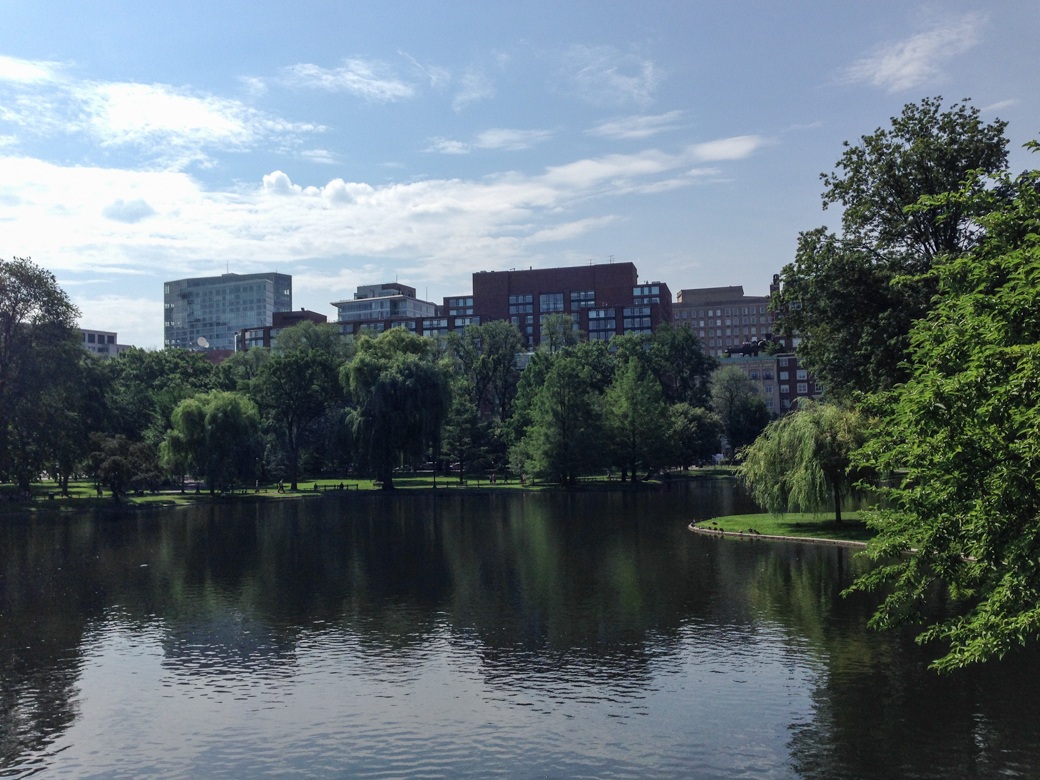
The Boston Public Garden is the most artificial of Boston parks, a horticultural effusion of specimen trees and carpet bedding. George F. Meacham designed a picturesque urban pleasure ground in the manner of contemporary parks in Paris, replacing a private effort to create a horticultural garden on the site of ropewalks that had been destroyed by fire. Originally, the park was to contain spaces for a children's playground and a new city hall. The centerpiece is a serpentine pond where ducks swim and the swan boats, introduced in 1876, glide gracefully throughout the summer. Boston's Valhalla, the park contains myriad statues of local and national heroes, including Thomas Ball's equestrian statue of George Washington (1867) looking toward the Commonwealth Avenue Mall. The Ether Monument (1867, Ware and Van Brunt with J. Q. A. Ward) in the northwest corner memorializes the first use of anesthesia in an operation performed nearby at Massachusetts General Hospital. The Make Way for Ducklings figures (1987, Nancy Schon) please a younger clientele, the readers of Robert McCloskey's children's classic. For all, the Friends of the Public Garden ensure that this park is one of the best maintained in the city.
Boston Public Garden
![Boston Public Garden (with The Taj [Ritz-Carlton Hotel], BB3 and John Hancock Tower, BB38)](https://archipedia-images.s3.amazonaws.com/full/MA-01-BB1-001.jpg) Peter Vanderwarker or Antonina Smith
Peter Vanderwarker or Antonina Smith
Boston Public Garden (with The Taj [Ritz-Carlton Hotel], BB3 and John Hancock Tower, BB38)
1859, George F. Meacham; 1866 bridge, William Gibbons Preston and Clemens Hershell. Beacon, Arlington, Boylston, and Charles sts.