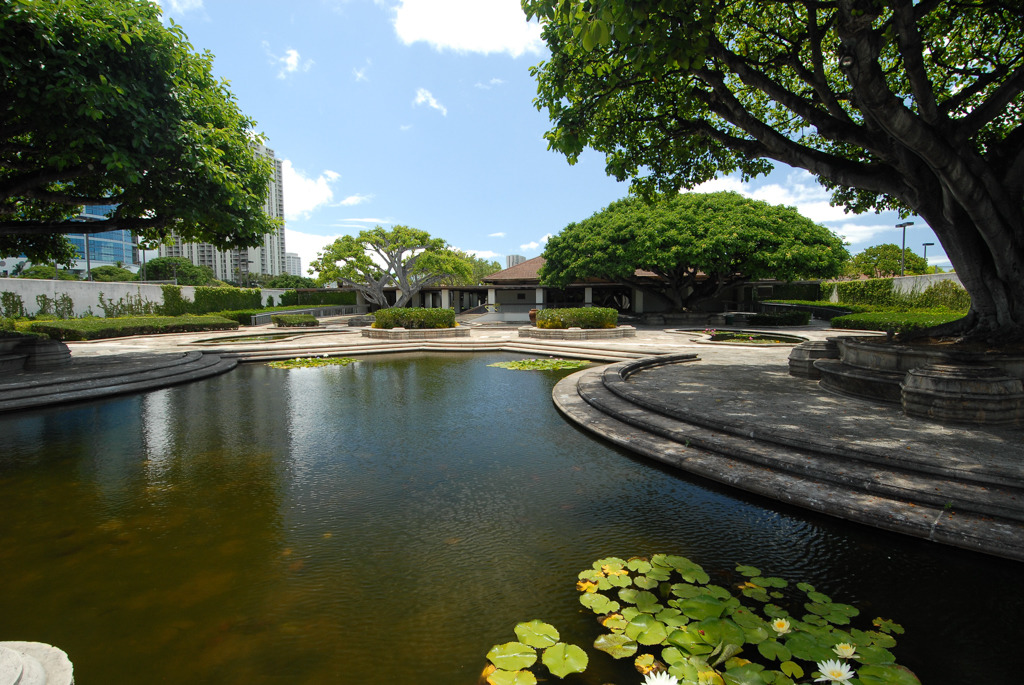
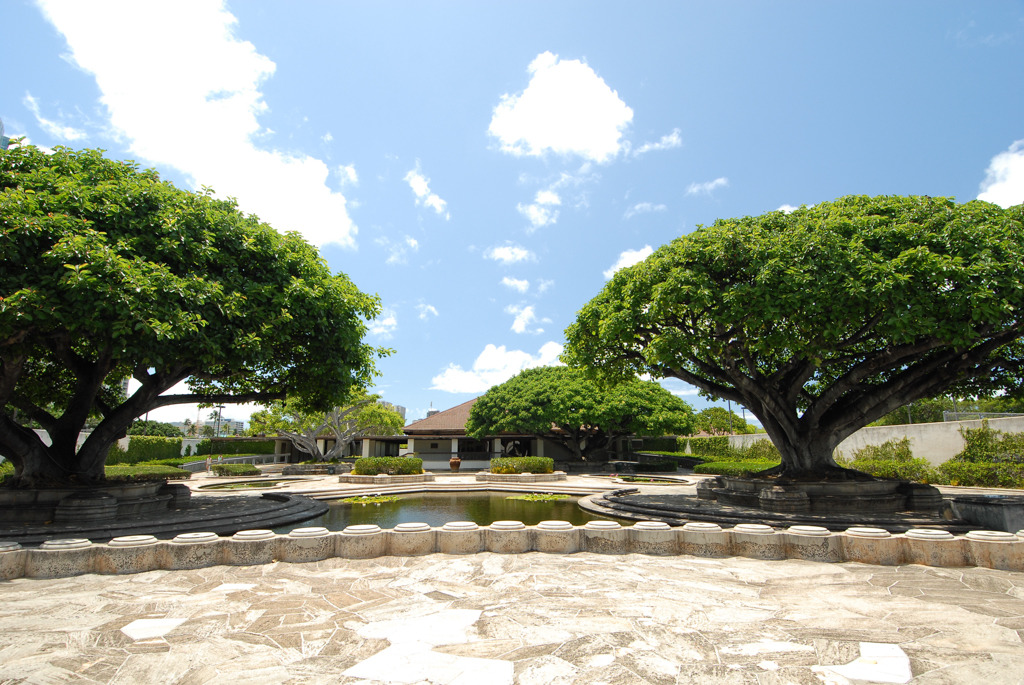
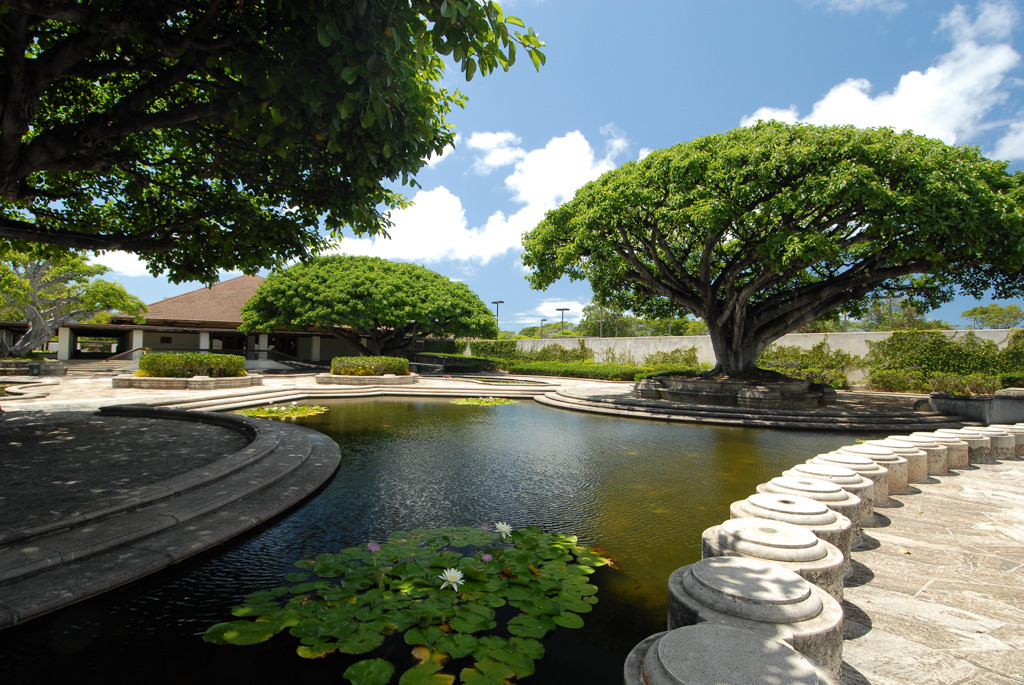
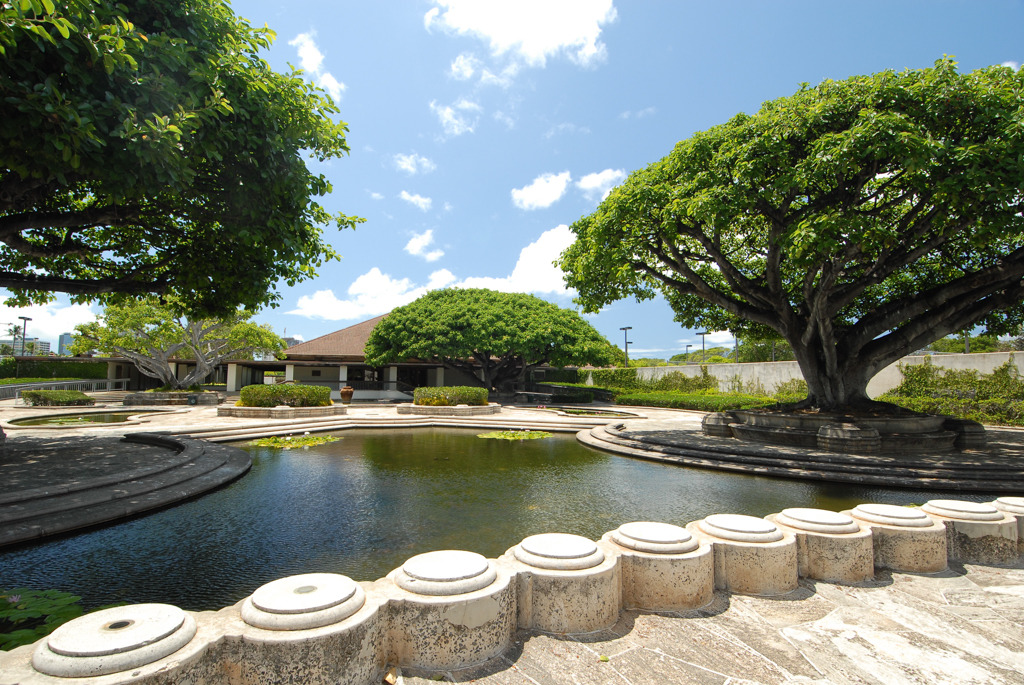
Concealed behind the concrete walls of the Mughal-inspired McCoy Pavilion lies the extraordinary banyan court inspired by a postcard of a Balinese garden with stone tree boxes adjacent to shaded reflection pools. With coral-stone pavers, mature Chinese banyan trees in elevated planters, and slightly below-grade concave and convex water elements, the enchanting banyan court is mesmerizing. The gable-roofed sports pavilion's narrow entrance passageways are a constrictive spatial prelude to the release offered by the expansive garden. The passage's slate opus sectile floor of Hawaiians playing konane (a Hawaiian game similar to checkers) and boxing are the work of local artist Margarite Blasingame, as is the pair of marble sculpture reliefs on the courtyard's side walls. The two large murals of the makahiki (an ancient Hawaiian festival beginning about the middle of October and lasting approximately four months with sports and religious activities and a taboo on war), which ornament the sports pavilion's main space, are by Robert Lee Eskridge. The more modern, pyramidal-roofed pavilions at the east end of the banyan court were designed by Charles J. W. Chamberlain. They were built in 1975 in memory of Lester Mc-Coy, chair of the Honolulu Park Board from 1931 to 1941 and an ardent advocate for the beautification of Honolulu.

