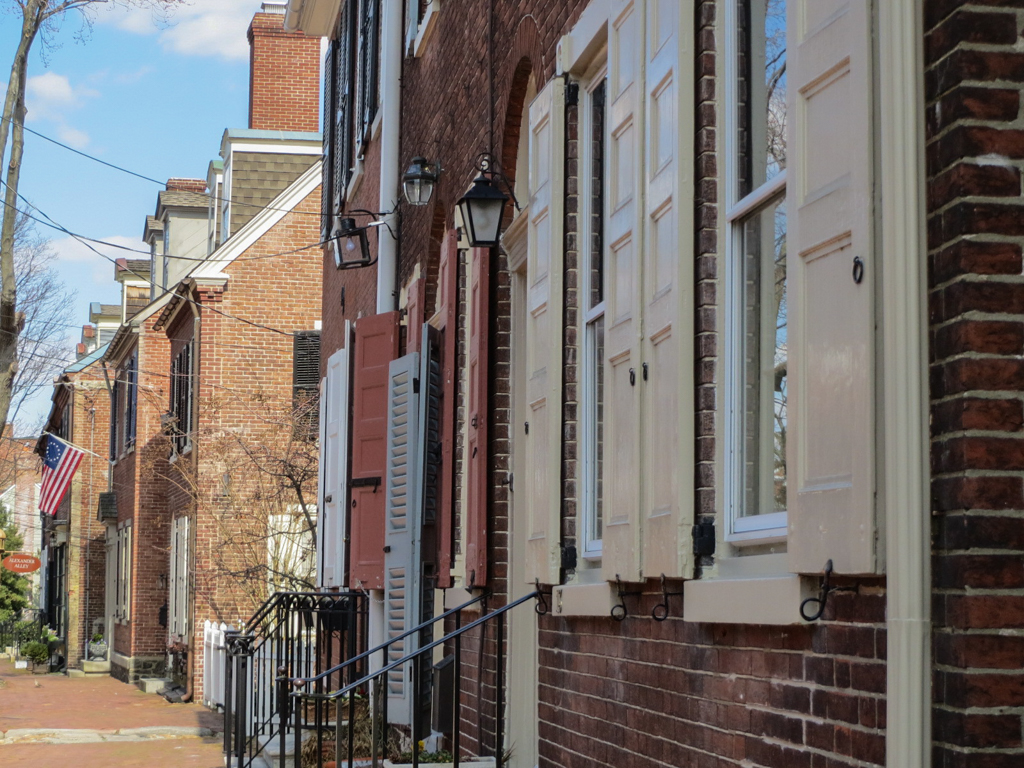
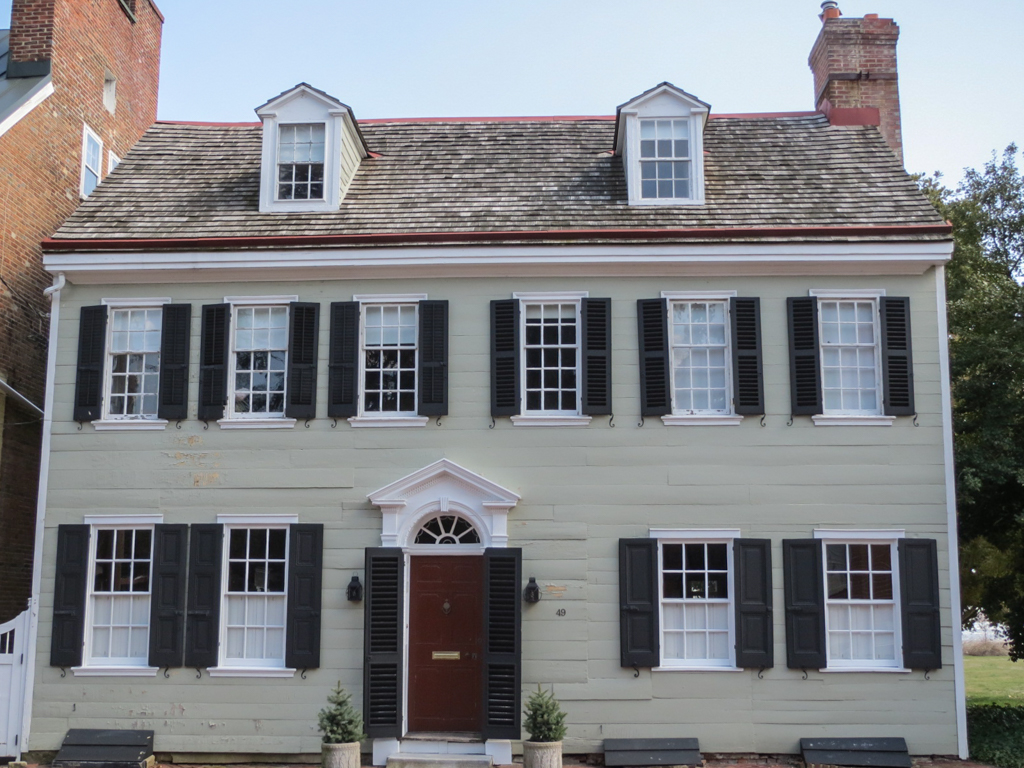
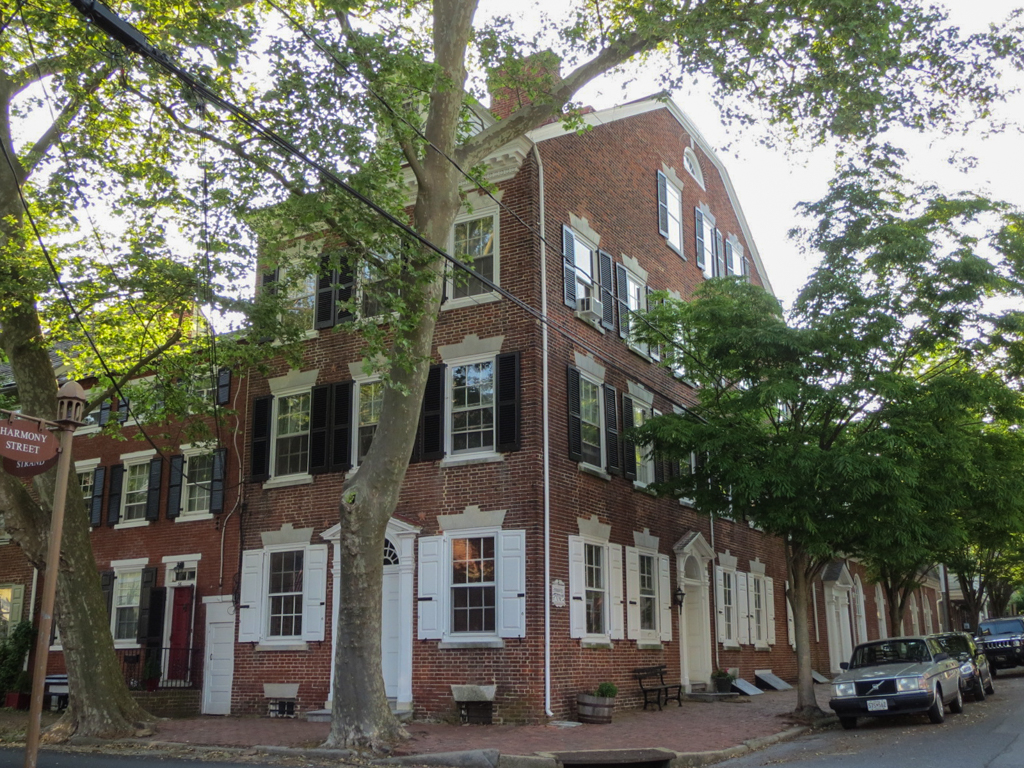
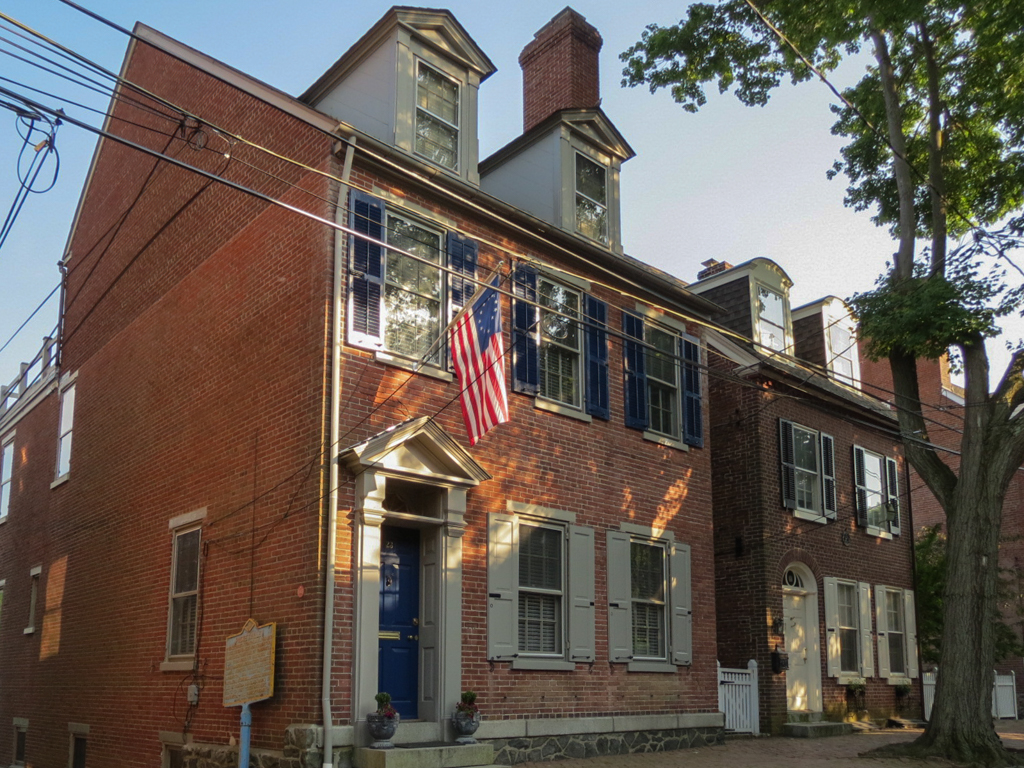
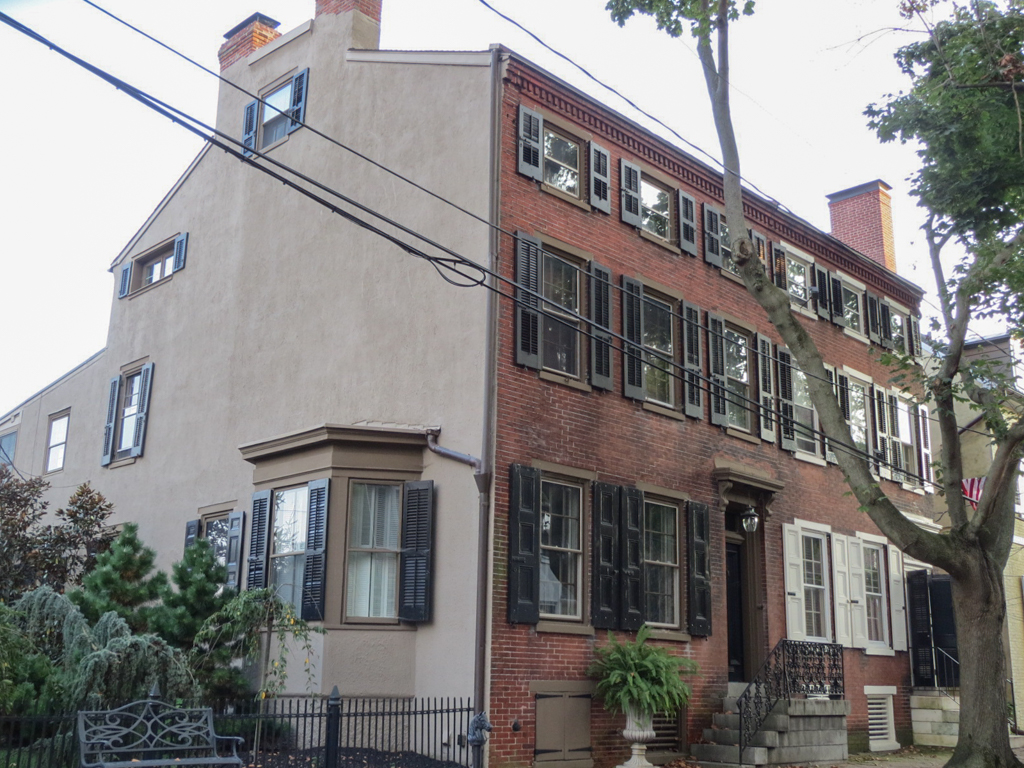
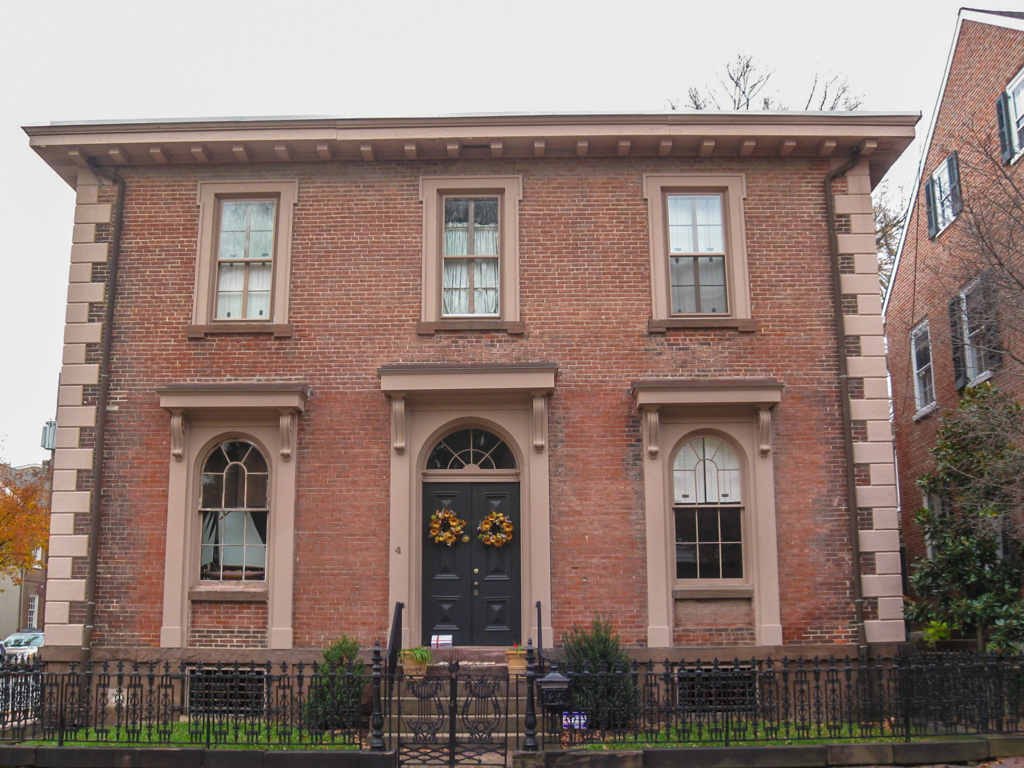
Now a prized address, this ancient street once lay directly on the river, but gradually land was reclaimed on the water side. On April 26, 1824, a fire whipped by a gale destroyed more than twenty houses at the south and east parts of the Strand. The area was quickly rebuilt in a homogeneous Federal-style aesthetic. In the twentieth century, the Lairds, then owners of the Read House (NC21), worked to preserve the streetscape. A proposal in 1950 to remove the 135-year-old cobblestones caused public outcry. The whole ensemble of buildings is charming; individually, there are several noteworthy structures, nearly all of brick. At the south end stands the eighteenth-century Van Leuvenigh House, with glazed-header brick-work. Jefferson Hotel, Number 5, went up on the lots where the fire had begun and was enlarged in the 1890s. The Old Farmers Bank (c. 1850, J. McArthur) has cast-iron quoins and unusual all-header brick-work on a curving wall behind. The Gunning Bedford House (c. 1730), Number 6, was stripped of its longtime coat of stucco in 2003; the double watertable shows how the street level was lowered subsequent to the Latrobe-Mills survey (on which this house appears). A restoration in the 1990s returned the pent eave and removed stucco from the eighteenth-century house next door, too. Architect Benjamin Henry Latrobe's residence in New Castle was in one of the Aull Houses, Number 55. At the corner of Harmony Street rises the tall, handsome Immanuel Parish House (Charles Thomas House) of c. 1801, built as a hotel and identical to contemporaneous structures in Philadelphia. A presentation watercolor survives for its Colonial Revival wing (1913, Laussat R. Rogers).

