

Mills were once innumerable on the Brandywine (see Augustine Mills,
BR21
; Bancroft Mills,
WL91
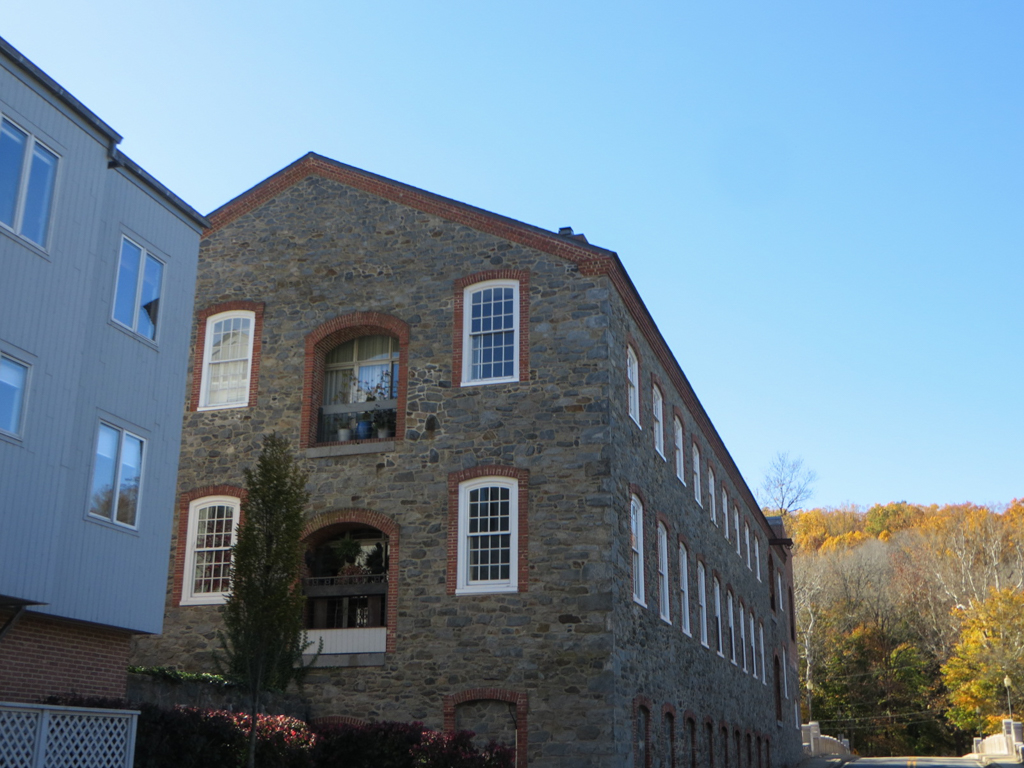
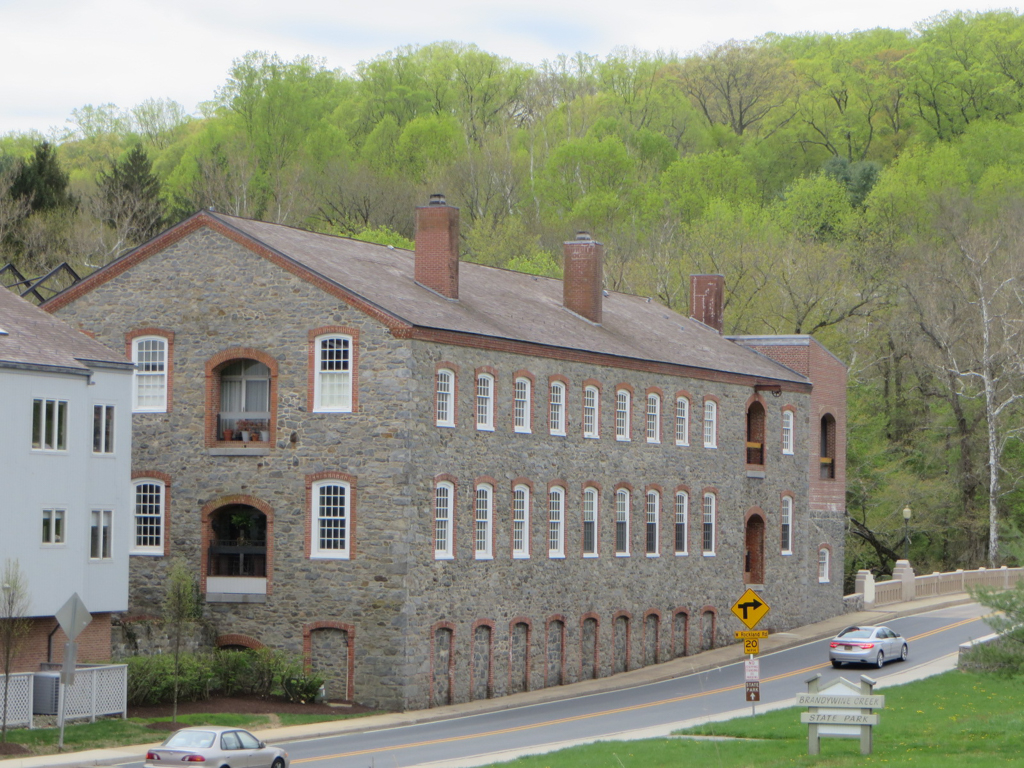
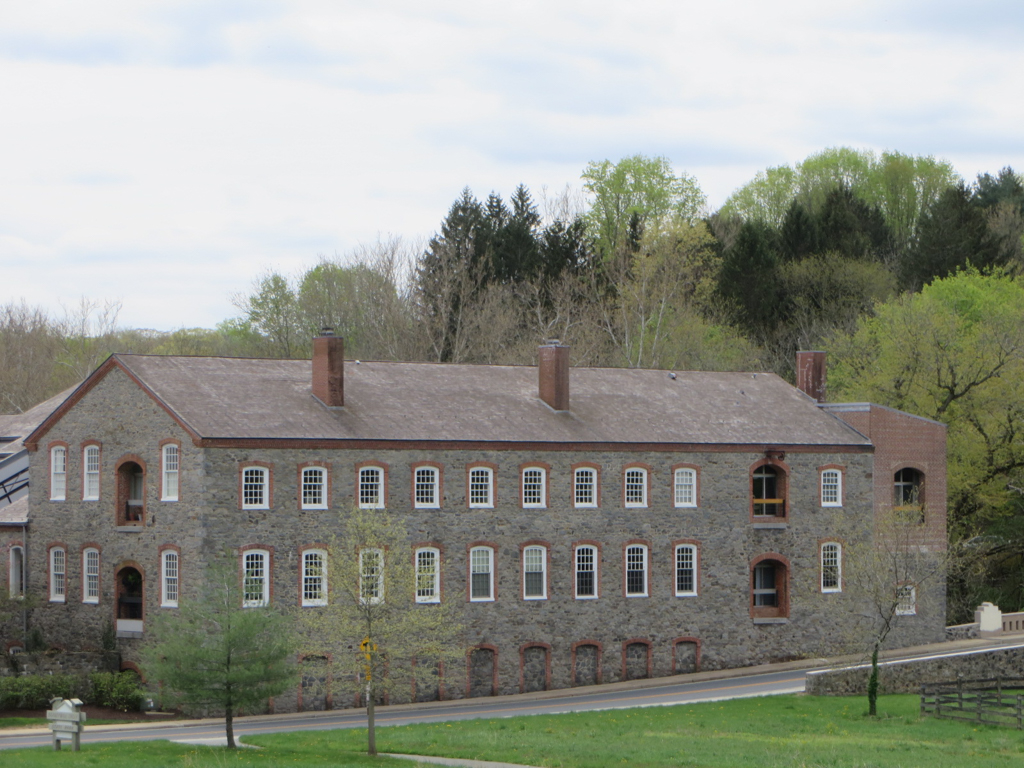
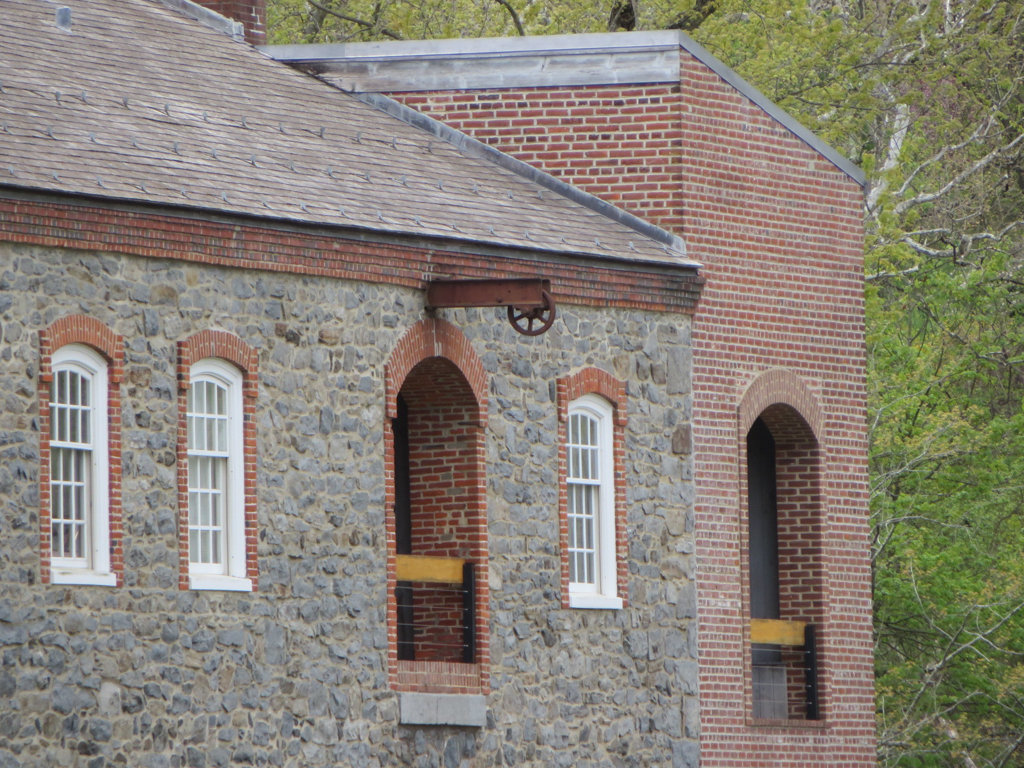
; and others). With profits from his Philadelphia bookshop, William Young (printer of the Columbian Magazine and chief supplier of paper for the U.S. government) dammed the river here in 1794 and built Delaware Paper Mill. It burned in 1814. By then, he had established Delaware Woolen Factory, making cassimeres, satinette, and fancy cords, and he later added a cotton factory. Operations ceased after a fire in 1846. Young's imposing stone house with fanlight (1801) still stands uphill at 507 Black Gates Road. Later, Jessup and Moore made paper, starting in 1860 and rebuilding after a fire later in the decade. Their long, stone riverside structures with brick arches above the openings were considered quaint as early as 1872, when they appeared in the famous book Picturesque America. A map of 1927 shows the plant as making book paper, with bleach and rag houses in the building nearest the road and beater rooms behind them. The facility ceased operation in 1971 and has been converted into condominiums (Peter Jennings and Mary Staikos for Moeckel Carbonell Associates). Rockland Bridge stands nearby, twentieth-century concrete successor to a noted covered span (1823, Lewis Wernwag, washed away 1839). That earlier bridge appeared in two paintings of 1835 by artist John Rubens Smith, along with Young's Mill on the east bank and Kirk's on the west.
Rockland Mills
19th century and later. Rockland Rd. at Brandywine Creek