

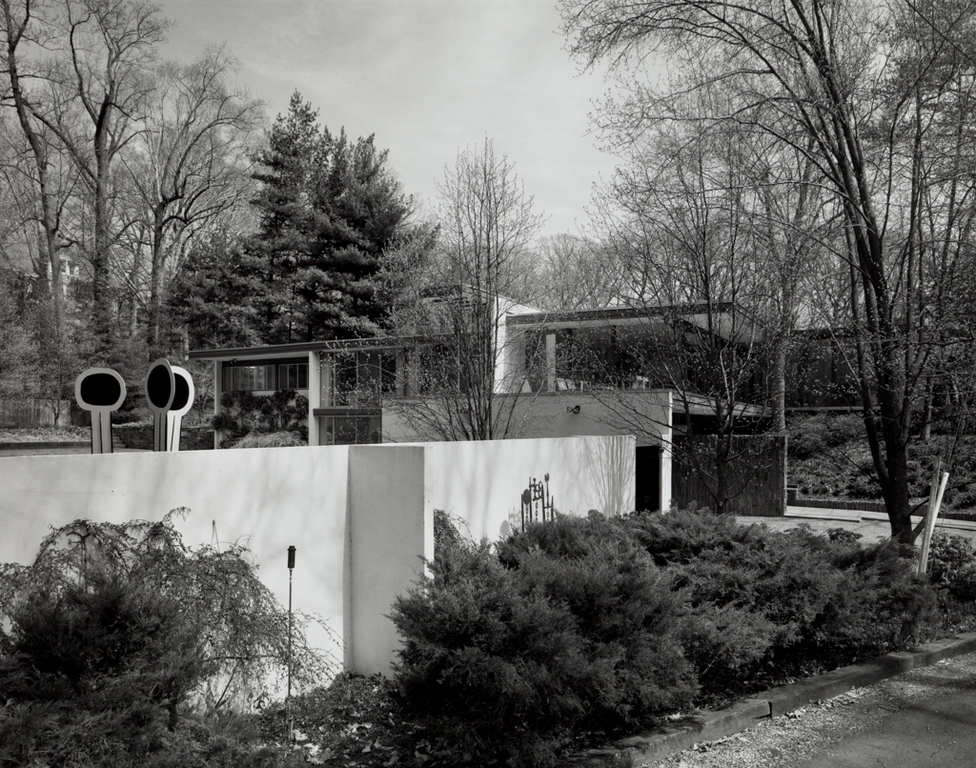
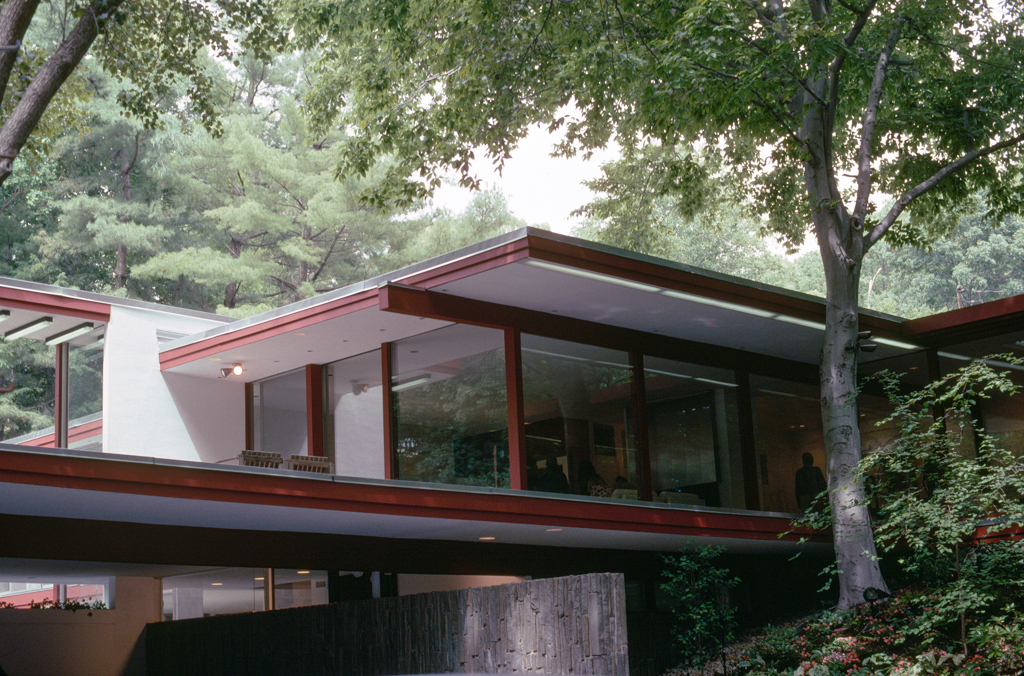
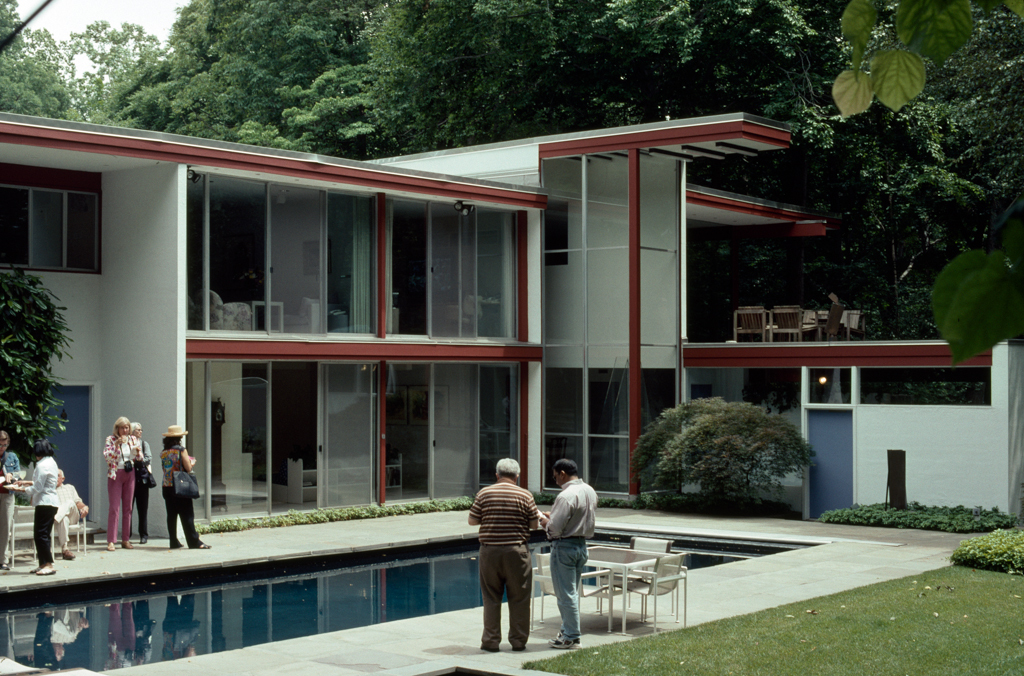
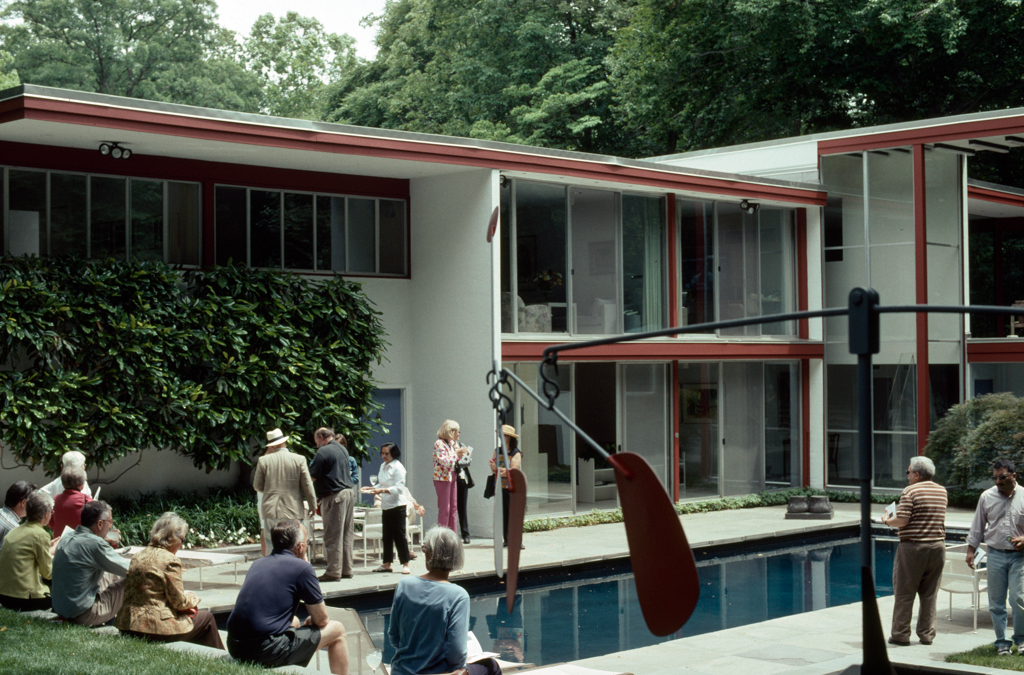
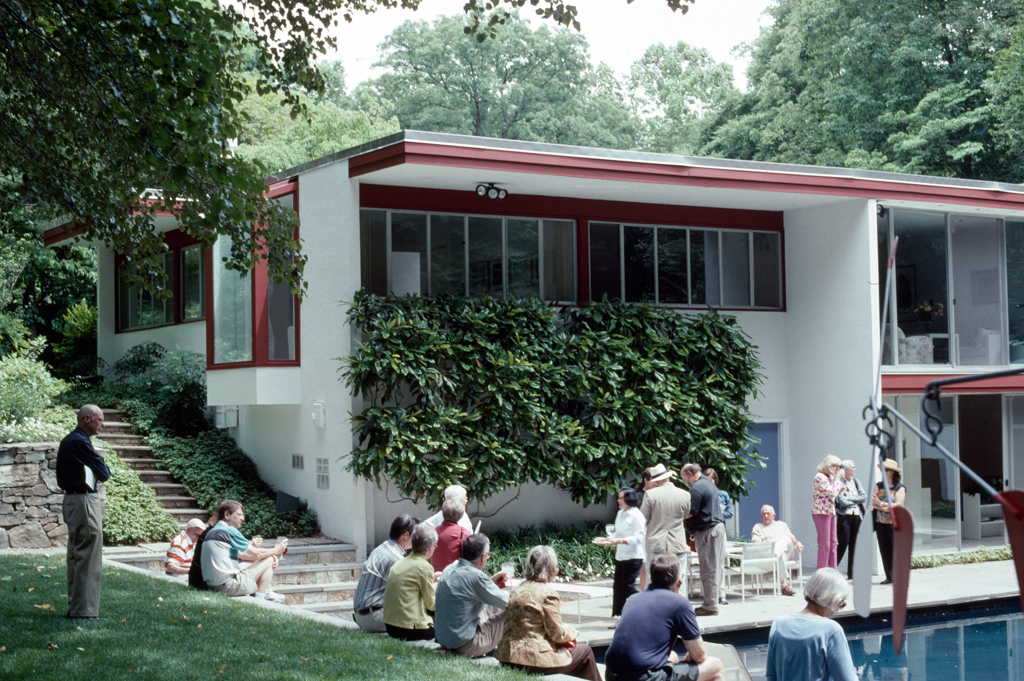
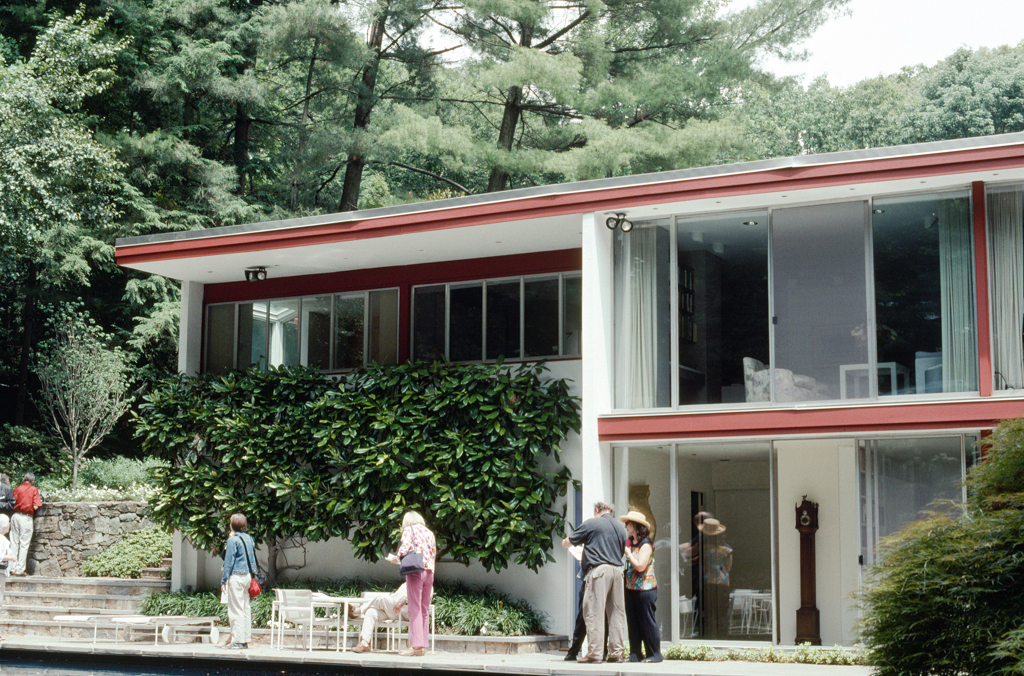
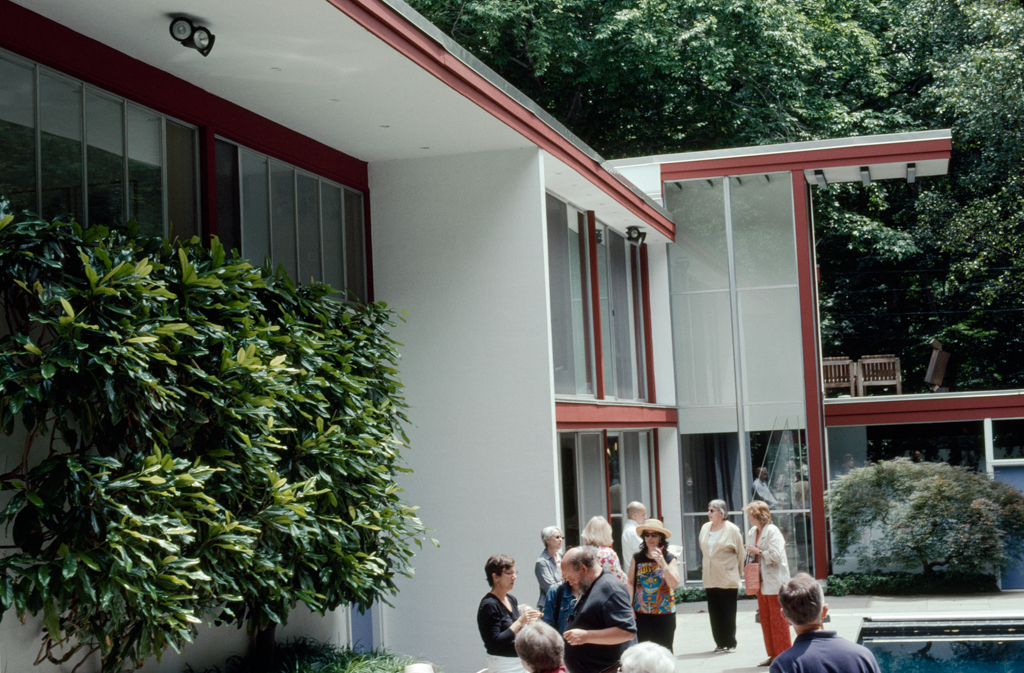
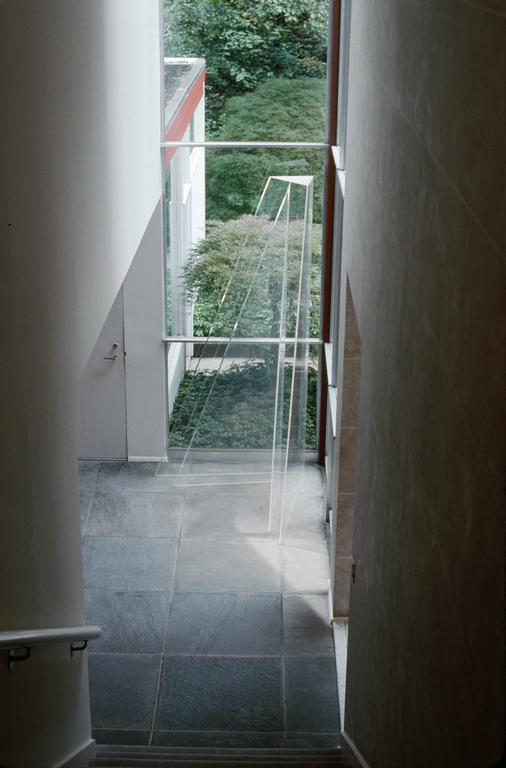
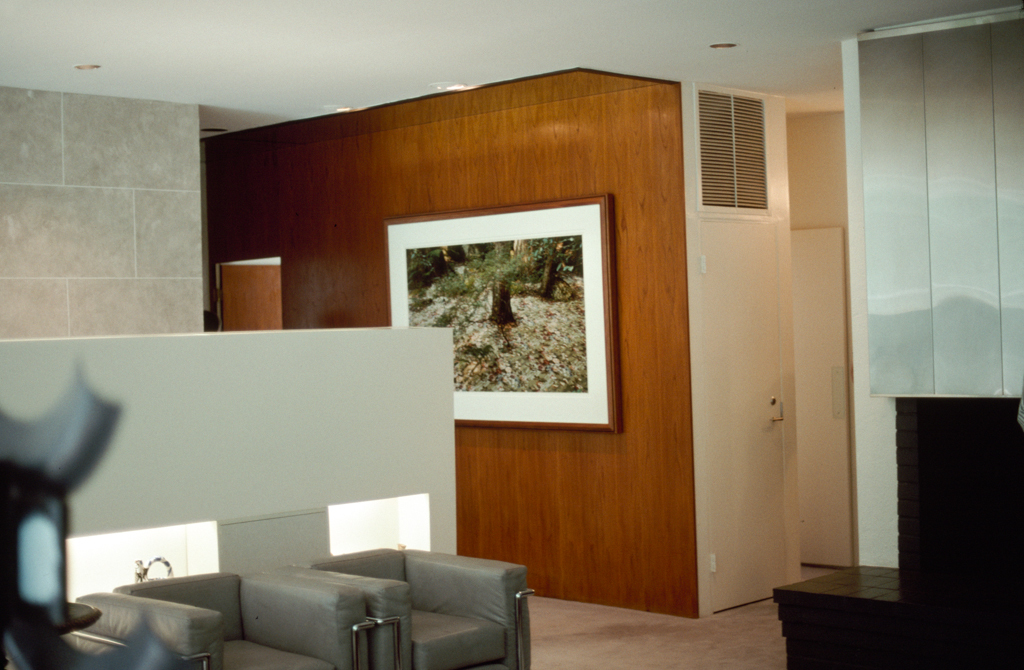
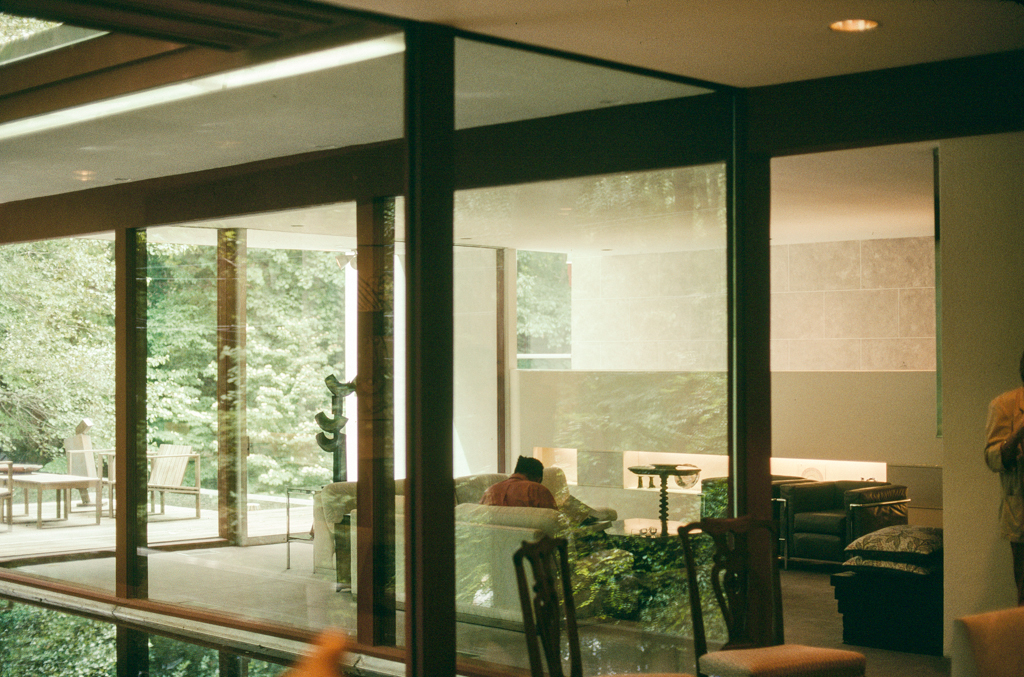
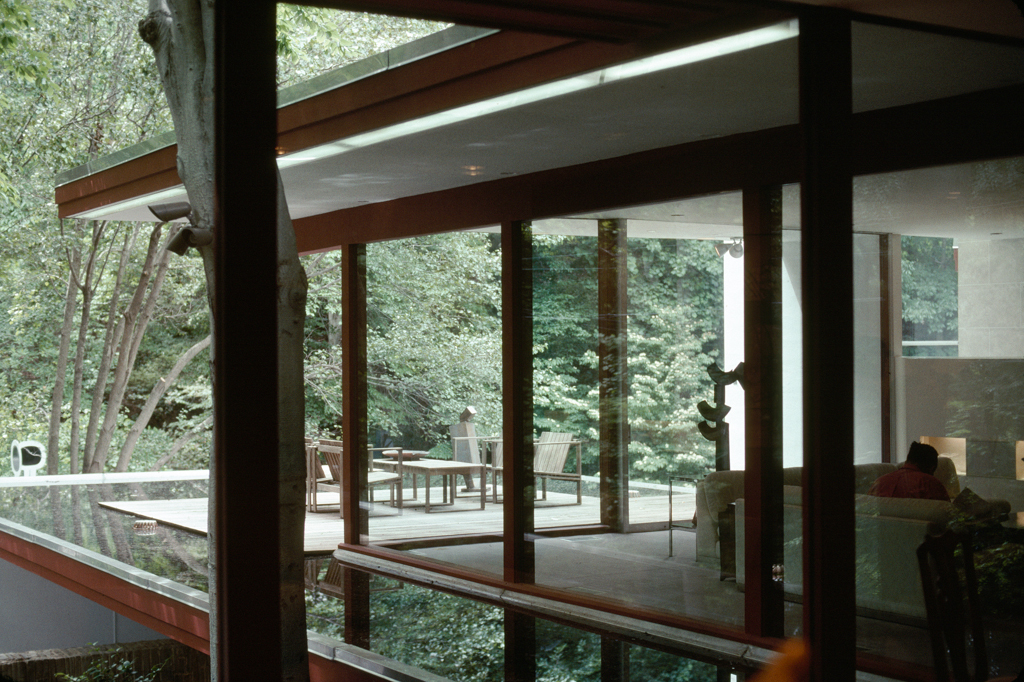
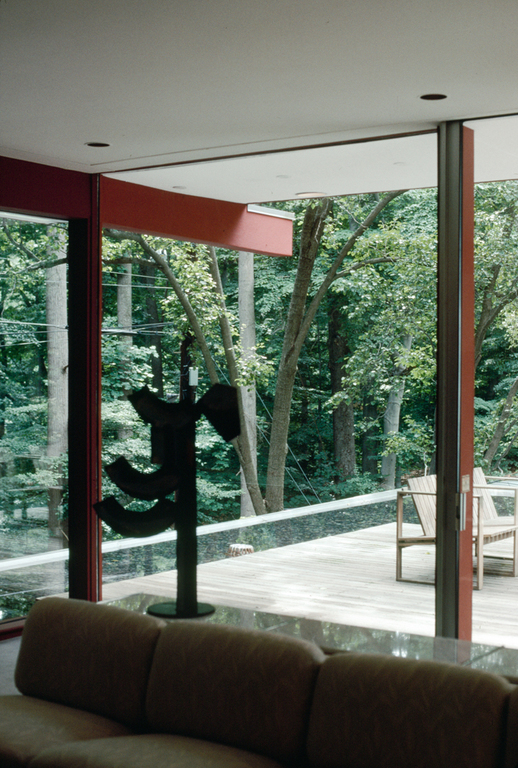
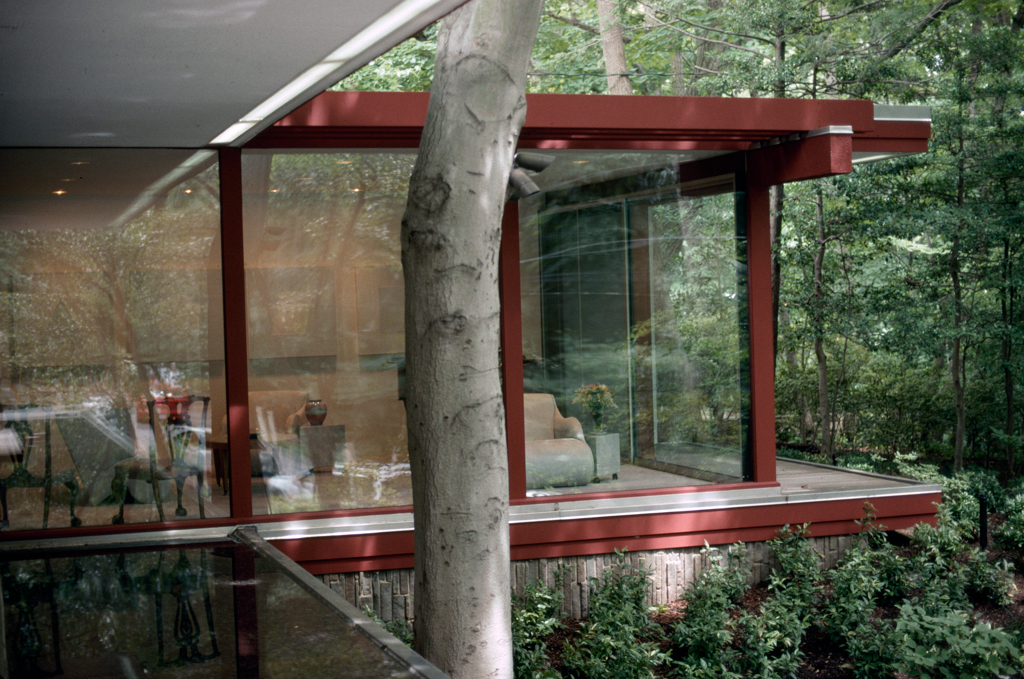
In the 1960s there were few sites remaining in Washington that could accommodate a house such as that designed by Neutra, for it demands both a beautiful natural setting and enough space to allow for privacy. Situated atop and into the end of a small ridge, the Brown house resonates with echoes of early twentieth-century modernism. Resolute horizontals defined by thin, cantilevered slab floors and roofs, all-enveloping glass walls, a tall, white, and planar garden wall, each bespeaks the training and orientation of the architect. Viennese-born and -educated, Neutra's interest in American architecture dates from before 1911, when he became aware of Frank Lloyd Wright. Neutra emigrated to America
The Brown house's picturesque composition—asymmetrical in its plan and its stepped horizontals—owes much to Wright's influence. However, the ambiguous nature of its setting and materials—rooted in nature at one end as it emerges from the ridge, yet subduing it in the wall sculpture garden at the other—and the use of rough natural materials alongside smooth industrially produced ones indicate a fundamental conflict between American and European perceptions of modernism.