

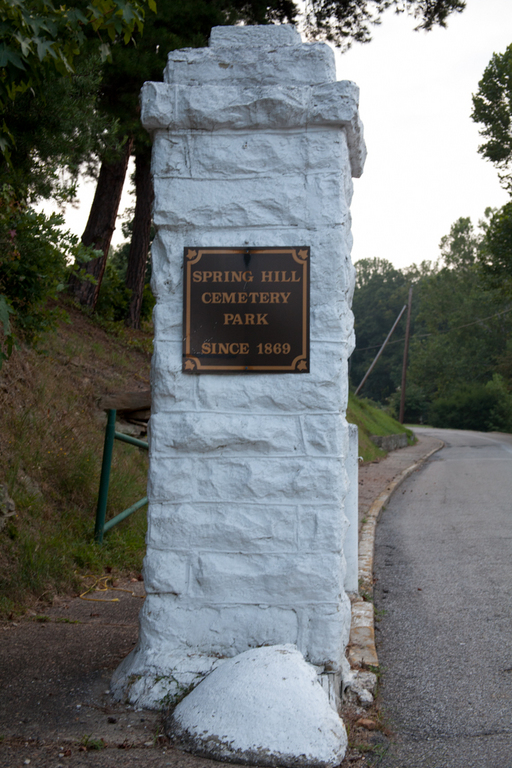
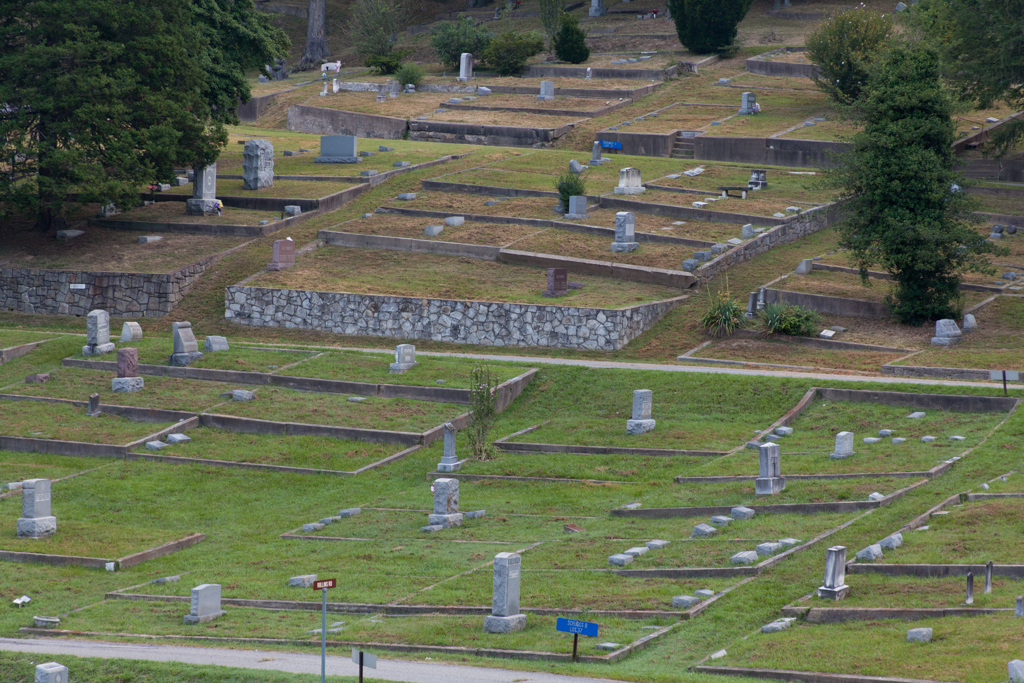
West Virginia's largest cemetery, a 172-acre tract, overlooks the city from a hill northeast of downtown. City officials established the cemetery in 1869 and hired A. J. Vosburgh, a civil engineer, and Thomas Matthius (or Matthews), a surveyor, to plat it. Old Circle, the first section, has a formal, circular layout composed of intricately curved pathways. Later sections are less formal, with meandering roadways following topographical dictates. The adjoining cemeteries of Mount Olivet (Roman Catholic) and B'nai Israel (Jewish) are now considered part of Spring Hill.
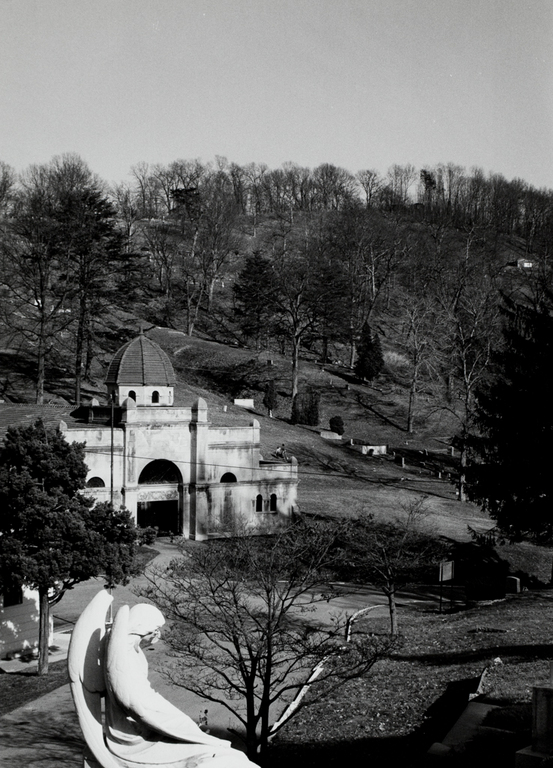
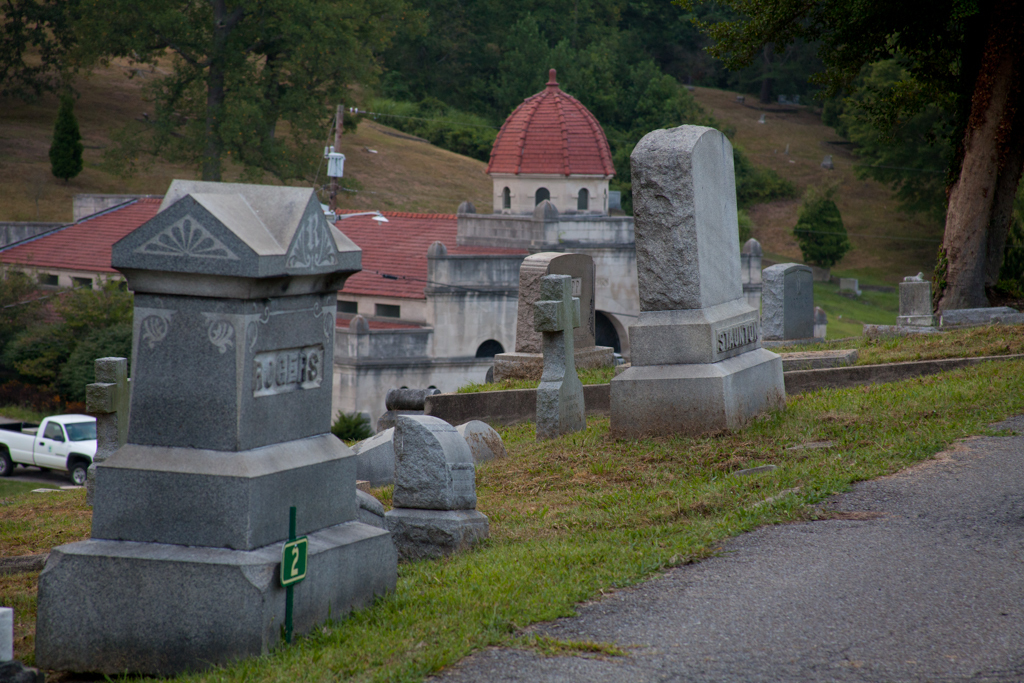
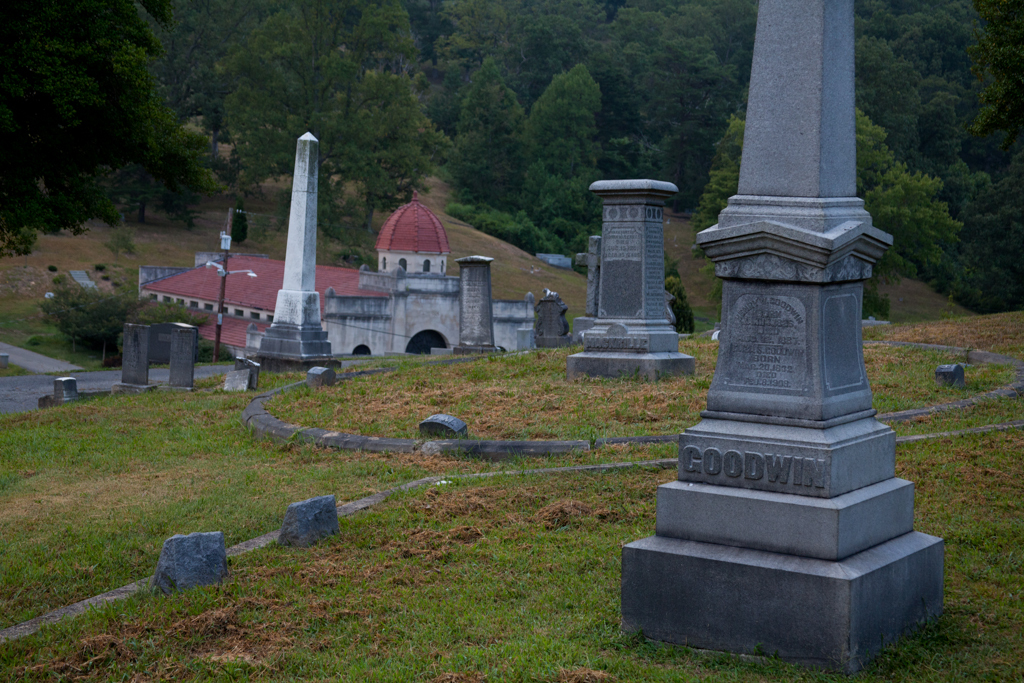
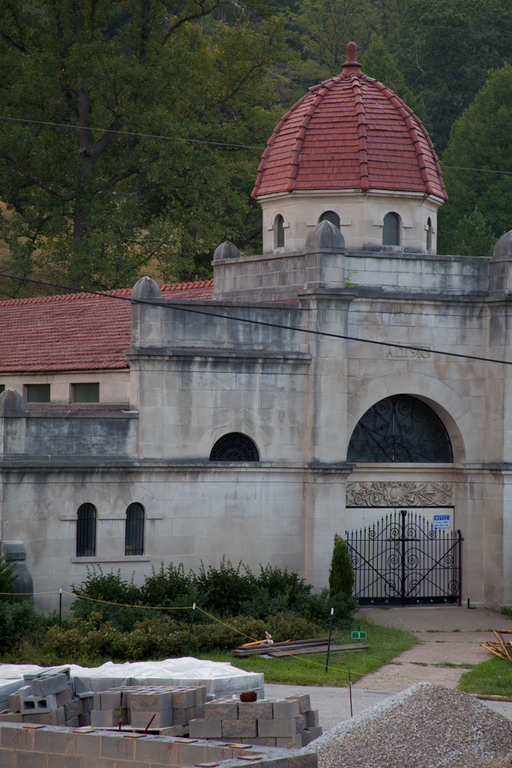
Near the center of the cemetery stands the Spring Hill Mausoleum (1910; restored 1985, Paul D. Marshall and Associates), a large, reinforced concrete structure with a smooth limestone facing and red-tiled dome. It combines classic proportions with Romanesque arches and details but somehow manages to impart a mostly Moorish feeling. The Stump family markers and the headstone of Sanford A. Hickel (1816–1887) are among the more unusual memorials. A carved stone tree trunk, or stump, “sawn off” several feet above ground, marks the Stump family plot. Near the stump, smaller “logs,” arranged as if they had been cut from the same tree and had fallen nearby,
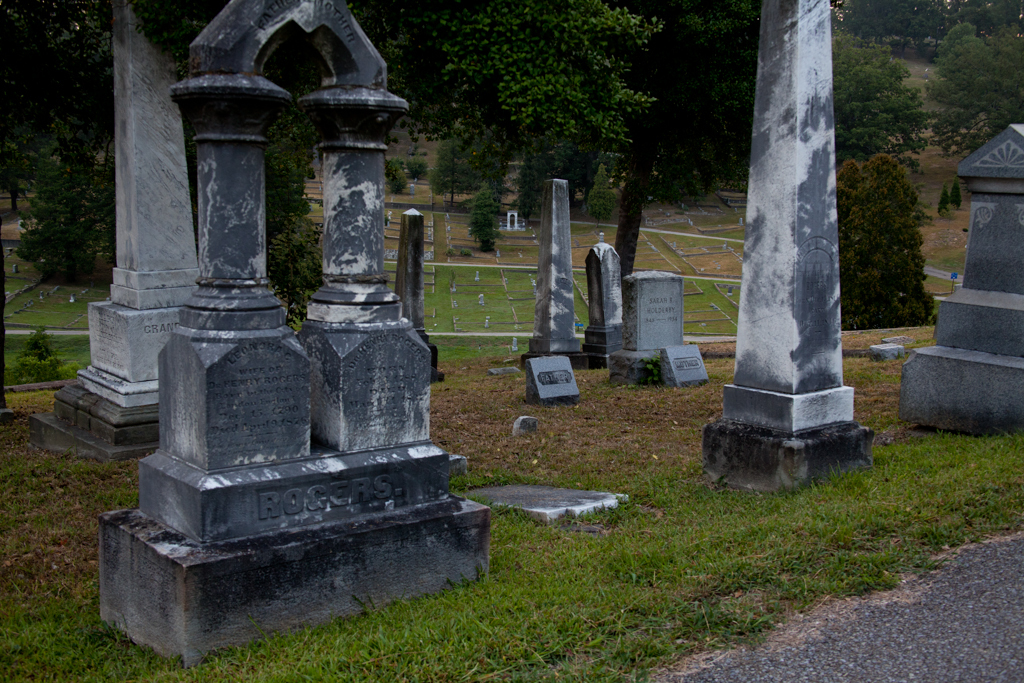
Spring Hill is the essence of the romantic Victorian burial park. Its grounds are embellished with carved angels, obelisks, broken columns, and mausoleums that honor the city's well-to-do, as well as a potter's field and markers honoring Confederate dead. Its expansive and mature landscaping provide a welcome, green oasis close to the heart of the city.