

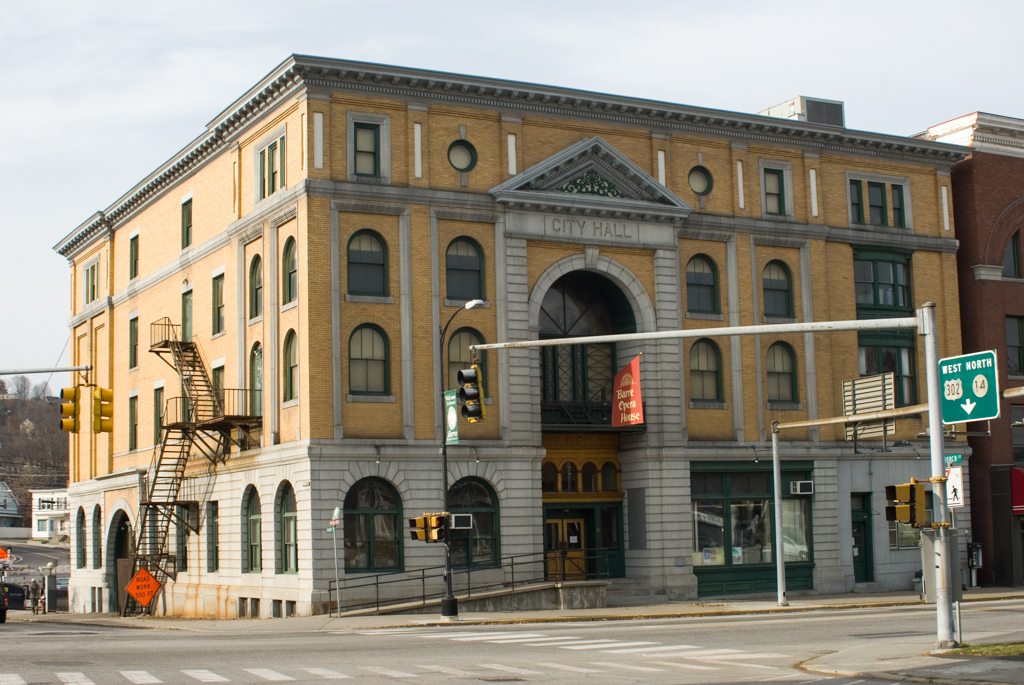
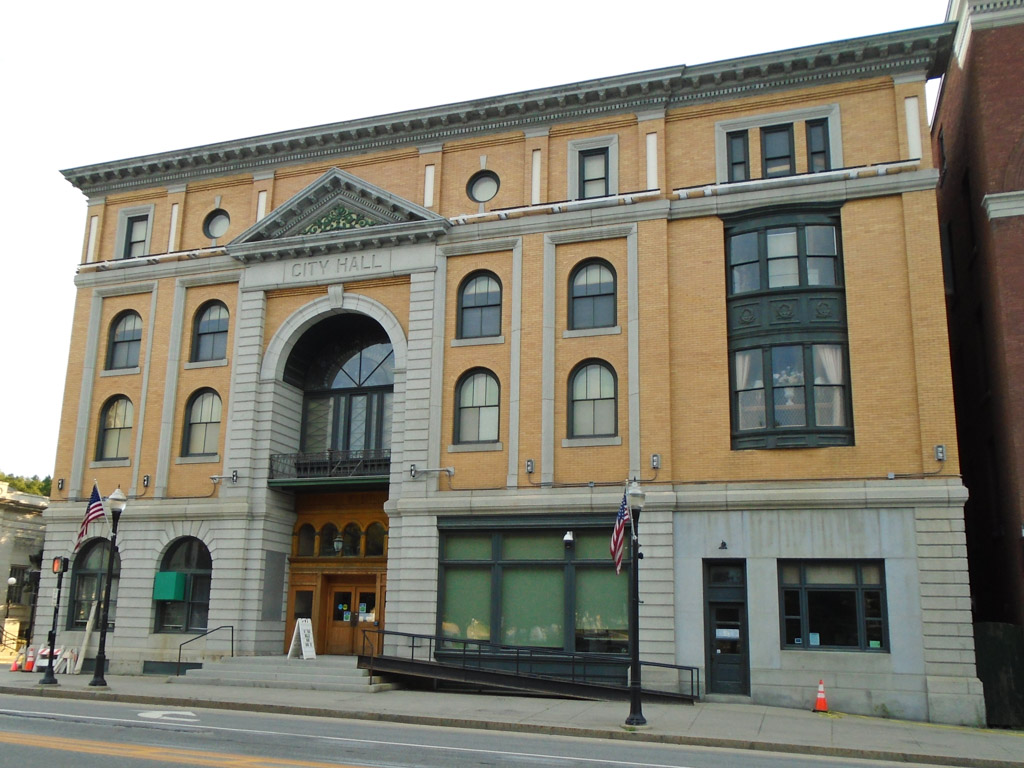
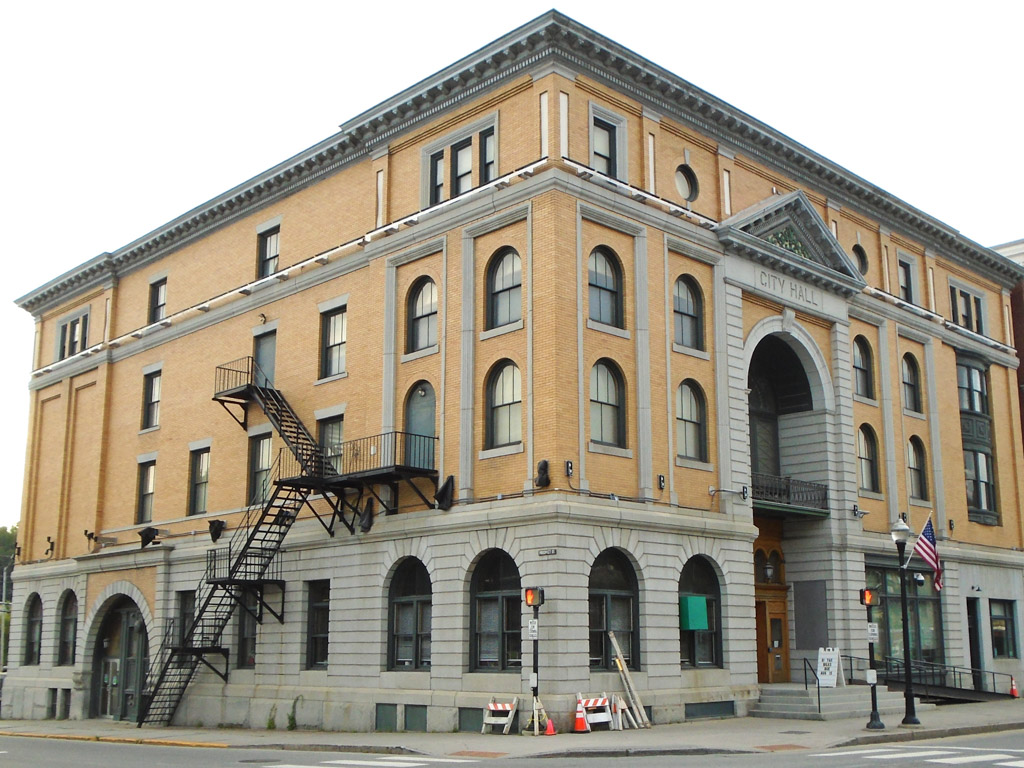
This five-story building with a grand two-story arched entrance looks more like a well-designed turn-of-the-twentieth-century Beaux-Arts commercial palazzo than a city hall. Designed by Adams of Lawrence, Massachusetts, a town that had strong labor union ties with Barre, the building also houses an opera house on the upper floors and a Grand Army of the Republic meeting room. This was the first of several grand municipal buildings Adams designed, including one in Montpelier (WA31). Here the scheme included a stage framed by an elaborate proscenium, a horseshoe-shaped balcony, and an ornamental pressed-metal ceiling. Especially popular among Barre's opera-loving Italian immigrant community, the hall was the venue for hundreds of live theatrical events until World War I. In 1925 it was outfitted for showing motion pictures but closed in 1940. Virtually forgotten until 1976, the hall was redis-covered by local residents Betsy Boutin and Lillian Owre while they were students in a University of Vermont historic preservation course. A citizens' movement emerged with rare backing from both businesses and labor unions to build a new rear access and refurbish the interior. Today the opera house operates as a performing arts center and stands as a monument to Barre's urbanity and to the spirit of the Progressive Era when the arts were understood as a public responsibility.
Barre City Hall and Opera House
1899, George G. Adams. 12 S. Main St., City of Barre