

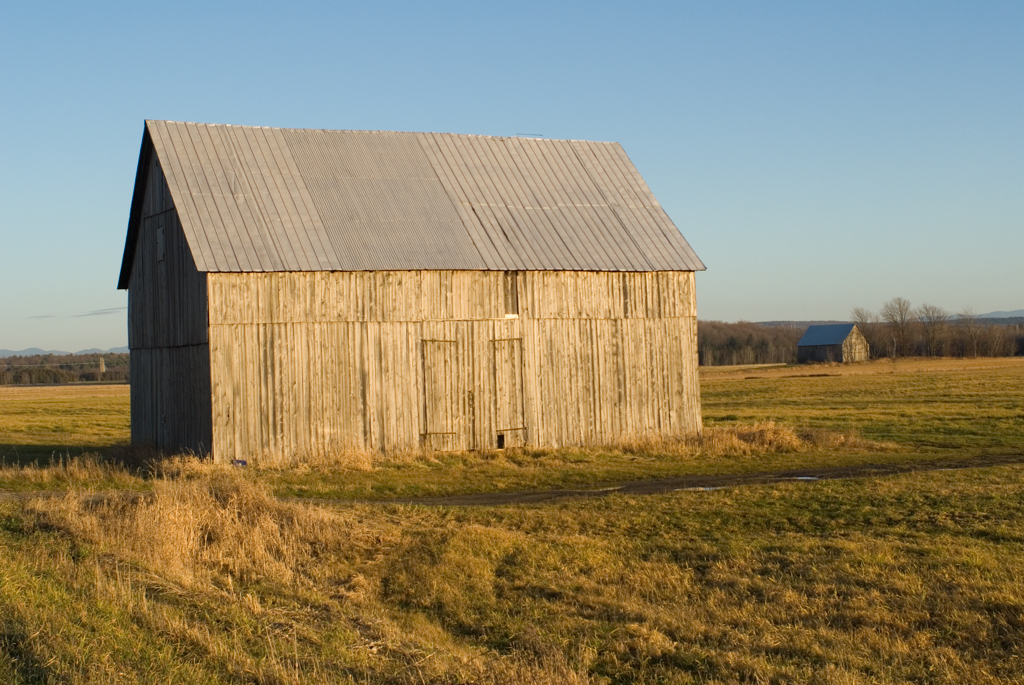
This barn is an interesting but not uncommon example of the persistence in Vermont of the traditional English barn. It was built for hay storage (still its present use), a field barn located to minimize the distance horses needed to haul loads during haying in the hot summer. It retains the basic size, three-bay post-and-beam form, and center drive of the English barn, but here the bays are regular. All posts and lumber are sawn, and there is a steeper pitch gable roof with purlins braced by diagonal posts joined to the girts. These changes made the structure easier to build and better able to shed snow, and also increased its storage capacity. A French Canadian from Rainville, Quebec, built the barn for John Rainville, also from Rainville, who resettled this border farm in 1899. At the time, like many farms in the area, Rainville's primary cash crop was hay that was shipped by rail to Boston to fuel its horse-powered conveyances. Rainville also kept a dairy and had the builder enlarge an earlier English barn behind his farmhouse into a large bank barn for dairy cattle.
Rainville Hay Barn
1904. VT 235, 0.5 miles east of Rainville Rd.